
Beyond the Suite: How to Mix Appliance Brands Without Ruining Your Kitchen's Design Flow

Rethinking the “Appliance Suite”
For decades, kitchen design followed a simple rule: buy everything from one brand and call it done. Appliance suites offered convenience, built-in visual consistency, and often meaningful savings when purchased as a package.
That approach still makes sense for many homeowners. A well-designed suite delivers a cohesive look with minimal effort and remains one of the most efficient ways to complete a kitchen.
But today’s design landscape has expanded. More homeowners and designers are exploring a performance-driven curation strategy, selecting appliances based on what each one does best while still maintaining a unified aesthetic.
This does not replace appliance packages. It complements them.
Whether you choose a full suite or mix brands strategically, the goal remains the same: a kitchen that performs well, looks intentional, and feels cohesive.
Master the Materiality: Navigating the “Stainless Steel” Maze
Not all stainless steel looks the same. In fact, this is one of the most common ways a mixed-brand kitchen goes wrong.
The difference starts at the alloy level. 304-grade stainless steel tends to have a deeper, warmer tone, while 430-grade steel appears lighter and cooler. When placed side by side, the contrast can be noticeable, especially under natural or directional lighting.
Then there is the grain. Some appliances use a tight horizontal brush, others a softer or even vertical pattern. These subtle differences affect how light reflects across surfaces, which can create what designers call “aesthetic dissonance.”
To successfully combine different materials in a mixed-brand kitchen, you must look beyond the brand logo and focus on the consistent application of finishes and tones. When you depart from a unified appliance suite, the kitchen becomes a collection of specialized tools that require a disciplined design framework to remain visually cohesive.
1. Navigate the "New Neutrals"
While stainless steel is iconic, matte finishes (such as Matte Black, Matte White, and Graphite) are increasingly replacing glossy surfaces as the "new neutrals" for 2026.
- Matte Textures: These offer an understated luxury and are superior at resisting fingerprints and smudges compared to traditional stainless steel.
- The Black Stainless Warning: Unlike traditional silver steel, "Black Stainless" is a proprietary coating that varies significantly in hue and sheen between brands like Samsung, LG, and Bosch. Designers often advise against mixing black stainless brands, suggesting a pivot to baked-in Matte Black finishes for better interoperability.


2. Implement the "Bridging Mechanism"
You can use hardware and lighting as "jewelry" to create a visual bridge between disparate appliance materials.
- Matching Accents: If you have a professional-grade 304-grade stainless range but a different brand of refrigerator, you can unify them by installing matching brass or copper pulls on both units.
- Strategic Repetition: To make mixed metals feel intentional, repeat the "outlier" material elsewhere. For example, if your range has brass knobs, use brass pendant lights and brass cabinet pulls to integrate the appliance into the overall design.
3. Utilize the "Focal Point Strategy"
In a mixed-brand kitchen, one appliance should serve as the "hero" piece, while others are designed to recede.
- The Hero: Choose one statement item, such as a colorful range (e.g., Blush Pink or Pastel blue) or a high-end professional refrigeration unit.


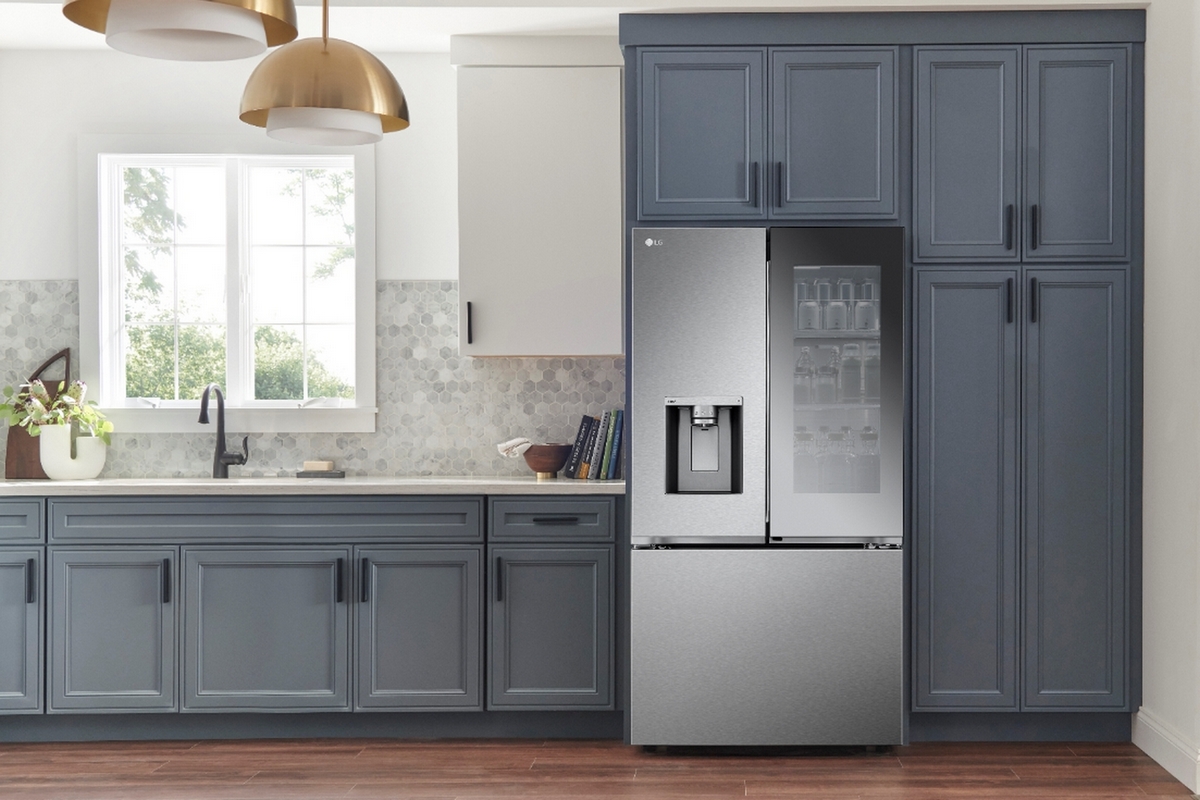
- The Supporting Cast: All other appliances should "recede" via panel-ready designs or minimalist styling. Cladding dishwashers and refrigerators in custom cabinetry hides brand identities and allows you to use uniform third-party hardware across the entire kitchen.
4. Coordinate Geometric Archetypes
If you cannot panel your appliances, focus on the geometric archetype of their handles and knobs.
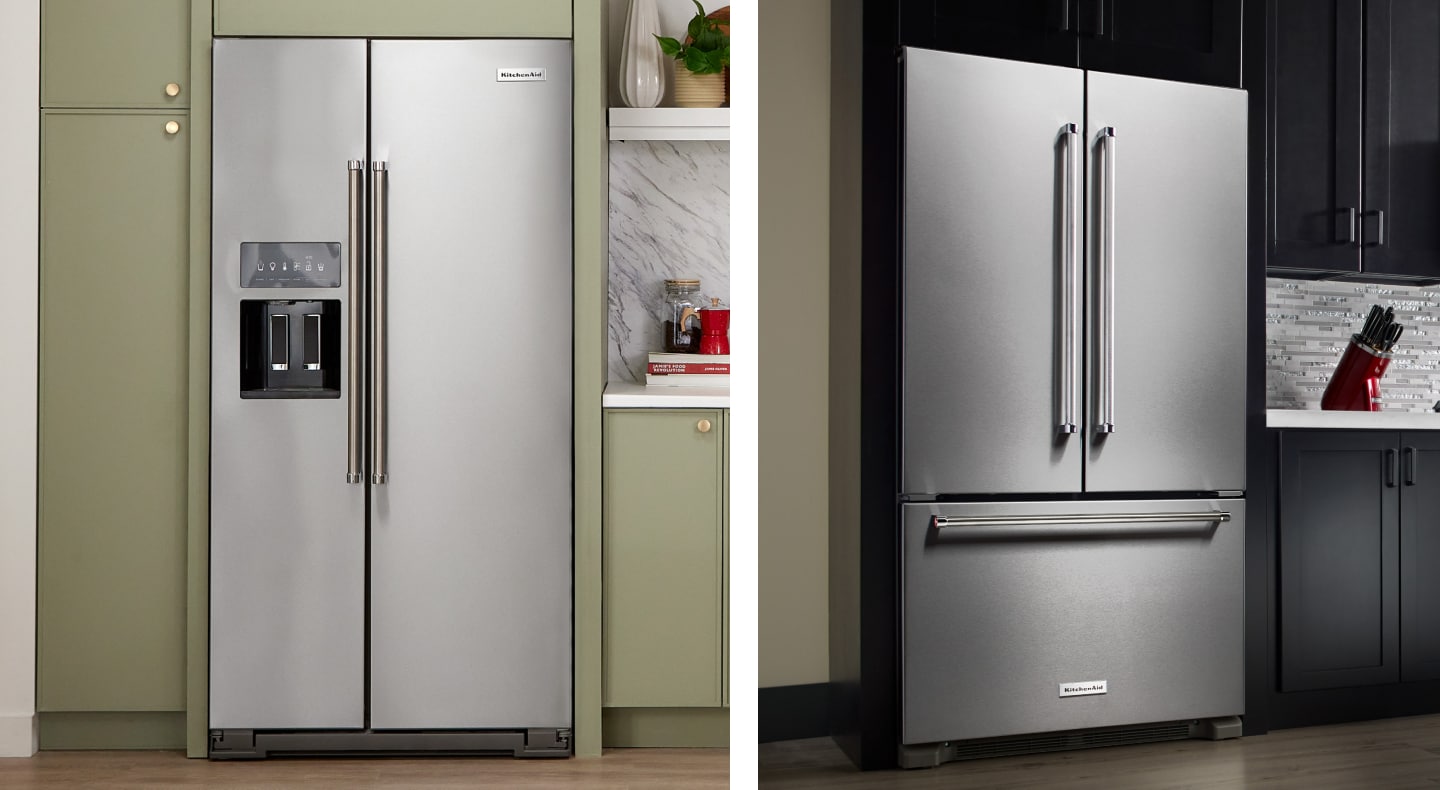
- Archetype Categories: Appliances generally fall into three styles: Professional (robust, tubular, knurled), Transitional (curved silhouettes), or Contemporary (minimalist, flat lines).
- The Pocket Handle "Cheat": Selecting a dishwasher with a recessed or pocket handle is a powerful way to reduce visual clutter. Because the handle is hidden, you eliminate a potential hardware clash with a nearby refrigerator or oven.
5. Align with Surface Undertones
Your choice of appliance materials must relate to your countertop and cabinetry undertones.
- Cool vs. Warm: 430-grade stainless steel, which has a cooler, blue-toned appearance, pairs best with cool grays or crisp white cabinetry. Conversely, the richer, warmer tone of 304-grade steel complements warm wood stains or countertops with gold or earthy veining.
- The Rule of Two Colors: To avoid a chaotic appearance, limit your palette to no more than two appliance colors plus stainless steel. For instance, a matte white refrigerator can coexist with a navy range as long as the other built-in units are stainless steel or panel-ready.
Geometric Interoperability: Coordinating Handles and Hardware
Handles are the most visible design element on any appliance. If they clash, everything feels off.
Most appliances fall into three design archetypes:
| Handle Archetype | Key Geometric Features | Maintenance / Ergonomics |
|---|---|---|
| Professional (Pro) | Straight, tubular, often textured | Strong grip, industrial presence |
| Transitional | Soft curves, balanced proportions | Comfortable, versatile |
| Contemporary | Minimal, thin, linear | Clean look, design-focused |
| Integrated (Pocket) | Hidden or recessed | No visual interruption, easy to clean |
The key is consistency. You do not need identical handles, but you do need compatible geometry.
One of the easiest ways to avoid conflict is the pocket handle strategy. A dishwasher with a recessed handle removes one competing element entirely, simplifying the visual field and letting other appliances take the lead.
Another approach is what designers call the “jewelry effect.” By aligning finishes like brass, copper, or matte black across hardware and fixtures, you create a bridge between different appliances.

If you go this route, follow one important rule:
Handle length should be about one-third of the panel dimension. This keeps proportions balanced and ensures proper leverage, especially for heavier doors.
Eliminating Digital Dissonance: The LED Spectrum
Even if finishes and hardware match perfectly, your kitchen can still feel disjointed once the lights go down.
Why? Display colors.
Some appliances use bright, cool-toned LEDs, while others lean warm or neutral. When these sit side by side, the contrast becomes much more noticeable at night, creating what designers call digital dissonance.
This is often overlooked during planning, but it has a real impact on how cohesive your kitchen feels after dark.
Below is a clear example of how lighting differences show up in real products:
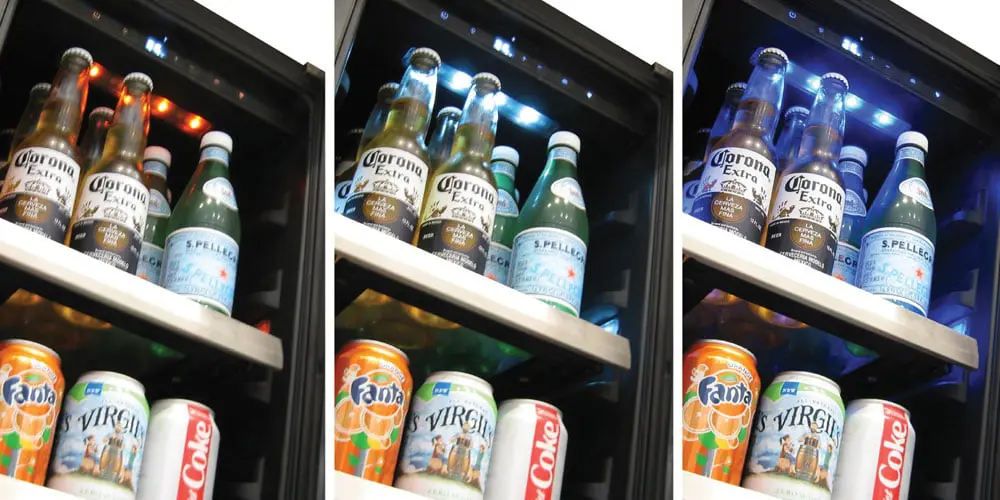
Some units use brighter, cooler LEDs that stand out immediately in a dim space. This can feel high-tech, but when mixed with softer lighting nearby, it can unintentionally draw too much attention.
Statement Lighting: When LEDs Become a Feature


These types of appliances use color-changing LEDs to showcase contents and create a high-impact visual moment. Some even allow multiple lighting colors, ranging from crisp white to ice blue or amber.
They are designed to stand out.
This works well if you want your appliance to act as a focal point. But in a mixed-brand kitchen, these brighter, cooler tones can easily compete with surrounding appliances, especially if those use warmer or dimmer displays.
Structural Integration: Built-ins and Flush Mounts
This is where mixing brands becomes technical.
Built-in appliances, especially wall ovens and microwaves, require precise alignment. The challenge comes from trim kits, which are typically designed to match a specific manufacturer’s dimensions and finish.
If you mix brands, you may need a custom matching-width trim kit to maintain horizontal continuity and avoid uneven gaps.
Depth is another factor. Not all “counter-depth” appliances are truly the same depth. Even small differences can break the flush look.
Then there is clearance. Appliances without zero-clearance hinges need extra space to open properly. If placed too close to another unit or wall, doors can collide or force awkward spacing.
The takeaway:
Measure everything. Then measure it again.
The Intelligent Ecosystem: Software and Smart Tech
Mixing brands does not just affect how your kitchen looks. It affects how it functions.
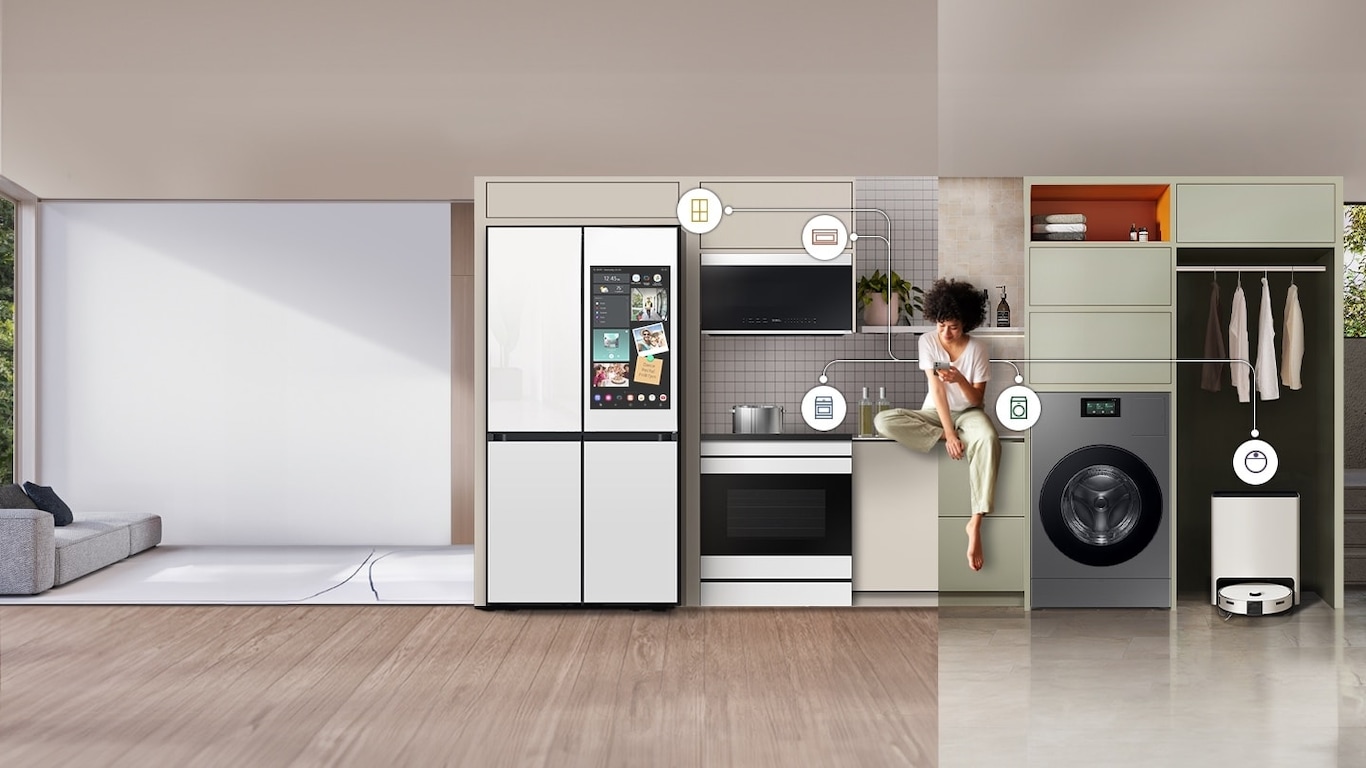
Each manufacturer typically operates within its own smart platform. That means multiple apps, separate controls, and limited communication between devices.
| Primary Brands | Smart Platform | Core Strength |
|---|---|---|
| Samsung, Dacor | SmartThings | Broad device compatibility |
| LG, LG Studio | ThinQ | AI diagnostics and automation |
| GE, Café, Haier | SmartHQ | Guided cooking features |
| Bosch | Home Connect | Strong partner integrations |
This fragmentation can be frustrating, but solutions are emerging.
Platforms like Home Assistant and the growing Matter standard are beginning to unify these ecosystems, allowing different appliances to communicate through a single interface.
For now, expect some level of fragmentation, and plan accordingly.
The Designer’s Rulebook for Success
Mixing appliance brands is not about breaking rules. It is about following better ones.
Here is the framework that works:
-
The Rule of Two Colors
Limit your palette to two appliance colors plus stainless. This prevents visual clutter and keeps the space grounded, even when brands differ. -
The Focal Point Strategy
Choose one standout appliance and let the others recede. Whether it is a range, refrigerator, or wine cooler, one “hero” piece creates intention while everything else supports it. -
The Bridging Mechanism
Use cabinet hardware, lighting, and finishes to tie everything together. Consistent materials across fixtures and accents help different appliances feel like part of the same design language. -
The Physical Audit
Always verify materials and finishes in person. Subtle differences in tone, texture, and reflectivity are nearly impossible to judge online.
When done right, a mixed-brand kitchen does not feel mismatched. It feels intentional.
And that is the difference between a kitchen that simply works and one that truly performs.
Ready to Build Your Perfect Kitchen?
Explore curated appliance packages or mix and match with confidence.
Shop performance-driven selections designed to work beautifully together at ShopAppliances.com.
FAQs:
Is it better to buy an appliance package or mix brands?
It depends on your priorities.
- Packages offer convenience, cohesive design, and cost savings.
- Mixing brands allows you to prioritize performance and customize your kitchen.
Both approaches work when executed thoughtfully.
How do I make different stainless steel appliances match?
Not all stainless steel looks the same. Pay attention to tone and finish. Whenever possible, view appliances in person and avoid placing noticeably different finishes directly side by side.
What is the biggest mistake when mixing appliance brands?
Ignoring the small details. Differences in finish tone, handle design, or LED lighting can create visual conflict if not planned carefully.
Where should I start when choosing appliances?
Start with your priorities. Decide which appliance matters most for your lifestyle, then build around it with complementary pieces that match in style and finish.
Where can I find appliances that work well together?
You can explore both curated appliance packages and individual pieces designed to complement each other at ShopAppliances.com.
Read More:
Panel Ready vs Stainless Steel Which Fits Your Kitchen Design
Design Trends: Comparing 1950s Pastel Appliances to Modern Stainless Steel
How to Design a Cohesive Kitchen with Appliance Suites
Best Kitchen Appliance Finishes in 2026: Stainless Steel vs. Matte Black vs. White Glass