
Pet-Friendly Washer and Dryer Systems: How to Remove Pet Hair and Odors Effectively

Introduction
Living with pets brings plenty of joy, but it also brings unique laundry challenges. From fur-covered blankets and muddy paw towels to lingering odors in pet beds and clothing, pet owners often deal with laundry loads that require far more than a standard washer and dryer setup. Pet hair can cling stubbornly to fabrics, dander can trigger allergies, and biological odors can linger even after washing.
One of the most common frustrations is fur buildup throughout the laundry system. Pet hair often sticks to clothing during both the wash and dry cycles, transfers between fabrics in the dryer, and accumulates inside washer gaskets, lint traps, and drain lines. Over time, this buildup can reduce appliance efficiency and even contribute to clogged plumbing.
Odors are another major concern. Pet-related smells from saliva, skin oils, urine accidents, and damp bedding can become deeply embedded in fabrics. Standard detergents may temporarily mask these odors, but without proper cleaning methods, bacteria and organic residue often remain trapped within the fibers.
Pet owners also frequently deal with:
- Clogged drain hoses caused by excess fur
- Stained pet bedding and blankets
- Hair reattaching to fabrics after washing
- Persistent odors inside washing machines
- Increased lint buildup in dryers
Creating a dedicated pet-friendly laundry routine can help solve these problems while extending the life of both clothing and appliances. The right combination of washers, dryers, detergents, filters, and maintenance practices can dramatically improve hair removal and odor control.
Why Pet Hair and Odors Are Difficult to Remove
Pet laundry presents a unique cleaning challenge because both pet hair and biological odors behave differently than ordinary dirt and stains. Understanding why they are so difficult to remove can help pet owners choose better laundry systems and cleaning routines.
How Pet Hair Clings to Fabrics
Pet hair is lightweight, static-prone, and designed by nature to cling to surfaces. Once embedded into fabrics, it can be surprisingly difficult to fully remove.
Static Electricity
One of the main reasons pet hair sticks to clothing is static electricity. During washing and drying, friction between fabrics creates static charges that cause loose fur to cling tightly to fibers. Synthetic materials such as polyester and fleece tend to generate even more static, making them magnets for pet hair.
Dry environments and heated dryer cycles can intensify this effect, causing hair to redistribute onto freshly cleaned clothing instead of being removed.
Fabric Types That Trap Fur
Certain fabrics naturally attract and hold onto pet hair more than others. Common fur-trapping materials include:
- Fleece
- Wool
- Velvet
- Corduroy
- Microfiber
- Knit fabrics
These materials contain textured or raised fibers that easily capture loose hair and dander. Pet bedding and blankets made from plush fabrics are especially prone to trapping fur deep within the material.
Why Traditional Washer and Dryer Systems Struggle
Standard washers and dryers are not always designed to handle excessive pet hair. In many traditional top-load washers, fur may simply circulate through the water and redeposit onto fabrics during the rinse cycle, while conventional dryers can create static that causes hair to cling back onto clothing during drying.
Without specialized filtration systems, strong tumbling action, or advanced airflow technology:
- Fur remains trapped in clothing fibers
- Hair accumulates inside washer drums and door gaskets
- Dryer lint traps become overloaded more quickly
- Pet hair can redistribute onto fabrics during drying
- Drain systems and dryer vents may become clogged
- Odors can linger in both washers and dryers over time
The Science Behind Pet Odors
Pet odors are often far more complex than ordinary household smells because they originate from biological materials that can penetrate deep into fabrics.
Biological Odors from Oils, Saliva, Urine, and Dander
Pets naturally produce oils, saliva proteins, sweat compounds, and dander that transfer onto fabrics over time. Accidents involving urine or vomit introduce additional bacteria and organic compounds that can create strong lingering odors if not treated properly.
These biological residues bond to fabric fibers and often survive regular wash cycles unless enzyme-based detergents or sanitizing settings are used.
Humidity and Heat Intensifying Smells
Warm temperatures and humidity can amplify pet odors dramatically. Damp fabrics create ideal conditions for bacterial growth, especially in:
- Pet beds
- Towels
- Blankets
- Rugs
- Plush toys
Bacteria Buildup in Fabrics and Washer and Dryer Systems
Over time, bacteria, detergent residue, body oils, and pet hair can accumulate not only in fabrics but also inside both washers and dryers. Front-load washer gaskets are particularly prone to trapping fur and moisture, while dryer lint traps and vent systems can collect large amounts of hair, dander, and debris that contribute to lingering odors and reduced airflow.
- Washers may begin transferring odors back onto clothing
- Mold and mildew can develop inside washer seals and drain systems
- Pet hair can combine with detergent residue to create buildup inside the washer
- Dryer lint traps and vents can become overloaded with fur and dander
- Poor dryer airflow may cause odors to linger in fabrics
- Excess lint and pet hair buildup can reduce drying efficiency over time
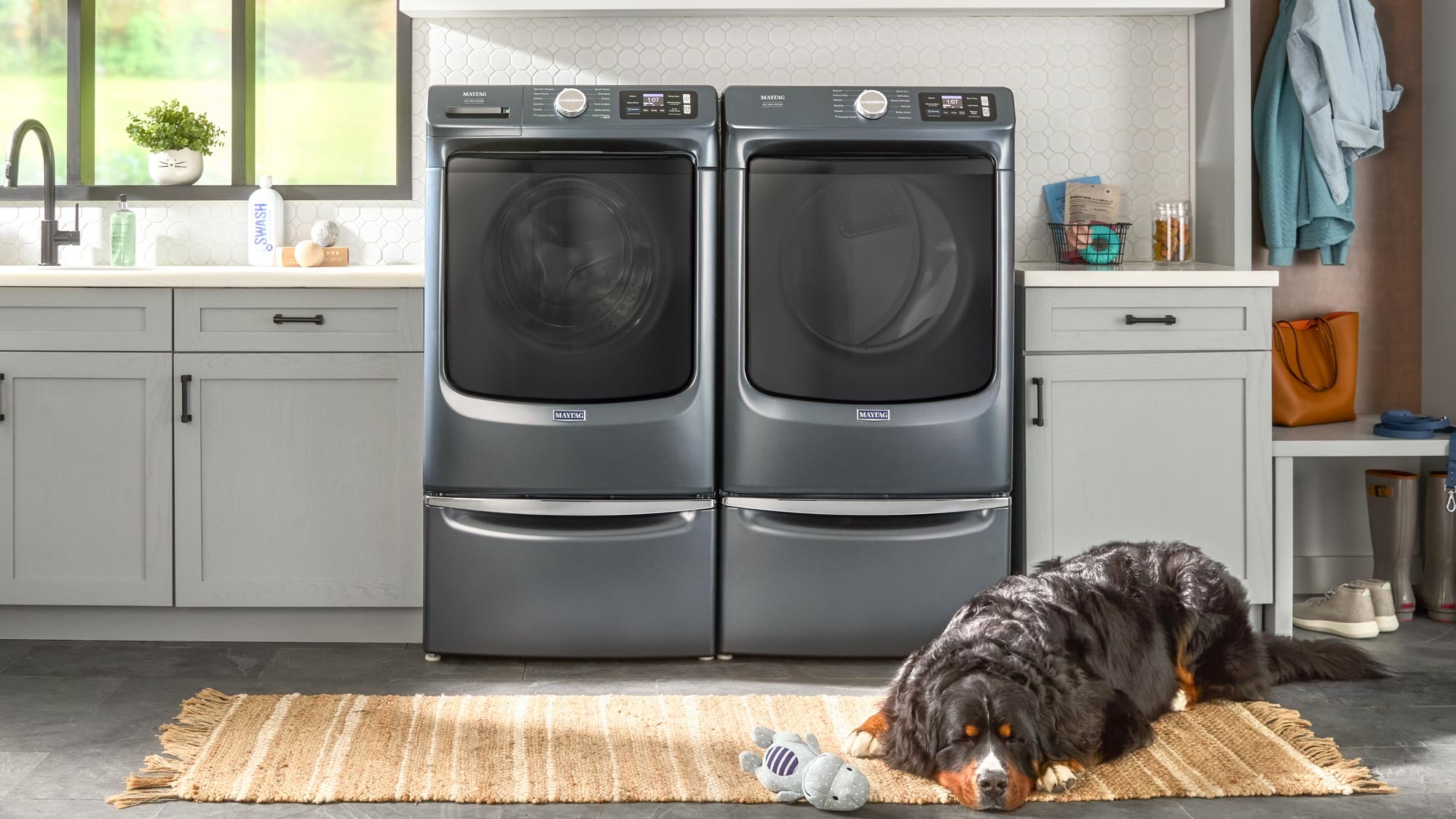
Image Credit: Maytag
Choosing the Best Pet-Friendly Washer and Dryer System
Pet owners know that standard laundry routines often fall short when it comes to removing stubborn pet hair, dander, and lingering odors. Choosing the right washing machine can make a significant difference in keeping pet bedding, blankets, and everyday clothing fresh and fur-free. Modern laundry appliances now include specialized pet care technologies designed specifically for households with dogs and cats.
Front-Load vs Top-Load Washers
Front-load washers are generally preferred for pet owners due to their horizontal-axis tumbling action, which helps dislodge embedded pet hair more effectively than traditional top-load machines. Their higher spin speeds also remove more moisture and loosened fur before items move into the dryer, helping reduce hair transfer during the drying process.
While modern high-efficiency top-load washers have improved significantly, front-load systems remain a popular choice for households with heavy-shedding pets because they typically provide:
- Better pet hair removal
- Higher spin speeds
- Improved water efficiency
- Enhanced odor control
- Better compatibility with steam dryer systems
Features to Look for in a Pet-Friendly Washer
When selecting a pet-friendly washer, look for specialized hardware and settings designed to combat biological odors and physical fur. Diamond-embossed or wave-shaped drum designs are highly effective as their internal texture is specifically engineered to trap fur and flush it out with water. Steam cleaning and sanitizing cycles, such as those found on LG or Maytag models, are essential for removing 99.9% of odor-causing bacteria and breaking down stubborn biological stains. Specialized pet hair filters, like the one found in the Maytag Pet Pro system, provide a dedicated mechanism to visibly remove hair from the wash water. Finally, prioritizing a machine with a high RPM spin cycle ensures maximum centrifugal force is applied to extract microscopic dander and embedded fur from the load.
Why Dryers Matter for Pet Hair Removal
Many pet owners focus primarily on the washer, but the dryer often plays an equally important role in removing stubborn fur and odors. During the drying process, airflow and tumbling help loosen remaining hair from fabrics while lint filtration systems capture fur before it redistributes onto clothing.
Key Dryer Features for Pet Owners
- XL lint traps
- Steam refresh cycles
- Moisture sensors
- Air-fluff settings
- Low-static drying technology
- Pet-specific drying cycles
Recommended Pet-Friendly Washer and Dryer Systems
Maytag Pet Pro Laundry Pair
The Maytag Pet Pro Laundry Pair was specifically designed to tackle pet hair removal and heavy-duty pet laundry.
Key Features
- Extra Power Button: Enhances drying performance for bulky pet bedding and blankets.
- Pet Pro Option: Uses extended no-heat drying to lift and capture pet hair in the XL lint trap.
- Advanced Moisture Sensing: Helps evenly dry thick fabrics.
- Steam-Enhanced Dryer: Refreshes clothing while helping reduce wrinkles.
- XL Lint Trap: Built to trap and remove large amounts of pet hair.


LG
LG laundry systems combine steam-powered washers with high-efficiency dryers that help reduce static cling and loosen trapped pet hair during drying. The combination improves odor removal while helping prevent fur from reattaching to fabrics, making LG a strong option for pet owners managing heavy shedding and lingering odors.
Key Features
- Allergiene® Cycle: Uses the gentle power of steam to help remove pet dander, dust, and allergens from bedding, blankets, and clothing.
- Pet Care Cycle: Helps reduce odors in pet clothes, toys, towels, and blankets so fabrics come out smelling fresher.
- Steam Technology: Penetrates deep into fabrics to loosen stubborn dirt, odors, and trapped fur.
- High-Efficiency Dryers: Advanced airflow and moisture sensing help reduce overdrying while minimizing static buildup that attracts pet hair.
- Large Capacity Designs: Ideal for oversized pet bedding, blankets, and high-volume laundry loads.


Samsung
Samsung laundry systems combine powerful filtration technology with specialized pet-focused washer and dryer features designed to tackle stubborn fur, dander, and odors. Samsung’s matching dryers complement the Pet Care wash cycle with moisture sensing, steam options, and advanced airflow technologies that help reduce static cling and improve fur capture during the drying process.
Key Features
- Pet Care Solution: Helps remove pet hair from bedding, blankets, and clothing for cleaner fabrics and fresher laundry.
- Pet Care Wash Cycle: Creates dynamic water currents that loosen embedded fur from fabrics during washing.
- Dual Pet Hair Filters: Trap and collect pet hair throughout the wash cycle to help prevent redepositing.
- Steam and Moisture Sensing Dryers: Help reduce static buildup while preventing overdrying that can cause fur to cling back onto fabrics.
- Large Capacity Design: Ideal for oversized pet bedding, towels, and high-volume laundry loads.
- Advanced Airflow Technology: Improves drying efficiency while helping capture loose pet hair during tumbling.


GE Profile
GE Profile offers a unique approach to pet hair management with innovative pre-wash filtration and all-in-one washer and dryer technology. The GE Profile combo system integrates washing and drying into a single appliance, helping minimize pet hair transfer between cycles while improving energy and water efficiency.
Key Features
- Pre-Wash Hair Removal Technology: Uses filtered high-speed air before the wash cycle to vacuum and capture dry pet hair directly from fabrics.
- EZ Access Two-Stage Lint Filter: Helps trap fur, lint, and debris before they circulate through the laundry system.
- Washer and Dryer Combo Design: Eliminates the need to transfer laundry between machines, reducing opportunities for pet hair to spread onto clean fabrics.
- Energy and Water Efficiency: Uses significantly less water and energy compared to many traditional washer and dryer setups.
- Ventless Drying System: Provides flexible installation options while helping manage moisture and odors efficiently.
- Large Capacity Drum: Accommodates bulky pet bedding, blankets, and oversized laundry loads.


Speed Queen
Speed Queen laundry systems are built for durability, heavy-duty performance, and specialized pet care cleaning. Designed with commercial-grade construction, Speed Queen washers and dryers are ideal for pet owners who regularly wash large amounts of fur-covered bedding, blankets, towels, and clothing. Speed Queen dryers feature advanced airflow systems and heavy-duty lint management that pair effectively with the Pet Plus™ wash cycle for complete pet laundry care.
Key Features
- Pet Plus™ Cycle: Specifically designed to help remove pet hair and odors from clothing, bedding, and pet items.
- Commercial-Grade Construction: Built for long-term durability and consistent high-performance cleaning.
- Advanced Dryer Airflow Systems: Help loosen trapped fur during drying while improving overall drying efficiency.
- Heavy-Duty Lint Management: Captures large amounts of pet hair and debris to help reduce buildup inside the dryer.
- Moisture Sensing Technology: Helps prevent overdrying and reduces static cling that can cause fur to reattach to fabrics.
- Deep-Cleaning Performance: Ideal for high-volume pet households and oversized laundry loads.


Equator
Equator washer & dryer combo include a dedicated PET Cycle designed for homes with pets.
Key Features
- PET Cycle: Specifically engineered to help remove pet hair from fabrics.
- Compact and space-efficient designs available.
- Suitable for apartments, condos, and smaller laundry spaces.


Best Laundry Additives for Pet Hair and Odor Removal
Pet-Safe Detergents
Enzyme-based detergents are highly effective for animal-related laundry because they use biological catalysts to break down complex organic matter. A primary example is LaundraPet, a veterinarian-formulated, all-natural detergent designed for use in various animal care facilities. The inclusion of specific enzymes in this formula provides an additional 15% cleaning power, making it particularly effective at eliminating stubborn pet odors and stains. Furthermore, using these detergents in cold-water wash cycles (60–75°F) is often recommended, as cold water helps preserve fiber integrity and minimizes the static that causes hair to cling, whereas hot water can shrink fibers and "lock" hair into the fabric.
Hair-Dissolving Laundry Solutions
Hair-dissolving additives represent a specialized category of laundry "software" designed to eliminate physical fur inside the machine. These products, such as Vamoosh Pet Hair Dissolver, function by utilizing active oxygen technology to chemically break down the keratin proteins that comprise hair strands. As the keratin dissolves, the hair is broken down into soluble components that wash away with the rinse water rather than clinging to bedding or clogging internal machine filters. It is important to note that these dissolvers typically require the hottest cycle available (85–95°C) to activate the chemical reaction, and they should not be used on heat-sensitive materials like wool or silk.
Natural Laundry Boosters
- White Vinegar: Adding ½ cup of distilled white vinegar to the rinse cycle is one of the most effective ways to manage fur. It neutralizes alkaline detergent residues and acts as a natural anti-static agent, which can reduce pet hair re-adhesion to fabrics by up to 60%.
- Baking Soda: While often cited for odor neutralization, the sources indicate that baking soda (sodium bicarbonate) works primarily on an absorption principle. It is effective at temporarily absorbing the oils and humidity that amplify odors, though it does not physically destroy the source of the odor like enzymatic or oxidizing agents.
- Avoid Fabric Softeners: You should strictly skip fabric softeners and dryer sheets when washing pet-affected items. Softeners function by coating fibers in a chemical film, which actually serves to trap pet hair within the weave of the fabric and increases the risk of static-induced fur retention.

Image Credit: Samsung
Best Practices for Washing Pet Bedding and Blankets
Effective management of pet bedding and blankets requires a coordinated strategy of physical hair removal before the wash, precise machine settings, and controlled drying to prevent fur from becoming permanently embedded in the fabric.
Pre-Wash Hair Removal Tips
- Shaking Out Fabrics Outdoors: This is a highly recommended pre-treatment. For best results, spray affected areas with a 1:3 water-to-vinegar solution, let it sit for 90 seconds, and then shake the bedding vigorously outdoors before loading it into the washer.
- Using Lint Rollers: Lint rollers can be used pre-wash, but they should only be used on dry fabrics. Using them on wet or damp items can accidentally embed the hair deeper into the weave.
- Machine Maintenance: While vacuuming the bed itself is a common practice, the sources emphasize vacuuming the washer’s door seal weekly, as this is where 78% of residual fur accumulates and can re-contaminate subsequent loads.
Proper Wash Settings
- Water Temperature Recommendations: Generally, cold water (60–75°F) is preferred for pet laundry because it preserves fiber integrity and minimizes the static that causes hair to cling. However, if using a specialized hair-dissolving additive like Vamoosh, the hottest cycle available (85–95°C) is mandatory to activate the formula.
- Cycle Selection: Use specialized settings such as the "Pet Hair Removal" function (available on Beko models), which utilizes targeted agitation patterns. For heavily soiled blankets, cycles like Maytag’s "PowerWash" or the "Sanitize with Oxi" setting are recommended to tackle both biological odors and deep-set fur.
- Extra Rinse and Additives: Adding ½ cup of distilled white vinegar to the rinse cycle neutralizes alkaline detergent residue and reduces static, which can cut hair re-adhesion to fabrics by up to 60%. Conversely, skip fabric softeners, as they coat fibers and trap hair in the weave.
Drying Tips for Pet Laundry
- Cleaning Lint Traps Frequently: Beyond standard lint traps, owners should check for secondary pet-hair filters tucked away in newer washer and dryer systems, as these catch fur that traditional traps might miss.
- Machine Drying Settings: It is best to dry pet bedding on low-heat or air-fluff settings. High heat increases electrostatic attraction, causing hair to cling more tightly. Furthermore, avoid overdrying, as it can "bake" pet hair into the seams of the fabric, making it nearly impossible to remove later.
- Dryer Sheets: Sources advise against using dryer sheets before or during the wash, as they can actually worsen hair adhesion to certain synthetic fabrics.
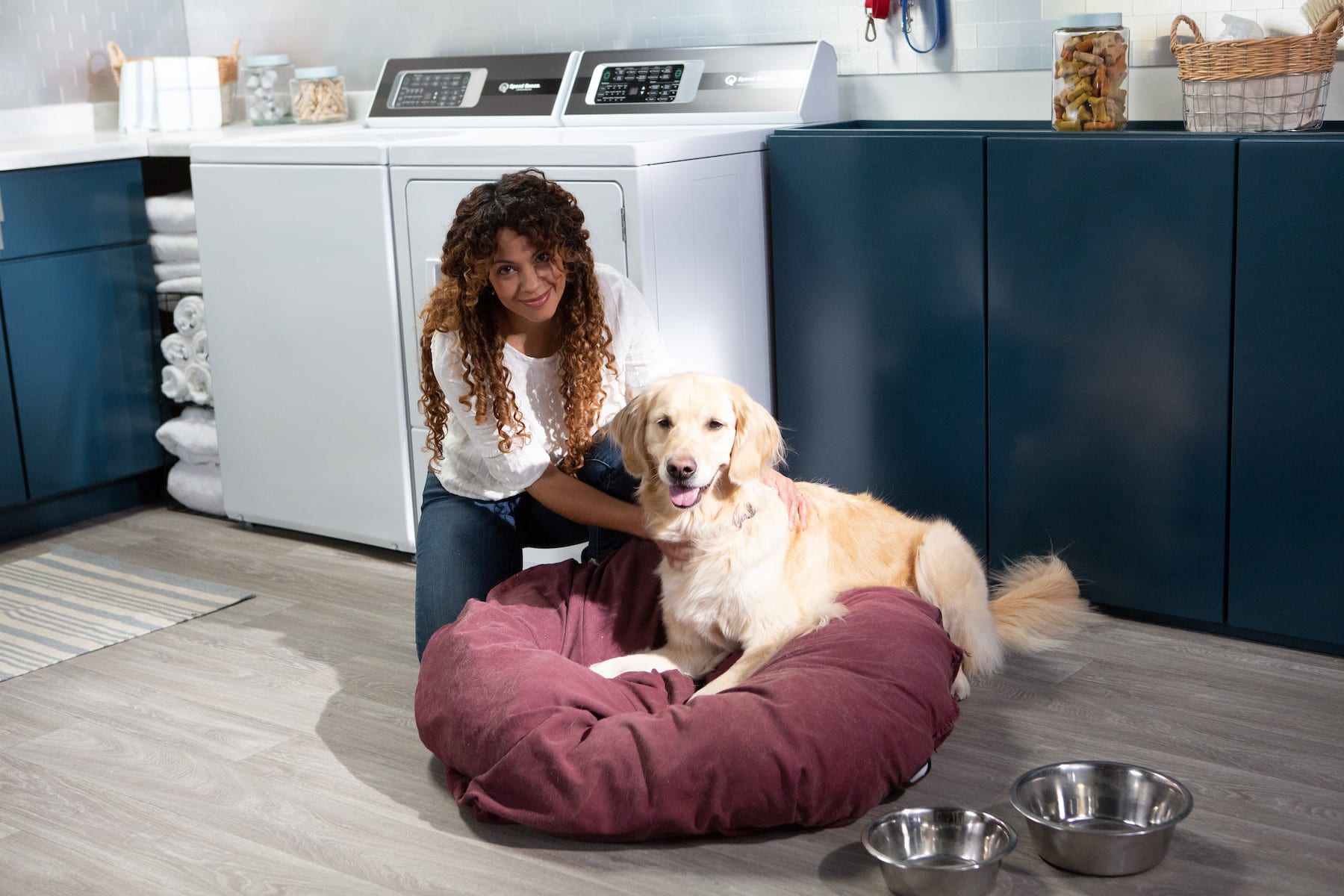
Image Credit: Speed Queen
Preventing Pet Hair from Clogging Your Laundry System
External Hair Filtration Systems
- Filtrol lint filter systems
- Mesh drain hose protectors
- DIY drain filter ideas
Washer Maintenance Tips
- Cleaning the rubber gasket
- Monthly washer cleaning tablets
- Preventing mold and odor buildup
Laundry Room Organization for Pet Owners
External Hair Filtration Systems
- Filtrol Filters: Trap pet hair before it enters drains and plumbing.
- Mesh Drain Protectors: Help catch fur and lint from washer discharge hoses.
- Dryer Lint Traps: Capture loose pet hair during drying cycles.
- Dryer Vent Cleaning: Prevents airflow blockages caused by lint and fur buildup.
- DIY Filter Solutions: Mesh screens and scrubber sponges can help reduce drain clogs.
Washer and Dryer Maintenance Tips
- Clean Washer Gaskets: Remove trapped fur and moisture weekly.
- Empty Dryer Lint Traps: Clean after every load for better airflow.
- Use Cleaning Tablets Monthly: Break down hair, oils, and detergent residue.
- Clean Dryer Vents Regularly: Helps improve drying performance and reduce odors.
- Leave Washer Doors Open: Prevents mold and mildew buildup.
- Inspect Filters and Hoses: Check regularly for trapped pet hair and debris.
Common Mistakes Pet Owners Make with Laundry
Using too much detergent
Washing excessive hair directly in the machine
Ignoring washer maintenance
Overusing fabric softeners
Mixing pet items with delicate clothing
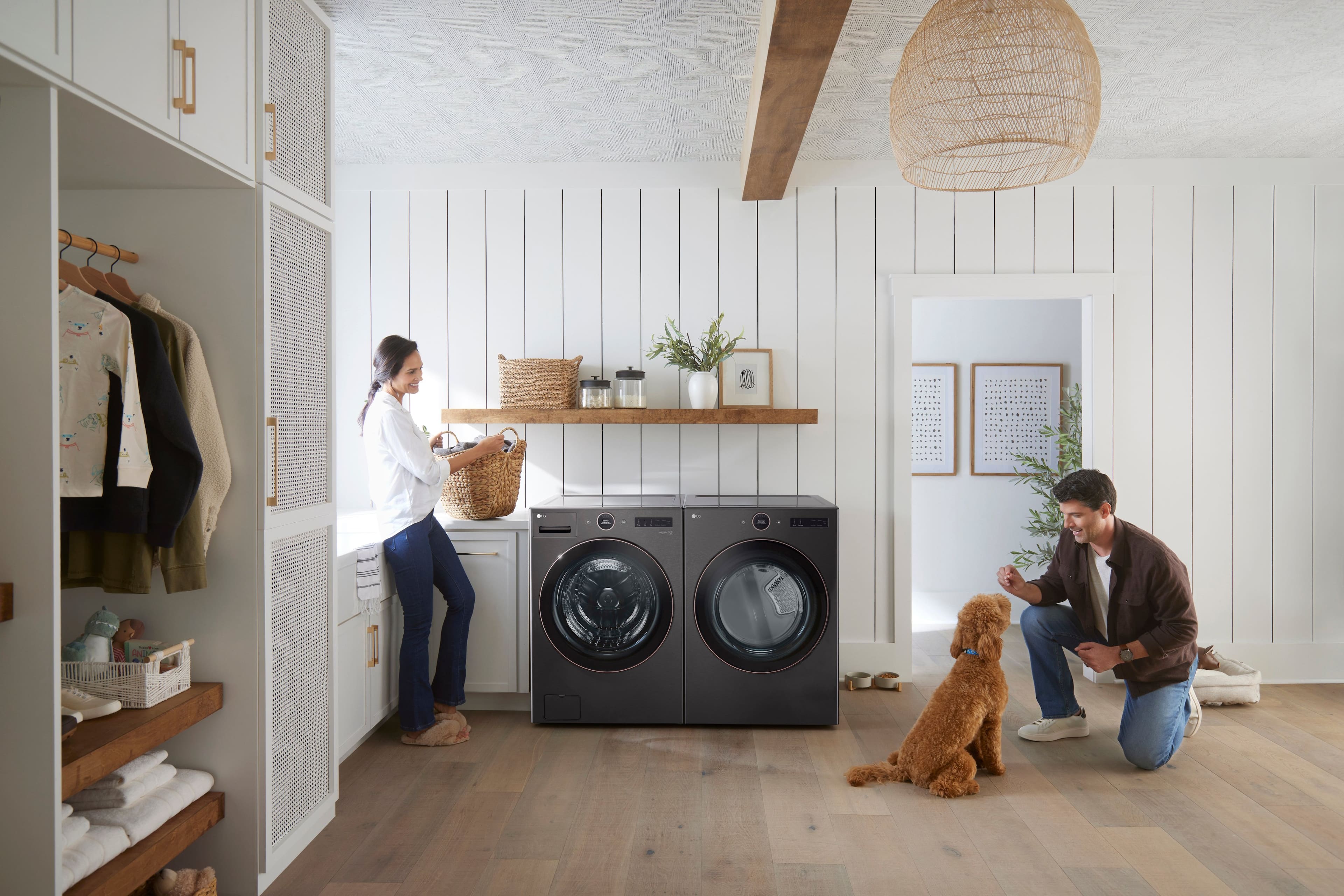
Image Credit: LG
FAQs
What is the best washing machine for pet hair?
Front-load washers are generally considered the best for pet hair removal because their tumbling action helps loosen fur from fabrics more effectively. Models like the Maytag Pet Pro, Samsung Pet Care, LG, and Speed Queen Pet Plus™ include specialized pet hair cycles, steam cleaning, and filtration systems designed for pet owners.
How do I stop pet hair from sticking to clothes?
To reduce pet hair buildup:
- Use white vinegar in the rinse cycle
- Avoid fabric softeners
- Shake out fabrics before washing
- Use dryer balls
- Clean lint traps regularly
- Wash pet items separately
Can vinegar remove pet odors from laundry?
Yes. White vinegar helps neutralize odors, reduce detergent residue, and minimize static electricity that attracts pet hair. Add about ½ cup during the rinse cycle for best results.
Are steam washers better for pet owners?
Yes. Steam penetrates deeply into fabrics to loosen odor-causing bacteria, dander, and residue. Steam cycles are especially effective for pet bedding, blankets, and heavily used fabrics.
How often should I clean my washing machine if I have pets?
Pet owners should clean their washing machine at least once or twice per month to prevent odor buildup, hair accumulation, and mold growth.
Why Buy Pet-Friendly Laundry Appliances from ShopAppliances.com
Managing pet hair and odors starts with choosing the right laundry appliances, detergents, and maintenance routine. Pet-friendly washers and dryers equipped with steam cleaning, sanitize cycles, pet hair filtration systems, and high-spin performance can dramatically improve how effectively fur, dander, and odors are removed from clothing, bedding, and pet accessories. Pairing these advanced appliances with enzyme-based detergents, proper laundry habits, and regular machine maintenance helps create a cleaner, fresher home for both pets and their owners.
At ShopAppliances.com, pet owners can find a wide selection of high-performance laundry appliances designed to handle the unique challenges of pet households. As an authorized dealer, ShopAppliances.com offers genuine products backed by full manufacturer warranties for added confidence and long-term protection. Customers also benefit from competitive pricing, expert appliance guidance, fast delivery options, and dedicated customer support to help choose the best washer and dryer solutions for their home.
Whether you’re dealing with stubborn pet hair, lingering odors, or heavily used pet bedding, upgrading to a pet-friendly laundry system can make laundry day easier, more effective, and far more hygienic. With the right appliances and care routine, maintaining fresh, fur-free fabrics becomes much more manageable for every pet-loving household.