Chest Freezers: Sizes, Defrost Types and Garage Use
A plain guide to chest freezers: how to size them, what garage ready means, and how four models compare on capacity and features.
- Chest freezers are easiest to choose once you match capacity to your storage habits.
- Manual defrost is normal and usually means simpler construction.
- Garage-ready models are the safer choice for temperature swings.
- Baskets, lighting, and convertible designs make daily use easier.
- Measure width first, then confirm the lid clearance and path to the final location.
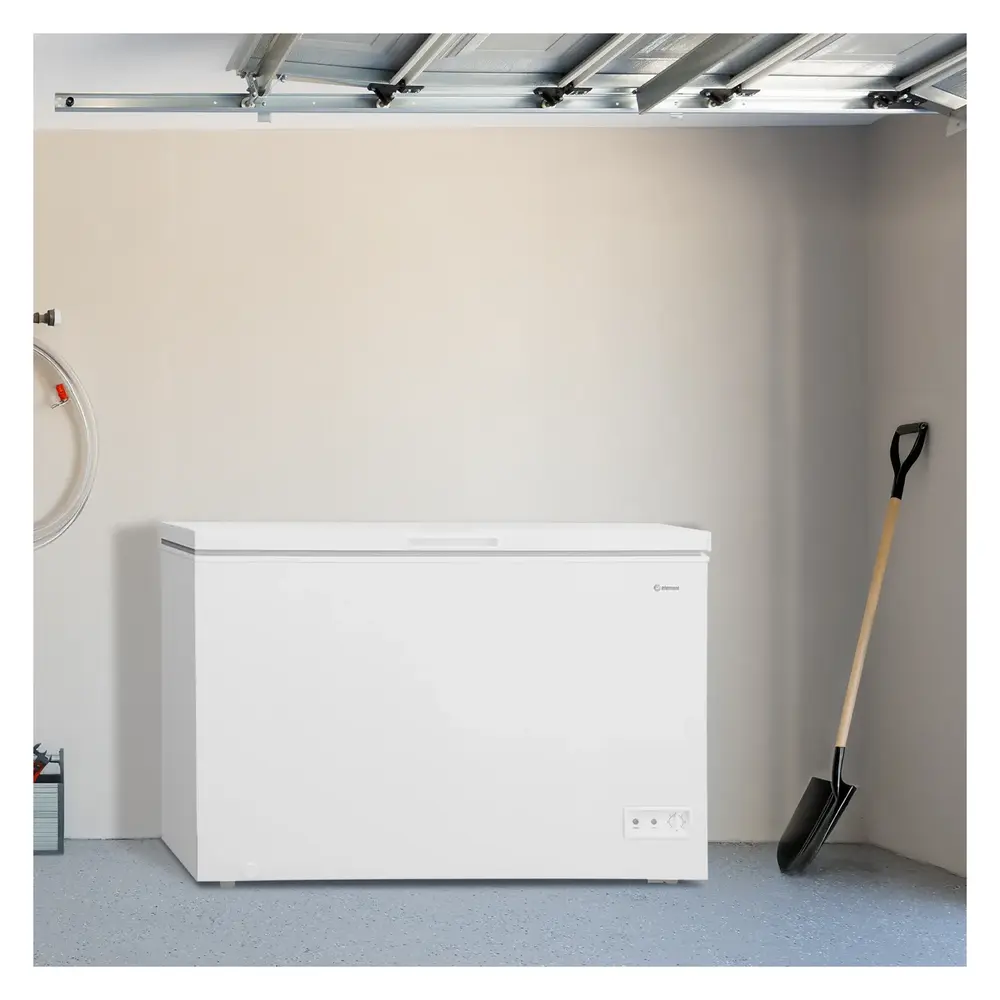
Chest freezer shopping gets easier once you narrow it down by size, defrost type, and where it will live. If you are comparing a chest freezer for a garage, basement, or overflow storage, this guide shows you what actually changes from one model to the next.
You will see how to match capacity to your household, when manual defrost is worth the upkeep, and which features make garage use less annoying in day-to-day life. We will also compare a few current models so you can see the differences at a glance.
To compare more models, browse the full Frigidaire lineup.
Chest Freezer Sizes: How Much Space You Actually Need
The right chest freezer size depends on what you plan to store, not just how much room you have on the floor. A compact 5 cu. ft. model is a good fit for frozen extras, while mid-size options around 10 cu. ft. can handle weekly bulk buys for a smaller household.
Once you get into the 14 cu. ft. range and up, the freezer starts to make more sense for families, hunters, gardeners, or anyone freezing meals in batches. The tradeoff is footprint, since chest freezers grow wider long before they grow taller.
Because chest freezers load from the top, capacity also affects usability. Wider models give you more bin organization and easier access to items at the bottom, but they need more clearance above the lid.
- Compact: good for backup storage and tight spaces
- Mid-size: works well for regular bulk groceries
- Large: better for households that freeze in batches
- Check width first, then height and depth
How to Choose a Chest Freezer, Step by Step
- 01
Start With Storage GoalsThink about what you will freeze most often: bulk meat, garden produce, meal prep, or overflow groceries. That tells you whether you need a compact backup freezer or a larger storage box with more room to organize.
- 02
Choose A Capacity RangeA smaller chest freezer is easier to place and cheaper to run, but it fills quickly. A mid-size or large model is better if you shop in bulk or want space for seasonal storage.
- 03
Decide On Defrost TypeMost chest freezers use manual defrost, so plan for periodic upkeep. If you want less maintenance and more convenience, compare whether a convertible design or another freezer style better fits your routine.
- 04
Check Garage CompatibilityIf the freezer will live outside the kitchen, choose a garage-ready model. That matters for spaces with hotter summers, colder winters, or more temperature swings than the house interior.
- 05
Measure The FootprintMeasure the width, depth, and height of the cabinet space, then add room for the lid to open comfortably. Also measure doorways and turns so the freezer can actually reach its final spot.
- 06
Look For Organization FeaturesBaskets, removable storage, and interior lighting make chest freezers much easier to use. These features help you keep small items accessible instead of losing them at the bottom.
- 07
Compare The Everyday DetailsA good chest freezer should fit your space, your storage habits, and your maintenance tolerance. Once those three things line up, the rest is usually about choosing the finish and feature set you prefer.
Our Picks by Capacity and Feature Level
Compact Pick: Element ECF50MD2EW Chest Freezer
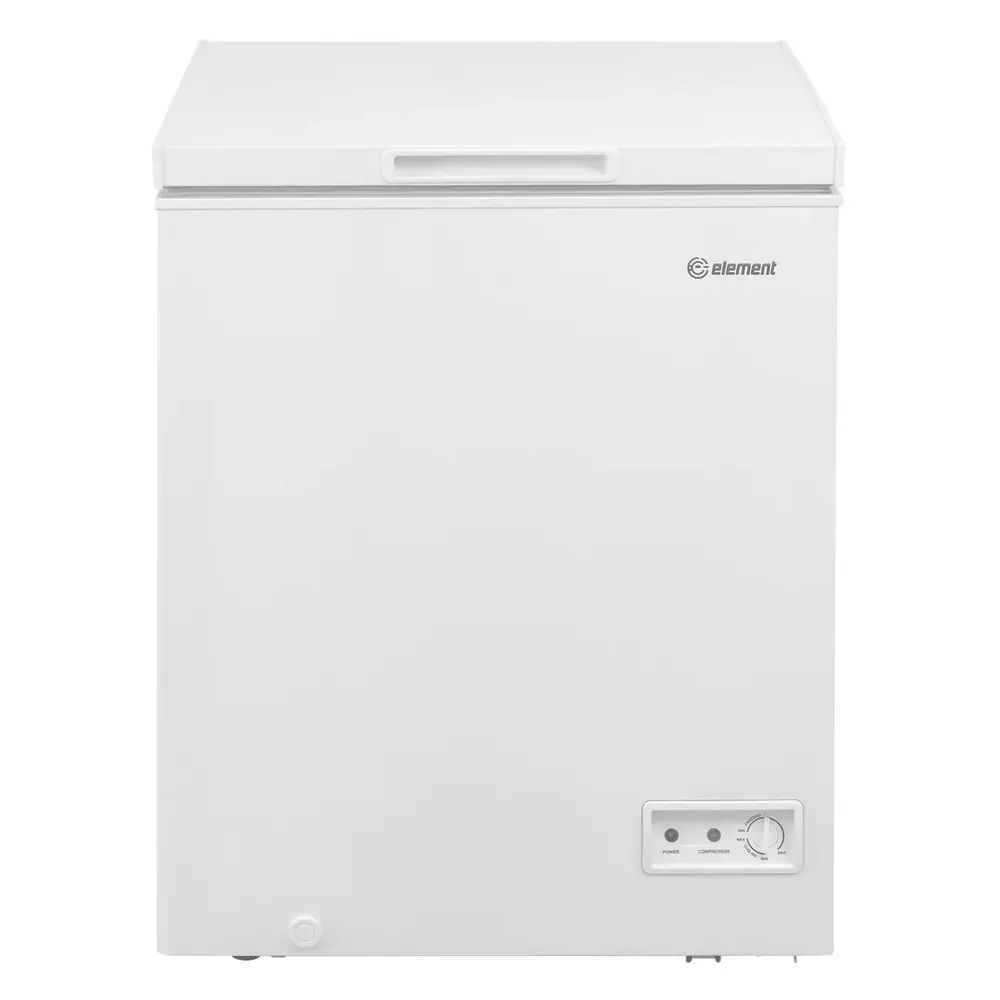
Element ECF50MD2EW 25 inch Chest Freezer with 5 cu. ft. Capacity, Garage Ready, Sliding Basket and Manual Defrost in White
The Element ECF50MD2EW is a compact 5 cu. ft. chest freezer with a 25-inch width that works well when floor space is tight. It is garage ready and uses manual defrost, with a sliding basket to keep smaller items easier to reach.
- 25-inch width for tighter spaces
- Garage-ready design
- Sliding basket
- Simple chest layout
- Manual defrost needs periodic upkeep
- 5 cu. ft. holds less than the mid-size models
Garage Pick: Element ECF10MD2EW Chest Freezer
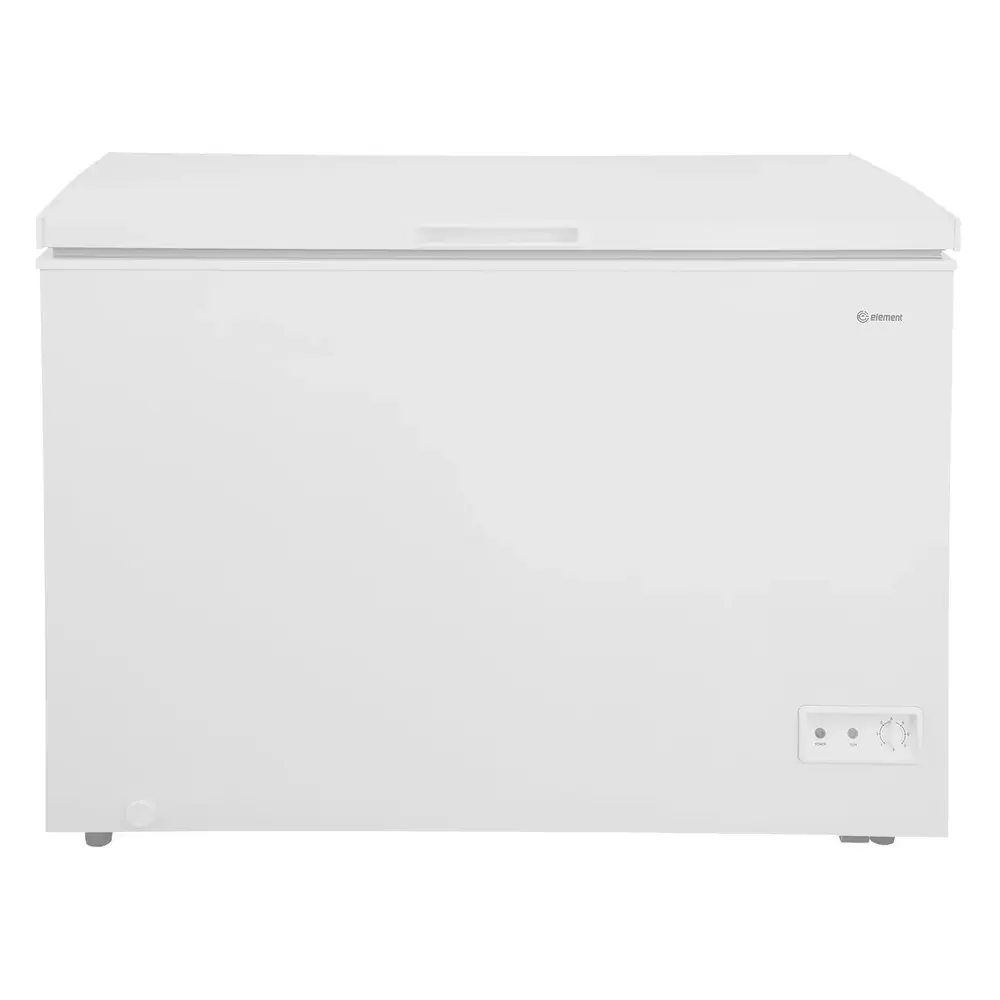
Element ECF10MD2EW 44 inch Chest Freezer with 10 cu. ft. Capacity, Garage Ready and Sliding Basket in White
The Element ECF10MD2EW steps up to a 10 cu. ft. cabinet for more usable frozen storage while keeping a straightforward chest-freezer layout. It is garage ready and includes a sliding basket for everyday organization.
- 10 cu. ft. capacity
- Garage-ready design
- Sliding basket
- Straightforward layout
- Manual defrost needs occasional maintenance
- Wider footprint than the 5 cu. ft. model
Convertible Pick: Frigidaire FFCS1062AW Chest Freezer
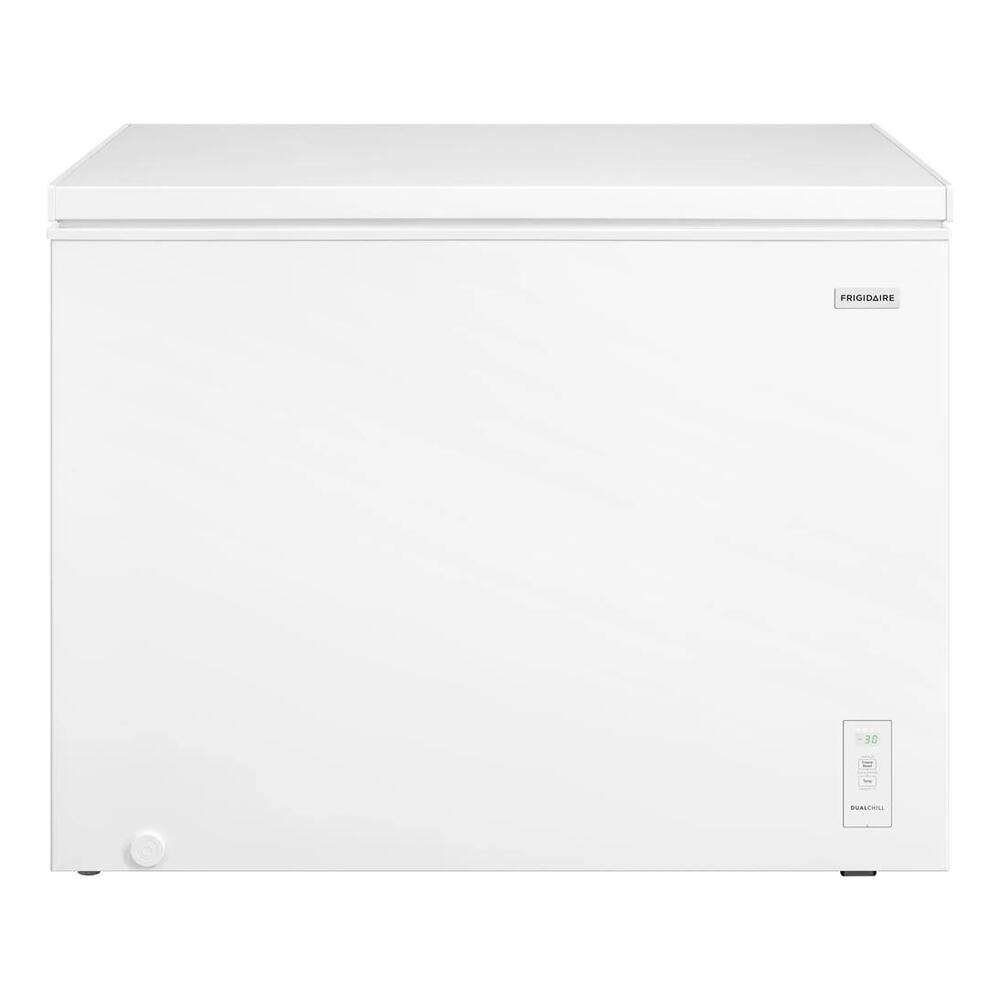
Frigidaire FFCS1062AW 42 inch Garage Ready Chest Freezer with 10.4 cu. ft. Capacity, Convertible to Fridge, LED Interior Light and Manual Defrost in White
The Frigidaire FFCS1062AW holds 10.4 cu. ft. and can convert from freezer to refrigerator. It is garage ready, with an LED interior light that helps when you dig for packages at the bottom.
- Converts to a refrigerator
- Garage-ready construction
- LED interior light
- 10.4 cu. ft. capacity
- Manual defrost needs periodic upkeep
- Needs planning for a built-in look
Family Size Pick: Frigidaire FFCL1562AW Chest Freezer
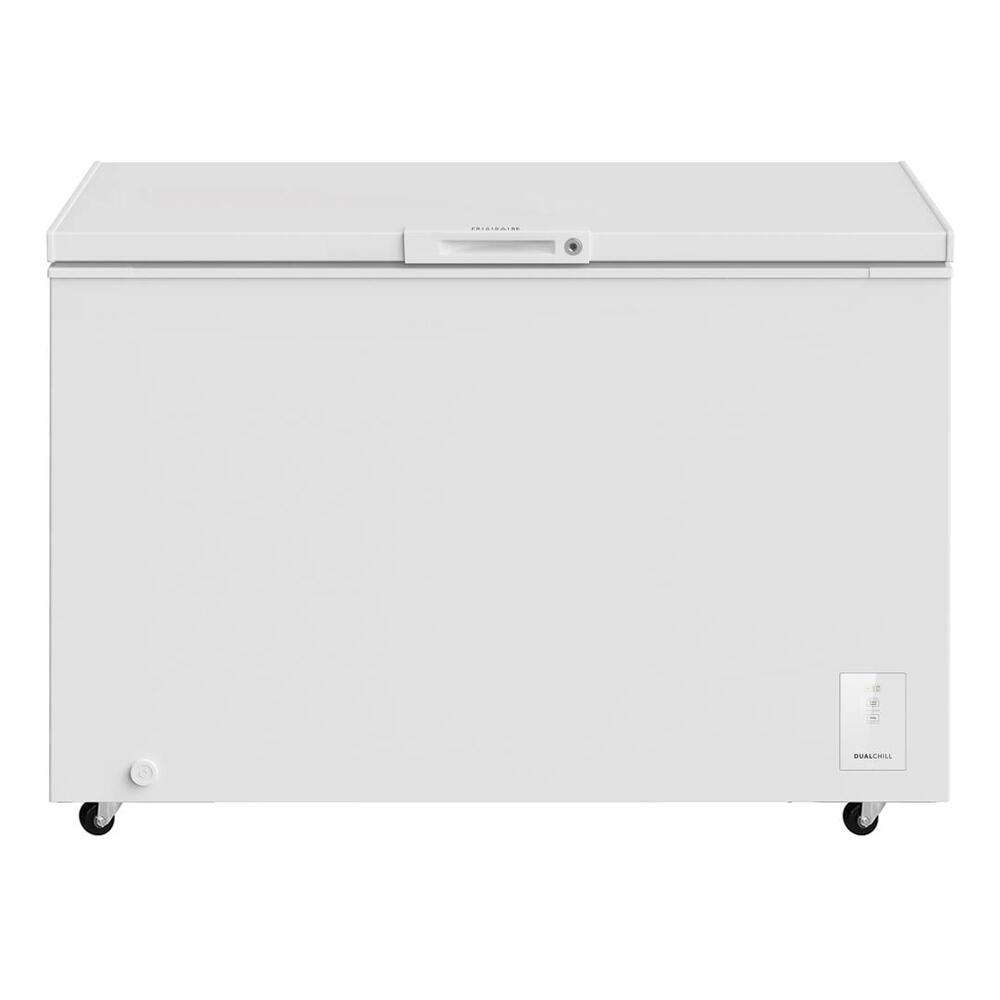
Frigidaire FFCL1562AW 56 inch Garage Ready Chest Freezer with 14.8 cu. ft. Capacity, Convertible to Fridge, LED Interior Light and Casters in White
The Frigidaire FFCL1562AW holds 14.8 cu. ft. for households that freeze in bulk. It is garage ready, converts to a refrigerator, has an LED interior light, and includes casters that help with placement.
- 14.8 cu. ft. capacity
- Garage-ready design
- Converts to a refrigerator
- Casters help with placement
- Widest footprint in this group
- Manual defrost needs periodic maintenance
Chest Freezer Comparison at a Glance
5 cu. ft. | 10 cu. ft. | 10.4 cu. ft. | 14.8 cu. ft. | |
| Model | ECF50MD2EW | ECF10MD2EW | FFCS1062AW | FFCL1562AW |
|---|---|---|---|---|
| Price | $200 | $349.99 | $443 | $693 |
| Style | Chest | Chest | Chest | Chest |
| Defrost Type | Manual Defrost | Manual Defrost | Manual Defrost | Manual Defrost |
| Garage Ready |  | | | |
| Convertible To Fridge | Freezer only | Freezer only | | |
| Interior Light | Not included | Not included | | |
| Sliding/Removable Basket | | | Not included | Not included |
| Width | 25" | 43 9/10" | 41 7/8" | 55 3/4" |
| View | View | View | View |
Chest Freezer Pros and Cons
- Chest freezers are efficient, simple, and easy to load with bulk food.
- Manual defrost models are common and keep the cabinet design straightforward.
- Garage-ready versions give you more placement flexibility.
- Wide, top-opening storage is useful for boxes, bins, and odd-shaped items.
- Items can get buried at the bottom if you do not use baskets or bins.
- Manual defrost requires occasional cleanup.
- Large models need more floor space than many shoppers expect.
- Top-opening access is less convenient than a drawer or upright freezer for daily grab-and-go use.
Manual Defrost vs. Frost-Free in a Chest Freezer
Most chest freezers in this category use manual defrost, which means you will eventually need to empty and thaw the cabinet to remove frost buildup. That is not a flaw; it is one reason chest freezers are so efficient and simple inside.
Manual defrost is a solid choice if you want straightforward storage and do not mind planning a cleaning session once in a while. It also keeps the interior design basic, which can be helpful when you are stacking food in bins and baskets.
If you want less maintenance, look for a freezer with frost-free or automatic defrost, but that is much less common in true chest freezers. For most shoppers, the bigger decision is whether the capacity and garage-ready construction are worth the occasional defrost cycle.
- Manual defrost usually means simpler construction
- Frost buildup is normal in chest freezers
- Plan to defrost when ice starts reducing usable space
- Store food in baskets or bins to make cleanup easier
Garage Use: What Makes a Chest Freezer Better for Tougher Spaces
A garage-ready chest freezer is built to cope better with temperature swings than a basic indoor-only unit. That matters if the freezer will sit in a space that is hotter in summer or colder in winter than your kitchen.
Look for features like garage ready, a convertible temperature setup, and a lid that seals well. Models with casters or lighter footprints are easier to reposition if you rearrange the garage or need to clean behind the unit.
If the freezer is going in a finished basement or utility room, garage-ready construction is still useful. It gives you more placement flexibility and reduces the odds that seasonal temperature changes will interfere with storage use.
- Garage-ready models are built for wider temperature changes
- Convertible freezer/refrigerator designs add flexibility
- Casters help when you need to move the unit
- Measure the path to the final location, not just the spot
Features That Make Chest Freezers Easier to Live with
The most useful chest freezer features are the ones that reduce digging and make storage more organized. Sliding baskets, removable baskets, interior lighting, and a convertible design all improve day-to-day use without making the appliance more complicated than it needs to be.
Lid style matters too. A lift lid is the standard on chest models, but a lid that stays open while you load food is much easier to work with than one that fights you.
Also pay attention to energy use and electrical requirements. A chest freezer usually runs on a standard 115-volt or 120-volt outlet, but the overall draw and placement still matter if you are sharing a garage circuit with other appliances.
- Baskets help separate smaller items
- Interior light is useful for deeper cabinets
- Convertible models add flexibility over time
- Simple controls are often easier to live with than extra electronics
Shop chest freezers by size, garage-ready design, and storage features to find the layout that fits your home.
Shop FreezersFrequently Asked Questions
What size chest freezer should I buy for a family?
For many households, a chest freezer around 10 to 15 cu. ft. is the sweet spot. It gives you room for bulk groceries, meal prep, and backup storage without taking over the garage or utility room. Bigger families or people who freeze large seasonal harvests may want more capacity.
Is manual defrost bad in a chest freezer?
No. Manual defrost is common in chest freezers and is part of why they are simple and efficient. The tradeoff is that you will need to defrost it occasionally when frost begins to reduce usable space.
Can I put a chest freezer in the garage?
Yes, if you choose a garage-ready model. Garage-ready designs are meant to handle more temperature fluctuation than a standard indoor freezer, which makes them a better fit for unfinished or semi-conditioned spaces.
Are convertible chest freezers worth it?
They can be, especially if your storage needs change over time. A convertible freezer/refrigerator gives you more flexibility for seasonal food storage, overstock drinks, or temporary refrigeration needs. If you want a simple long-term freezer only, a standard model may be all you need.
What features matter most in a chest freezer?
Capacity, defrost type, and where you plan to place it matter most. After that, look at basket organization, interior lighting, garage-ready construction, and whether the lid and footprint fit your space cleanly.