
Dishwasher Quietness Guide: How to Choose a Truly Quiet Dishwasher

Dishwasher noise is one of those things you do not think about until it becomes a daily annoyance. If you have an open kitchen, live in an apartment, or like to run your dishwasher at night, sound levels matter more than you might expect.
A “quiet” dishwasher does not mean silent. It means the sound blends into the background without interrupting your routine. The key is understanding what noise levels actually feel like in real life and choosing a model that fits your space.
As a quick benchmark, anything above 50 dBA is noticeable, while models under 45 dBA are generally considered quiet enough for most homes.
Understanding Dishwasher Noise (dBA Explained)
Dishwasher noise is measured in decibels, or dBA. This scale is not linear, which means small number changes do not always translate to noticeable differences.
For example, a 2 or 3 dBA difference is very subtle. Most people only notice a clear change when the difference reaches around 5 to 10 dBA.
To put things in perspective:
- Normal conversation is around 60 dBA
- A quiet library is around 40 dBA
Noise Level Breakdown (Shop by Quietness)
-
60+ dBA → Loud and best avoided unless budget is your only concern
Common in older or basic models. Best for utility spaces or if noise is not a concern.
-
50 to 59 dBA → Noticeable but manageable
You will hear it running, but it is acceptable for most households with separate kitchens.
-
45 to 49 dBA → Quiet (Best for most homes)
A solid balance between performance, price, and low noise. Ideal for everyday use.
-
Below 44 dBA → Ultra quiet
Nearly silent operation. Best for noise sensitive homes or nighttime use.

What Makes a Dishwasher Quiet
Not all quiet dishwashers are built the same. Noise levels depend on several design factors beyond just the dBA rating.
Insulation
High quality dishwashers use multiple layers of insulation, often called sound blankets, to absorb noise. Stainless steel tubs also help dampen sound better than plastic.
Motor type
Inverter motors tend to be quieter and more efficient than traditional motors because they adjust speed instead of running at full power all the time.
Build quality and vibration control
A well built dishwasher reduces vibration, which is a major source of noise. Heavier, more solid units tend to sound quieter.
Wash system design
Advanced spray arms and filtration systems can reduce harsh water sounds while maintaining cleaning performance.
How Quiet Do You Actually Need?
The right noise level depends on your living situation.
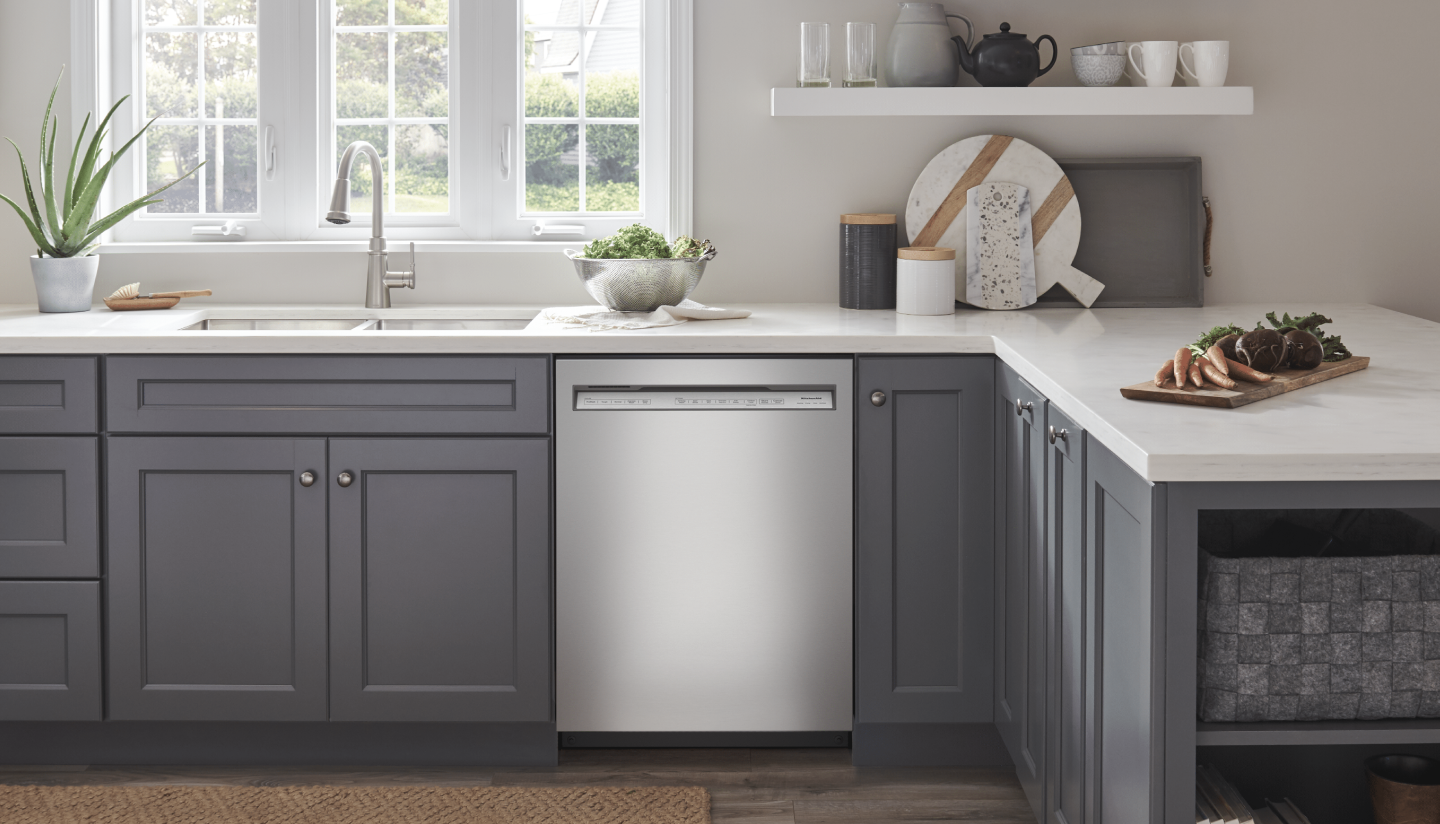
- If you live in a small apartment or have an open concept kitchen, a quieter model in the 40 to 44 dBA range makes a noticeable difference.
- If your kitchen is separated from your living space, a 45 to 48 dBA dishwasher is usually more than sufficient.
- If you run your dishwasher at night, quieter models help avoid disturbing sleep, especially in smaller homes.
Ultimately, your sensitivity to noise matters just as much as the number itself.
Quietest Dishwasher Shopping List
Here are some of the best quiet dishwashers by noise level and value, so you can quickly find the right fit for your kitchen.
Best Ultra Quiet (Under 44 dBA)
Premium models designed for near silent operation. Ideal for open kitchens and noise sensitive households.

Bosch 500 Series SHP65DM5N
44 dBA
Reliable, quiet performance with excellent drying and build quality.


Best Value Quiet (45 to 49 dBA)
The sweet spot for most buyers. Quiet enough for daily use without the premium price.


Quiet but Budget Friendly (50 to 59 dBA)
Affordable models that keep noise at a reasonable level without breaking the budget.


Common Mistakes (and How to Avoid Them)
Focusing only on dBA
Noise ratings matter, but build quality and design are just as important. Two dishwashers with the same rating can sound different.
Assuming all quiet models feel the same
A 44 dBA dishwasher may feel very similar to a 42 dBA one. Do not overpay for small differences.
Ignoring installation quality
Loose mounting or poor leveling can make even a quiet dishwasher sound louder than expected.
Overlooking drying performance
Some ultra quiet models compromise on drying. Make sure performance matches your expectations.
Paying for ultra quiet when you do not need it
If your kitchen is closed off, you may not benefit much from going below 44 dBA.
FAQs
Is a 45 dBA dishwasher quiet enough?
Yes, for most households, 45 dBA is considered quiet. You will hear a soft hum, but it will not interrupt conversations or TV watching. It is a good balance between performance and price.
Can you hear a 40 dBA dishwasher?
Barely. At 40 dBA or lower, the sound is extremely subtle. In many cases, you may not notice it running unless you are standing nearby. Some models even use indicator lights because they are so quiet.
What is considered a “quiet” dishwasher?
Generally:
- 50 dBA and above: noticeable
- 45 to 49 dBA: quiet
- 40 to 44 dBA: very quiet
- Below 40 dBA: ultra-quiet
Most modern “quiet” dishwashers fall in the 44 to 48 dBA range.
Why is my “quiet” dishwasher still noisy?
Several factors can make a quiet-rated dishwasher seem loud:
- Poor installation or loose mounting
- Hard items like utensils rattling inside
- Cabinet vibration
- Echo in open or empty kitchens
- Normal sounds like water spraying or draining
Do stainless steel tubs make dishwashers quieter?
Yes. Stainless steel tubs absorb sound better than plastic and help reduce noise. They also improve drying performance, which is an added benefit.
Are quieter dishwashers worth the extra cost?
It depends on your space:
- Worth it for open kitchens, small apartments, or frequent nighttime use
- Less critical if your kitchen is closed off or noise does not bother you
Many people find the upgrade to around 44 dBA worth it, but going below 40 dBA often has diminishing returns.
Is there a big difference between 42 dBA and 44 dBA?
Not really. A 2 dBA difference is barely noticeable to most people. You typically need a 5 to 10 dBA difference to clearly hear a change.
Why do some dishwashers have lights instead of sounds?
Ultra-quiet dishwashers can be so silent that users cannot tell if they are running. Floor indicator lights or display timers solve this problem.
Do all brands measure dBA the same way?
Not always. While measurements follow general standards, testing conditions can vary slightly. This means real-world noise may differ a bit from the listed rating.
Does installation affect noise levels?
Yes, a lot. Even a quiet dishwasher can sound louder if:
- It is not level
- It is loosely secured
- Cabinets amplify vibration
Proper installation is key to achieving advertised quietness.
Are budget dishwashers always loud?
Not necessarily. Many affordable models now operate around 48 to 52 dBA, which is acceptable for most homes. They may not be silent, but they are far from disruptive.
What sounds are normal in a dishwasher?
Even quiet models make some noise:
- Water spraying
- Pump or motor humming
- Draining sounds
- Occasional clicking
These are normal and not a sign of a problem.
Is lower dBA always better?
Not always. Extremely quiet models often cost more, and the difference may not matter depending on your home. It is better to choose a balanced option based on your needs.
Can I make my current dishwasher quieter?
Sometimes. You can:
- Tighten mounting brackets
- Add insulation around cabinets
- Ensure proper leveling
- Avoid overloading dishes that can rattle
These small fixes can reduce perceived noise.
Do dishwashers get louder over time?
They can. Wear and tear, loose parts, or buildup in components can increase noise. Regular cleaning and maintenance help keep noise levels consistent.
Quick Buying Checklist
Before you hit “buy,” take a minute to make sure you are choosing the right dishwasher for your space and lifestyle:
-
Target dBA range
Decide how quiet you actually need. Open kitchen or night use? Aim lower. -
Your budget
Ultra quiet models cost more, but you do not always need the lowest dBA to get a great experience. -
Kitchen layout
Open concept kitchens benefit from quieter models, while closed kitchens give you more flexibility. -
Must-have features
Think beyond noise. Do you want a third rack, better drying, or smart controls?
A quick check here can save you from overpaying or ending up with a dishwasher that does not fit your daily routine.
Final Thoughts
Choosing a quiet dishwasher is not just about picking the lowest dBA number. It is about finding the right balance between noise level, performance, and price for your specific space.
For most people, a model in the 44 to 48 dBA range offers the best value. If you have an open kitchen or run your dishwasher at night, investing in a quieter model can make a noticeable difference in your daily comfort.
The key is to focus on what actually matters in your home rather than chasing specs that you may not even notice.
If you are ready to upgrade, start by narrowing down your ideal noise range and comparing a few top rated models within your budget. Explore the latest quiet dishwashers now at ShopAppliances.com.