
Gas vs Induction vs Dual Fuel: Pros, Cons, Costs & Which Is Best?

Choosing a new range or cooktop can significantly impact how you cook every day. The three most common options today are gas, induction, and dual fuel ranges, each with its own advantages in performance, efficiency, and installation.
Some homeowners love the traditional flame control of gas, others prefer the speed and efficiency of induction, while serious home cooks often choose dual fuel ranges for professional-level results.
In this guide, we’ll compare all three cooking technologies so you can decide which one fits your kitchen best.
Gas vs Induction vs Dual Fuel at a Glance
| Feature | Gas | Induction | Dual Fuel |
|---|---|---|---|
| Heat Source | Gas flame | Electromagnetic energy | Gas cooktop + electric oven |
| Heating Speed | Fast | Very fast | Fast |
| Energy Efficiency | Medium | Very high | Medium–high |
| Cookware Compatibility | All cookware | Magnetic cookware only | Same as gas |
| Cleaning | Moderate | Very easy | Moderate |
| Installation | Gas line required | 240V electrical circuit | Gas + 240V electrical |
| Price Range | $500–$3,000 | $1,000–$4,000 | $2,500–$10,000 |
What Is a Gas Range?
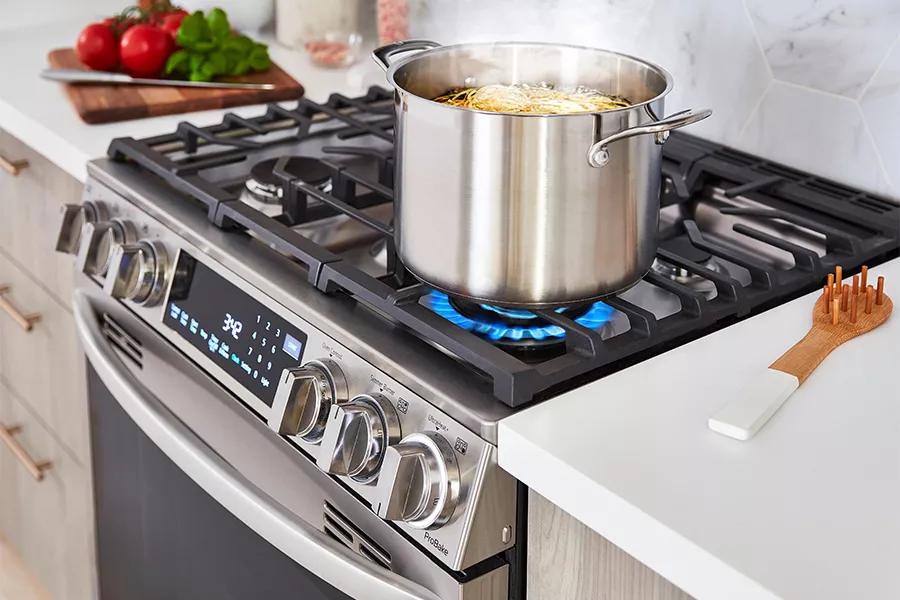
Gas ranges use natural gas or propane burners to produce an open flame that heats cookware.
Because the flame is visible and responds instantly to adjustments, gas cooking has been the standard in professional kitchens for decades.
Key Characteristics
- Instant flame control
- Works with nearly all cookware
- Reliable even during power outages (depending on model)
- Familiar cooking experience
Best For
- Home cooks who want traditional flame cooking
- Kitchens that already have gas lines installed
- Buyers looking for lower upfront costs
What Is an Induction Cooktop?
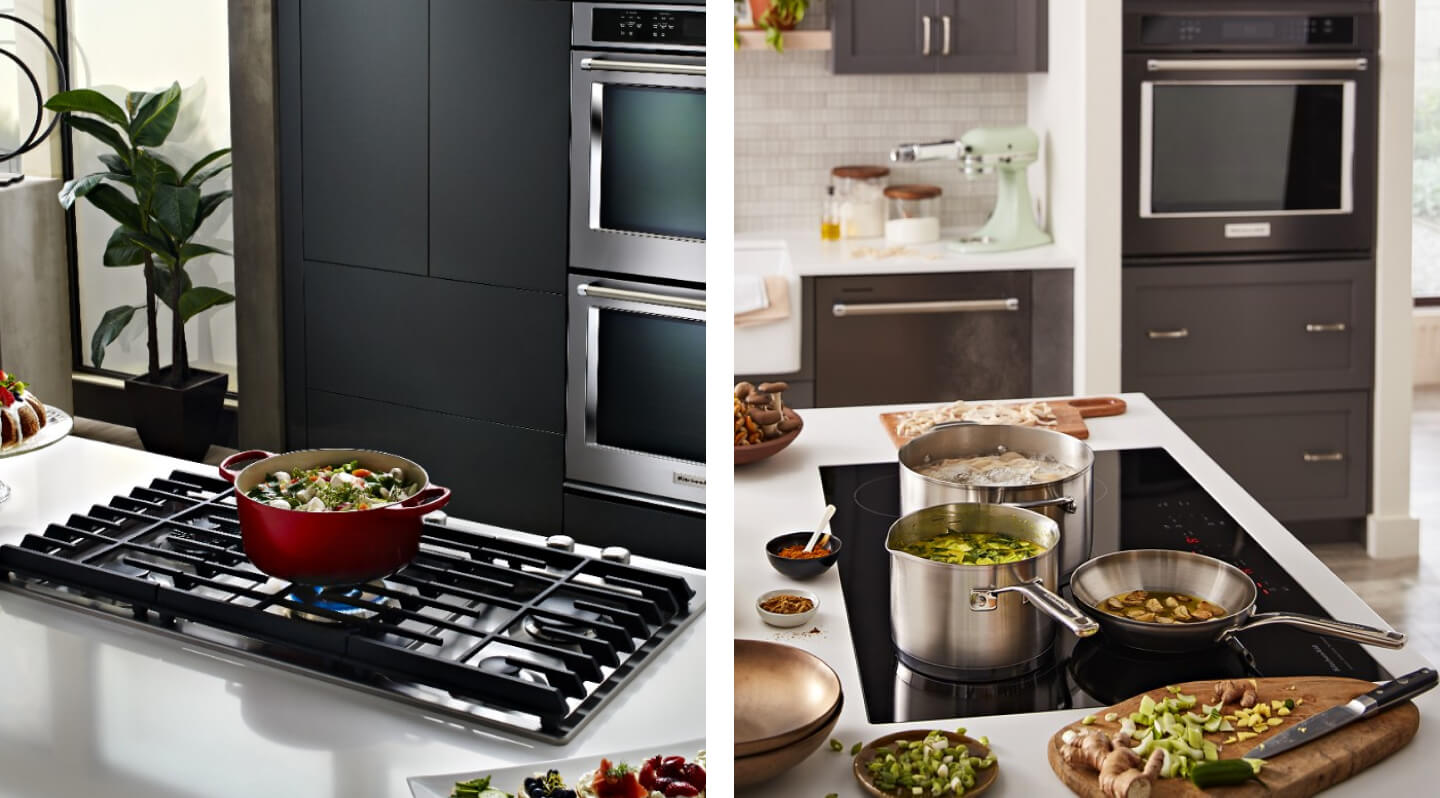
Induction cooktops heat cookware using electromagnetic energy rather than an open flame.
The cooktop creates a magnetic field that directly heats compatible cookware, making induction one of the most efficient cooking technologies available.
Key Characteristics
- Extremely fast heating
- Precise digital temperature control
- Smooth glass surface for easy cleaning
- High energy efficiency
Best For
- Modern kitchens
- Energy-efficient homes
- Households prioritizing safety and easy cleaning

What Is a Dual Fuel Range?
Dual fuel ranges combine two cooking technologies in one appliance:
- Gas cooktop for stovetop cooking
- Electric oven for baking and roasting
This combination is popular among serious home cooks because it delivers both precision cooking and even baking performance.
Key Characteristics
- Gas burners for responsive stovetop cooking
- Electric oven for consistent baking temperatures
- Often available in professional-style ranges
Best For
Dual fuel ranges are ideal for:
- Enthusiastic home cooks
- Bakers who need precise oven temperatures
- High-end kitchen renovations

Pros and Cons of Each Cooking Technology
| Type | Pros | Cons |
|---|---|---|
| Gas | Instant heat adjustments Compatible with all cookware Lower upfront cost Familiar cooking experience |
Lower energy efficiency Harder to clean Requires gas line Indoor air quality concerns |
| Induction | Extremely energy efficient Very fast heating Safer surface Easy to clean Precise power levels |
Requires magnetic cookware Higher appliance cost Requires dedicated electrical circuit |
| Dual Fuel | Gas stovetop + electric oven performance Excellent cooking flexibility Professional-level results |
Most expensive option Requires gas and electric connections Installation can be complex |
Cookware Compatibility
Gas Cooktops
- Stainless steel
- Cast iron
- Aluminum
- Copper
- Nonstick
Induction Cooktops
Requires magnetic cookware.
- Cast iron
- Magnetic stainless steel
Tip: If a magnet sticks to the pan, it works on induction.
Dual Fuel
Same cookware compatibility as gas ranges.
Installation Requirements
Gas Range Installation
- Natural gas or propane line
- Ventilation hood
- Electrical outlet for ignition
Typical cost: $200–$800
Induction Cooktop Installation
- Dedicated 240V circuit
- Breaker capacity
- Flat countertop installation
Typical cost: $300–$1,500
Dual Fuel Installation
- Gas line
- 240V outlet
- Professional installation recommended
Typical cost: $500–$2,000
| Type | Efficiency |
|---|---|
| Gas | ~40–55% |
| Induction | ~85–90% |
| Dual Fuel | ~60–70% |
Which Cooking Technology Is Best?
Choose Gas if
- You prefer cooking with a flame
- You already have a gas line
- You want lower upfront cost
Choose Induction if
- You want maximum efficiency
- You prefer easy cleaning
- You want faster cooking
Choose Dual Fuel if
- You bake frequently
- You want premium cooking performance
- Budget is less of a concern
Frequently Asked Questions
Is induction better than gas?
Induction is more energy efficient and faster, but gas offers visible flame control and broader cookware compatibility.
Can induction cooktops scratch easily?
The glass surface can scratch if heavy cookware is dragged, but normal use rarely causes damage.
Do chefs prefer gas or induction?
Traditionally gas, but many modern professional kitchens now use induction due to efficiency and precision.
Does induction work during a power outage?
No. Induction requires electricity to operate.
Is dual fuel worth the extra cost?
For serious cooks and bakers, dual fuel ranges provide the best combination of stovetop control and baking performance.
Conclusion
Gas, induction, and dual fuel ranges each offer unique advantages depending on your kitchen and cooking preferences.
- Gas ranges provide classic flame control and wide cookware compatibility.
- Induction cooktops deliver exceptional speed, efficiency, and safety.
- Dual fuel ranges combine gas stovetop performance with electric oven precision.
Understanding the differences in performance, installation, and operating costs will help you choose the best option for your kitchen.
Further Reading
- The 7 Best Professional Ranges for 2026 (That Aren’t Wolf or Viking)
- The Best Gas Ranges of 2026: Cook Like a Pro with These Top Picks
- Kitchen 2026: How Ranges with Air Fry Changed Weeknight Cooking
- Gas vs. Induction Ranges in 2026: We Tested Blomberg, Bosch, GE & Samsung
- The Best Ranges of 2026: Finding the Perfect Fit for Your Kitchen