
When to Change Your Refrigerator Water Filter for Cleaner, Safer Drinking Water

Clean drinking water starts with consistent filtration. Your refrigerator water filter helps reduce unwanted tastes, odors, and certain contaminants before water reaches your glass or ice maker. But every filter has a limited lifespan. Over time, the media inside the cartridge can become clogged or saturated, which may reduce water flow, affect taste, and weaken filtration performance.
For most households, the best rule is simple: replace your refrigerator water filter every six months, or sooner if the water flow, taste, or ice quality changes.
Why Refrigerator Water Filters Matter
Refrigerator water filters improve both water quality and everyday convenience. A high quality filter can help reduce contaminants such as chlorine, lead, pesticides, pharmaceuticals, and certain emerging chemicals while also improving the taste and smell of drinking water and ice.
Beyond essential safety, filtration significantly improves the sensory experience of your water. Filters help reduce chlorine and organic compounds that often cause a swampy taste or musty odor, resulting in cleaner tasting water for coffee, cooking, ice, and daily hydration.
The Power of Carbon Block Technology
Many modern refrigerator filters use carbon block technology, which allows water to pass through dense activated carbon media for more consistent contaminant reduction.
- Uniform Pore Structure: It creates a consistent path for water, helping prevent channeling where water might bypass the filtration media.
- Increased Contact Time: The compact nature of the block ensures water spends more time in contact with the carbon.
- Superior Efficiency: This technology is engineered to meet strict safety standards and can help trap microscopic particles and certain contaminants.
Effective Defense Against PFAS
Carbon block refrigerator filters can also help reduce PFAS, often called forever chemicals. Research from the University of Akron found that a Samsung refrigerator filter maintained PFAS concentrations below federal regulatory thresholds throughout its recommended 300 gallon lifespan.

How Often Should You Change Your Refrigerator Water Filter?
For the best water quality and appliance performance, you should replace your refrigerator water filter every six months. However, this is a baseline. If you notice a decrease in water flow, cloudy ice cubes, or the return of a chlorine taste, you should change the filter immediately.
Waiting until water tastes bad is not the best approach. By that point, the filter may already be clogged, saturated, or past its effective lifespan.
The Six Month Replacement Rule
Following the six month replacement schedule is essential for several reasons.
- Prevents Bacteria Growth: Because filter cartridges remain wet throughout their life, they can become a breeding ground for bacteria and microbes if left in place too long.
- Maintains Optimal Flow: Sediment and particulates can clog the microscopic pores of the carbon block, causing slow dispenser flow or sputtering.
- Protects the Appliance: A clogged filter forces the refrigerator water system to work harder, which can strain the internal water valve and ice maker.
- Ensures Filtration Performance: Activated carbon has a limited surface area for adsorption. Once that surface is saturated, filtration performance can decline.
Why Gallon Capacity Also Matters
While the calendar is a helpful guide, your actual water usage is just as important. Most standard refrigerator filters are rated for a specific volume, typically between 200 and 400 gallons. Many popular Samsung and Whirlpool models are rated for 300 gallons.
- Standard Usage: For a typical household, 300 gallons of filtration often aligns with the six month replacement rule.
- Heavy Usage: In busy homes with large families or frequent dispenser use, you may reach the gallon limit in as little as 3 to 4 months.
- Low Usage: Even if you rarely use the dispenser, replace the filter at the six month mark for hygiene reasons.
Replace your filter based on whichever comes first: the six month mark or the rated gallon capacity.
Signs It Is Time to Replace Your Refrigerator Water Filter
Even with a regular six month replacement schedule, your refrigerator may show signs that the filter needs to be changed sooner. Watch for changes in water flow, taste, odor, ice quality, or the filter indicator light.
Water Flow Is Slower Than Usual
One of the most common signs of a spent filter is a noticeable decrease in water pressure at the dispenser. Over time, the microscopic pores in the carbon block or filter media become clogged with sediment, rust, minerals, and trapped contaminants. If it takes longer to fill a glass or if the dispenser sputters, the filter may need replacement.
Water Has a Chemical, Plastic, or Metallic Taste
If your water develops a chemical, metallic, plastic, stale, or musty taste, the filter may be overdue for replacement. Taste issues can also come from stagnant water in the refrigerator line or odors inside the refrigerator or freezer. Replacing the filter and flushing the system usually helps restore clean taste.
Ice Tastes or Smells Bad
Ice can absorb odors from the freezer, especially when food is not sealed properly or ice sits too long. A used filter can also allow unwanted tastes and odors to reach the ice maker. Replace the filter, discard old ice, and clean the ice bin if ice starts to taste or smell off.
The Filter Indicator Light Is On
Modern refrigerators often include indicator lights that remind you to change your filter. Most of these lights are based on timers or estimated gallon usage rather than real time water quality sensors. If the indicator is on, replace the filter. If you already notice poor flow or taste changes, replace it even before the light appears.
It Has Been More Than Six Months
Even if your water still tastes fine and the flow seems steady, the calendar alone is a valid reason for replacement. Because filter cartridges stay wet throughout use, they can eventually become a breeding ground for bacteria or microbial growth if left in place too long. Sticking to a six month schedule is the simplest way to support clean taste and proper refrigerator water system performance.

Can Refrigerator Water Filters Remove PFAS?
PFAS are persistent chemicals that can contaminate drinking water. Some refrigerator filters, especially those using carbon block technology, can help reduce PFAS when used within their recommended lifespan.
Why Carbon Block Filters Are Effective
Unlike standard granular filters, a carbon block is made from activated carbon that has been finely ground into tiny particles and compressed into a solid, dense block. This design provides several practical advantages for home water quality.
- Increased Contact Time: Water moves through static pores, maximizing time spent in contact with the filtration media.
- Reduced Channeling: The uniform pore structure forces water to pass directly through the media for more thorough filtration.
- Efficient Adsorption: The dense structure creates a large surface area that can help trap and hold microscopic contaminants.
What Research Shows About PFAS Reduction

Image Credit: Shop Appliances
Recent research conducted at the University of Akron provided confidence in the performance of carbon block refrigerator filters. The study evaluated a Samsung Ice and Water Refrigerator Filter and found that it effectively reduced major PFAS compounds to levels below federal regulatory thresholds throughout its recommended 300 gallon lifespan.
Specifically, the study confirmed that this carbon block technology was highly successful in mitigating several concerning PFAS compounds.
- PFOA Perfluorooctanoic acid
- PFOS Perfluorooctanesulfonic acid
- PFNA Perfluorononanoic acid
- PFHxS Perfluorohexanesulfonic acid
- PFBS Perfluorobutanesulfonic acid
- GenX Chemicals HFPO-DA
Why Replacement Still Matters Even If Capacity Is High
Even if research suggests carbon block media may continue capturing some contaminants beyond the stated gallon capacity, the filter should still be replaced every six months. Clogging, bacteria growth, taste changes, and appliance performance are all reasons to follow the recommended replacement schedule.
Refrigerator Water Filters and Private Well Water
Private well owners are responsible for testing and maintaining their own water quality. A certified carbon block refrigerator filter can be a useful final stage filter for drinking water and ice, especially for reducing certain contaminants such as PFAS. However, it should not replace regular well testing or a whole home treatment system when serious contamination is present.
Why Well Owners May Need Extra Protection
Groundwater quality depends on your local environment and can change over time. Private wells may face contaminants that municipal users do not encounter in the same concentrations.
- Sediment and Minerals: Sand, silt, and rust can affect water clarity and plumbing health.
- PFAS: These persistent chemicals may be present in some private wells.
- Nitrates and Bacteria: Agricultural runoff or septic system issues can introduce harmful contaminants into groundwater.
When to Use a Pre Filter
One common challenge for well owners is sediment heavy water, which can clog the microscopic pores of a carbon block filter before its six month lifespan is reached. If your water flow slows after only a few months, you may have heavy sediment or mineral content.
An inline pre filter on the water supply line leading to your refrigerator can trap larger particles of rust and sand before they reach the refrigerator filter. This allows the main filter to focus on reducing smaller contaminants and improving taste.
What Refrigerator Filters Cannot Do
Refrigerator filters are designed to improve the quality of water that is already considered potable. They are not intended to turn contaminated source water into safe drinking water.
- Dissolved Salts and Nitrates: These often require more advanced systems such as reverse osmosis.
- Heavy Biological Contamination: If your well tests positive for high levels of bacteria or cysts, a refrigerator filter alone is not enough.
- Total Dissolved Solids: Most carbon filters do not significantly reduce total dissolved solids.
For well owners, the most effective approach is regular professional testing, appropriate whole home treatment for major issues, and a high quality refrigerator filter for final stage taste and filtration.
How to Maintain Your Refrigerator Water Filter
Refrigerator filter maintenance is simple, but consistency matters. Replacing, flushing, and tracking your filter helps maintain clean taste, steady water flow, and reliable performance.
Replace the Filter Every Six Months
Replace your refrigerator water filter every six months, or sooner if you notice slow flow, taste changes, or heavy sediment. Even low use filters should be changed on schedule because the cartridge remains wet inside the system.
Flush the Filter After Installation
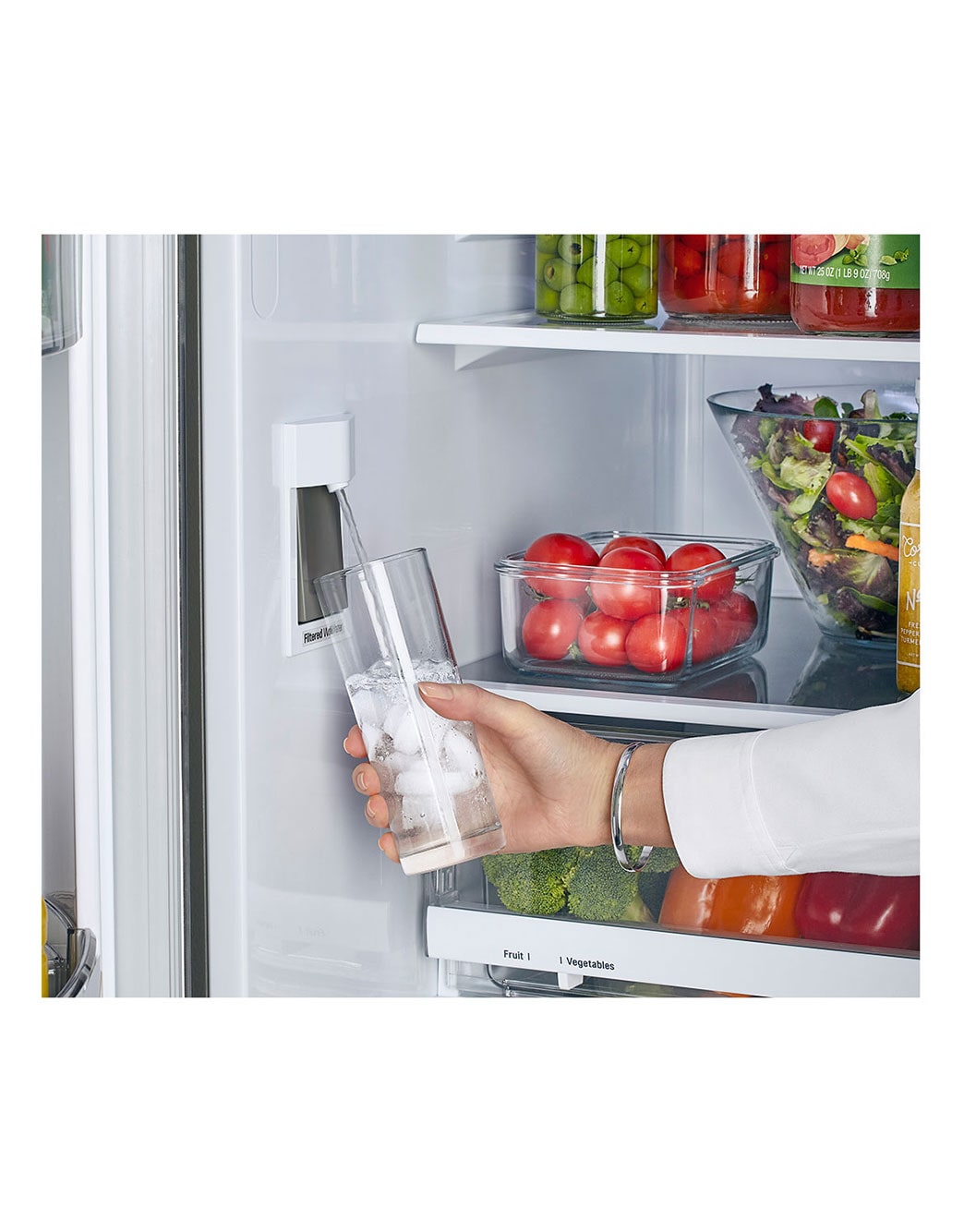
Every time you install a fresh cartridge, flush and prime the system. Experts often recommend running and discarding approximately 3 to 5 gallons of water, or the amount recommended by your refrigerator brand, through the dispenser.
- Removes Carbon Fines: It clears out loose carbon particles, sometimes seen as black specks, that can appear after manufacturing.
- Purges Air: It removes trapped air bubbles that can cause cloudy water or a noisy, sputtering dispenser.
- Refreshes the Lines: It clears stagnant water that may have been sitting in the internal reservoir or tubing.
Discard Old Ice After Replacing the Filter
After a filter change, discard the first two or three batches of ice produced after the new filter is installed. This helps prevent remaining carbon dust or trapped air from ending up in your drinks. It is also a good opportunity to empty old ice that may have absorbed freezer odors over time.

Keep the Refrigerator and Freezer Clean
The quality of your water and ice is directly affected by the environment inside your appliance. Because ice is exposed to circulating air in the freezer, it can absorb odors from strong smelling foods. Keep food tightly sealed and clean the ice bin with mild soap and water every 6 to 12 months.
Track Your Replacement Date
It is easy to forget a six month deadline, so having a tracking system is important. Most modern refrigerators include a filter indicator light, but these are often simple timers and may not reflect actual water quality or usage.
- Label the Filter: Write the installation date directly on the filter cartridge before installing it.
- Set a Reminder: Use a recurring calendar alert or set a reminder when you change your clocks.
- Manual Reset: Reset your refrigerator filter indicator light after each replacement.
Choosing the Right Replacement Filter
When it is time for a new filter, identify your refrigerator model and the correct part number. These are often found on a label inside the refrigerator wall, behind a crisper drawer, or in the user manual. Matching the part number and connection type exactly helps prevent leaks, stuck housings, or stripped filter heads.
Look for NSF Certifications
To ensure your filter performs as promised, prioritize products with third party certifications from NSF International. These standards provide a baseline for what the filter can reduce from your water.
- NSF/ANSI 42: Focuses on aesthetic effects such as chlorine taste and odor.
- NSF/ANSI 53: Covers reduction of health related contaminants such as lead, cysts, and certain volatile organic compounds.
- NSF/ANSI 401: Addresses emerging contaminants such as trace pharmaceuticals and certain herbicides.
Always verify that a filter specifically lists the contaminants you are concerned about, because a general certification may not cover every substance.
Use Genuine or Certified Compatible Filters
You generally have two safe paths: buying a genuine Original Equipment Manufacturer filter or choosing a certified compatible option. Genuine filters are made by or under license from the refrigerator manufacturer and provide guaranteed fit. Certified compatible filters can also be a safe choice when they are independently tested and engineered correctly.
Avoid unverified generic filters. Even if they fit physically, they may lack independent lab testing and may not provide meaningful filtration performance.
Featured Refrigerators with Advanced Water Filtration
Whether you are replacing an aging appliance or upgrading your kitchen, choosing a refrigerator with a high quality water filtration system can help ensure cleaner, better tasting water and ice every day. These refrigerators feature built in filtration technologies designed to reduce contaminants while providing convenient access to fresh, filtered water.

Frigidaire 22.3 cu. ft. Side by Side Refrigerator FRSC2333AS
The Frigidaire FRSC2333AS features the PurePour Water and Ice Filter system, designed to reduce up to 99 percent of contaminants commonly found in drinking water.
Highlighted Feature: PurePour Water and Ice Filter for cleaner, fresher tasting water and ice.
Image Credit: Shop Appliances
View Product
GE 24.7 cu. ft. French Door Refrigerator GNE25JYKFS
Equipped with a factory installed icemaker and integrated water filtration system, the GE GNE25JYKFS provides filtered ice and water without requiring additional accessories.
Highlighted Feature: Factory installed icemaker with integrated water filtration.
Image Credit: Shop Appliances
View Product
LG 27.8 cu. ft. French Door Refrigerator LMXS28626S
The LG LMXS28626S combines generous storage capacity with convenient filtered water access through its external ice and water dispenser.
Highlighted Feature: External filtered water and ice dispenser with Slim SpacePlus Ice System.
Image Credit: Shop Appliances
View Product
KitchenAid 24 cu. ft. French Door Refrigerator KRFC236SPS
The KitchenAid KRFC236SPS uses the EveryDrop Water Filter, designed to reduce up to 75 potentially harmful contaminants, including lead and microplastics.
Highlighted Feature: EveryDrop filtration system for cleaner drinking water.
Image Credit: Shop Appliances
View ProductConclusion
Changing your refrigerator water filter on time is one of the easiest ways to protect water quality at home. A fresh filter helps maintain cleaner taste, steady water flow, better ice quality, and stronger contaminant reduction. For most households, replace the filter every six months or when it reaches its rated gallon capacity.
Flush the new filter, discard old ice, and use a genuine or certified compatible replacement to keep your refrigerator water system performing at its best.
Shop Refrigerators and Water Filters at ShopAppliances.com
Whether you need a replacement refrigerator water filter or a new refrigerator with built in filtered water and ice, ShopAppliances.com makes it easy to compare trusted brands, filtration features, dispenser styles, and storage capacities.
- Shop refrigerators with built in water filtration
- Compare side by side, French door, and counter depth models
- Find replacement filters for cleaner water and ice
- Get expert support when choosing the right refrigerator for your home
FAQs
How often should I change my refrigerator water filter?
Most refrigerator water filters should be replaced every six months, or sooner if water flow slows down, taste changes, or the filter reaches its rated gallon capacity.
Can an old refrigerator filter make water taste bad?
Yes. An old or clogged filter can allow chemical, metallic, stale, or musty tastes to return. Stagnant water, freezer odors, and old ice can also affect taste.
Do refrigerator water filters remove PFAS?
Some carbon block refrigerator filters can reduce PFAS when used within their recommended lifespan. Look for certified filters and replace them on schedule.
Is a refrigerator filter enough for private well water?
It can help reduce certain contaminants, but private well owners should still test their water regularly. Refrigerator filters are not designed to solve all well water problems or make unsafe source water safe.
Why is my refrigerator water flowing slowly?
Slow flow often means the filter is clogged or overdue for replacement. Sediment in well water can also clog filters faster. Replacing the filter and flushing the system usually helps restore normal flow.
Read More
- How to Clean Refrigerator Coils to Lower Energy Bills and Boost Efficiency
- Café vs Viking French Door Wall Ovens: Which Luxury Oven Is Best for Your Kitchen?
- Energy Efficiency Through the Decades: How EPA Standards Changed Appliance Manufacturing
- The Ultimate Guide to Coin Operated Laundry Machines and Top Commercial Brands
- The History of the Washing Machine: How We Moved from Scrub Boards to App Controlled Laundry
Reference: Ferry, Mccallah. Assessing Household GAC Water Filters for PFAS Removal from Private Drinking Water Wells. 2024.