
How to Match Hood Width and Blower Power to Cooking Output

Properly sizing your range hood is the secret to a cleaner, healthier, and more comfortable kitchen. The right range hood helps trap smoke, heat, grease, and cooking fumes before they settle on your cabinets, walls, and surrounding surfaces. Choosing the wrong size can lead to smoke buildup, lingering odors, sticky cabinets, loud fan operation, and reduced ventilation performance.
Finding the right fit means matching both the physical hood width and blower power, measured in cubic feet per minute, or CFM. Proper range hood sizing depends on your cooktop size, burner output, cooking style, mounting height, ductwork, and kitchen layout.
Why Proper Range Hood Sizing Matters
Choosing the right range hood size helps keep your kitchen cleaner, quieter, and more comfortable to cook in. Proper ventilation improves smoke and grease removal, supports better indoor air quality, and prevents excess heat and odors from lingering after meals.
Smoke and Grease Capture
A properly sized hood captures smoke, steam, and grease before they spread throughout the kitchen. In most cases, the hood should be slightly wider than the cooktop to improve coverage and reduce buildup on surrounding cabinets and walls. Mounting height also matters, with most indoor hoods performing best when installed 28 to 36 inches above the cooking surface.
Indoor Air Quality
Cooking can release pollutants such as carbon monoxide, nitrogen dioxide, and airborne particulates into your home. Adequate ventilation helps remove these contaminants and maintain cleaner indoor air. Gas ranges typically require about 1 CFM for every 100 BTUs of burner output to ventilate effectively.
Noise and Energy Efficiency
A hood with adequate airflow can often operate at lower fan speeds while still delivering strong ventilation performance. This helps reduce noise levels and minimizes strain on the blower motor over time. On the other hand, undersized hoods may need to run continuously at maximum speed to keep up with heavy cooking.
Preventing Heat and Odor Buildup
CFM ratings determine how quickly a range hood can remove heat, smoke, and cooking odors from the kitchen. High output gas ranges and island installations generally require stronger airflow because heat and smoke disperse more easily in open spaces. Proper airflow helps maintain a cooler, fresher cooking environment even during heavy cooking sessions.
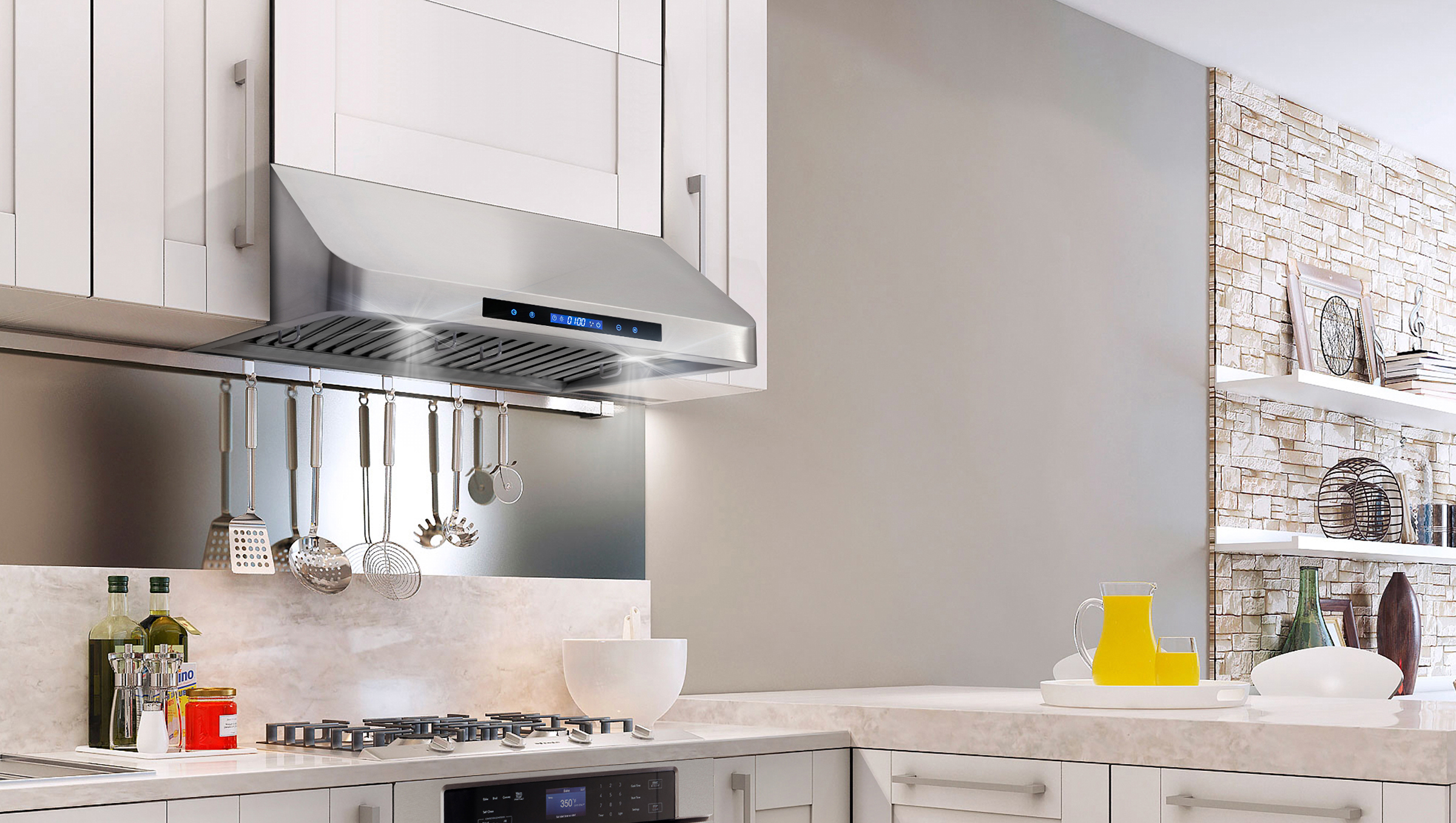
Understanding Range Hood Width
The Golden Rule for Range Hood Width
For the best ventilation performance, your range hood should generally be wider than your cooktop. The standard recommendation is to choose a hood that extends about 3 inches past the cooking surface on each side, helping improve smoke and grease capture before they spread throughout the kitchen.
A wider hood provides better coverage for rising steam, heat, and airborne grease, especially during high heat cooking. Without enough coverage, smoke and cooking fumes can escape around the sides of the hood and settle onto nearby cabinets and walls.
Recommended Hood Widths by Cooktop Size
| Cooktop Size | Recommended Hood Width |
|---|---|
| 24 inches | 30 inches |
| 30 inches | 36 inches |
| 36 inches | 42 inches |
| 48 inches | 54 to 60 inches |
Choosing the right hood width helps improve ventilation efficiency and keeps your kitchen cleaner during everyday cooking.
Same Width vs. Wider Hood
When same width hoods may work
A hood that matches the width of the cooktop can still perform adequately in certain kitchens, particularly when cabinet space is limited, cooking is mostly light duty, the hood has strong airflow performance, or the hood is mounted closer to the cooking surface.
Why wider hoods perform better
Wider hoods offer better containment for smoke, grease, and heat, especially during heavy cooking sessions. High heat techniques like searing, frying, and wok cooking produce fast rising smoke that can easily escape narrower ventilation systems. Additional hood coverage helps improve capture efficiency and reduces grease buildup throughout the kitchen.
How Mounting Height Affects Width
Most indoor range hoods are designed to be installed between 28 and 36 inches above the cooking surface. This range balances ventilation performance, user comfort, and heat protection for the hood itself.
As mounting height increases, smoke and steam naturally spread outward as they rise. A wider hood helps compensate for this larger dispersion area and improves airflow coverage. If your hood will be installed above the standard height range, increasing hood width can help maintain effective ventilation performance.
Understanding Blower Power and CFM
What CFM Means
CFM, or cubic feet per minute, measures how much air a range hood can move in one minute. The higher the CFM rating, the more smoke, heat, grease, and cooking odors the hood can remove from your kitchen. Choosing the right airflow level is essential for maintaining clean air and improving overall ventilation performance.
Calculating CFM for Gas Ranges
Gas ranges require ventilation based on total burner output. A common industry guideline is to match every 100 BTUs of cooking power with 1 CFM of airflow.
- 40,000 BTUs usually need at least 400 CFM.
- 60,000 BTUs usually need at least 600 CFM.
Professional style gas ranges with high BTU output often require significantly stronger ventilation systems to handle increased smoke and heat production.
Calculating CFM for Electric and Induction Cooktops
Electric and induction cooktops typically produce less ambient heat than gas cooking, so ventilation sizing is usually based on cooktop width rather than BTUs. A general recommendation is approximately 100 CFM per linear foot of cooking surface.
- A 30 inch cooktop usually needs approximately 250 to 300 CFM.
- A 36 inch cooktop usually needs approximately 300 to 400 CFM.
Induction cooking may still benefit from higher airflow if you frequently cook at high temperatures or use multiple burners at the same time.
Adjusting CFM for Cooking Style
Your cooking habits play a major role in determining how much airflow you actually need. Frequent high heat cooking produces larger amounts of smoke, steam, and airborne grease, which can overwhelm lower powered ventilation systems.
You may benefit from higher CFM ventilation if you regularly:
- Sear meats at high temperatures
- Stir fry with a wok
- Deep fry foods
- Grill indoors
- Cook with multiple burners at once
Choosing a slightly more powerful hood can also improve comfort by allowing the blower to run at lower, quieter speeds during everyday cooking while still providing extra power when needed.
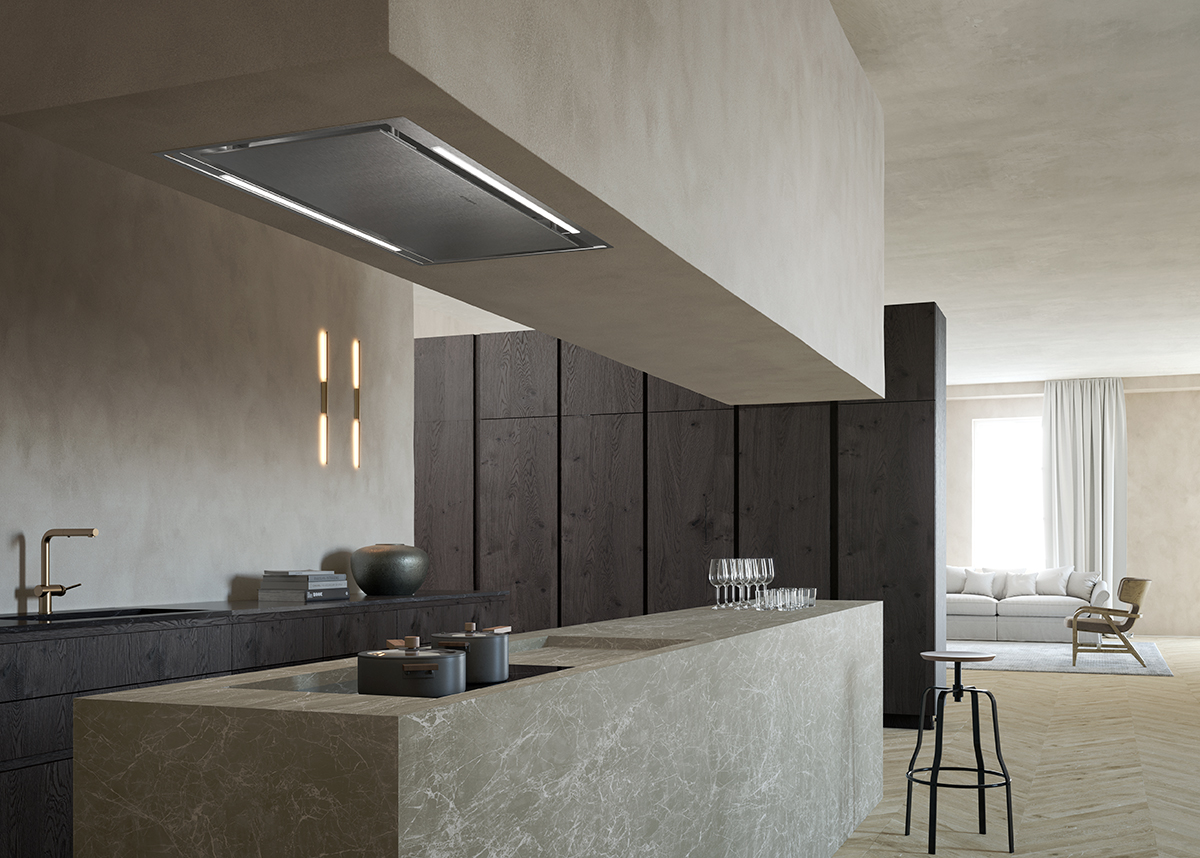
Wall Mount vs. Island Hood Ventilation Needs
Wall Mounted Hoods
Wall mounted range hoods are typically more efficient because the wall and surrounding cabinetry help direct smoke and grease toward the hood. As a result, they usually require less blower power to maintain effective ventilation.
These hoods work well for:
- Standard kitchen layouts
- Moderate cooking output
- Smaller spaces
Island Hoods
Island hoods require stronger ventilation because they are exposed on all sides, allowing smoke and heat to spread more easily throughout the kitchen. They are also more affected by cross drafts from fans, vents, and open layouts.
To improve performance, island installations typically benefit from:
- An additional 100 to 200 CFM
- A wider hood for better coverage
- Stronger airflow in large or open concept kitchens
Matching Hood Size to Different Kitchen Layouts
Matching your range hood to your kitchen layout is about more than aesthetics. It is about creating an effective capture area that helps keep your home’s air cleaner. Here is how to size your ventilation for different kitchen setups.
Small Kitchens and Compact Cooking Areas
In compact spaces, cabinet space is often limited, making under cabinet hoods or slim wall mounted models popular choices.
- Sizing: While the standard 6 inch wider rule is ideal, same width hoods are often used when cabinetry is tight.
- Performance Tip: If you must use a same width hood, mounting it at the minimum recommended height can help maximize suction efficiency.
- Ventilation: For light cooking like simmering or boiling, a lower CFM around 250 to 300 is often sufficient.

Bosch HUI54452UC 500 Series 24 Inch Stainless Steel Under Cabinet Hood
Compact under cabinet hood designed for small kitchens with efficient everyday ventilation performance.
Image Credit: Shop Appliances
View Product
ZLINE KBCRN24 24 Inch Wall Mount Hood
Sleek wall mount hood that combines modern design with strong airflow for compact cooking spaces.
Image Credit: Shop Appliances
View ProductOpen Concept Kitchens
Open layouts require powerful ventilation to prevent cooking odors and grease from drifting into living areas.
- Island Hoods: These are common in open kitchens but are highly vulnerable to cross drafts because they lack walls to contain smoke.
- The Overhang Rule: To compensate for air dispersal, an island hood should be 6 inches wider than the cooktop to provide about 3 inches of overhang on each side.
- CFM Needs: Open spaces often benefit from higher airflow, especially when paired with high output cooking appliances.

Cosmo COS63ISS75 Lumin 30 Inch Stainless Steel Wall Mount Hood
Stylish wall mount hood built to handle open concept kitchens with powerful smoke and odor removal.
Image Credit: Shop Appliances
View Product
Zephyr ZSLE48DS Pro 48 Inch Stainless Steel Island Mount Hood
High performance island hood engineered for larger kitchens and heavy cooking output.
Image Credit: Shop Appliances
View ProductProfessional Style Ranges
Professional grade ranges generate intense heat and large volumes of smoke, requiring heavy duty ventilation.
- Width Matching: Follow the 6 inch wider rule, such as a 42 inch hood for a 36 inch range.
- Overhang Requirements: For heavy duty cooking with charbroilers or woks, larger front and side overhangs may improve containment.
- Blower Power: Use the BTU rule of 1 CFM for every 100 BTUs of total output. High output ranges often require 1000 CFM or more.

Viking VCWH53648SS 5 Series 36 Inch Stainless Steel Wall Mount Hood
Professional grade wall hood built for high BTU ranges and serious home chefs.
Image Credit: Shop Appliances
View Product
JennAir JXW9048HP 48 Inch Stainless Steel Wall Mount Hood
Premium 48 inch hood offering powerful ventilation and modern luxury styling for pro style kitchens.
Image Credit: Shop Appliances
View ProductOutdoor Kitchens and BBQ Ventilation
Outdoor environments face the most extreme heat and smoke, requiring specialized equipment.
- Mounting Height: Because grills produce intense flames, outdoor hoods are often mounted higher, typically between 36 and 42 inches above the surface.
- Increased Width: Due to this higher mounting position, smoke disperses more quickly. Outdoor hoods should be wider than indoor models to catch smoke before it escapes the capture area.
- Durability: Choose an outdoor rated hood made from durable stainless steel to withstand outdoor cooking conditions.

XO XOGV42S 42 Inch Stainless Steel Wall Mount Hood
Durable outdoor rated hood designed to manage high heat and smoke from grilling setups.
Image Credit: Shop Appliances
View Product
Bull 66009 36 Inch Stainless Steel Wall Mount Hood
Heavy duty outdoor ventilation hood built for reliable BBQ smoke and heat control.
Image Credit: Shop Appliances
View ProductOther Factors That Affect Ventilation Performance
Duct Size and Length
Your ductwork plays a major role in overall hood performance. Long duct runs, small duct diameters, and multiple sharp bends create static pressure, which restricts airflow and reduces the actual CFM delivered by the hood. Keeping duct runs short and straight helps improve ventilation efficiency.
Make Up Air Requirements
Many local building codes require a make up air system for range hoods rated above 400 CFM. These systems replace the air being exhausted from the kitchen, helping prevent negative air pressure and maintaining safe indoor airflow conditions.
Hood Design and Capture Efficiency
Hood design also affects how effectively smoke and grease are captured. Features like deep canopy designs and perimeter capture systems help improve airflow containment and direct pollutants toward the filters more efficiently. Some premium hoods also use airflow principles such as the Coanda Effect to improve smoke capture without relying only on higher blower speeds.

Common Range Hood Sizing Mistakes
- Choosing a hood that is too small: A narrow hood may allow smoke, grease, and steam to escape around the sides.
- Ignoring total BTU output: Gas ranges with higher burner output usually need stronger ventilation.
- Overlooking mounting height: A hood installed too high may need extra width or stronger airflow.
- Forgetting about duct restrictions: Long ducts, small ducts, and sharp turns can reduce real world performance.
Quick Range Hood Sizing Cheat Sheet
| Cooking Setup | Recommended Hood Width | Recommended CFM |
|---|---|---|
| 30 inch electric range | 36 inch hood | 250 to 350 CFM |
| 30 inch gas range | 36 inch hood | 400 to 600 CFM |
| 36 inch pro gas range | 42 inch hood | 600 to 1200 CFM |
| 48 inch professional range | 54 to 60 inch hood | 1200 CFM or more |
Final Thoughts
Choosing the right hood size and airflow is one of the most important decisions for maintaining a cleaner, quieter, and more comfortable kitchen. By matching your ventilation system to both your cooking appliance and cooking habits, you can improve air quality, reduce grease buildup, and maximize long term appliance performance.
Shop Premium Range Hoods at ShopAppliances.com
Whether you need a compact under cabinet hood for everyday cooking or a high performance ventilation system for a professional style range, ShopAppliances.com offers a wide selection of premium range hoods designed to match your cooking needs and kitchen layout.
- Wide selection of wall mount, island, insert, and under cabinet hoods
- High performance ventilation options for gas, electric, and induction cooking
- Trusted appliance brands and professional grade solutions
- Competitive pricing and expert customer support
FAQs
How wide should a range hood be compared to the cooktop?
For the best ventilation performance, a range hood should generally be about 6 inches wider than the cooktop, allowing for roughly 3 inches of overhang on each side.
How much CFM do I need for my range hood?
A common guideline for gas ranges is 1 CFM for every 100 BTUs of burner output. For electric or induction cooktops, many homeowners use approximately 100 CFM per linear foot of cooktop width.
Are outdoor range hoods different from indoor models?
Yes. Outdoor range hoods are built to handle higher heat levels and weather exposure, often using durable stainless steel construction and stronger airflow systems.
Can a range hood be the same width as the stove?
Yes, but same width hoods generally work best in smaller kitchens or for light cooking. Wider hoods usually provide better smoke and grease capture, especially during high heat cooking.
What is the ideal mounting height for a range hood?
Most indoor range hoods perform best when installed 28 to 36 inches above the cooking surface. Outdoor hoods are often installed higher because grills produce more intense heat and smoke.
Read More
- How to Know Whether You Need an Electrician, Plumber, Cabinet Installer, or Stone Fabricator Before Delivery
- How to Choose Between Rangetop, Cooktop, and Range
- Introducing Lynx: Luxury Outdoor Cooking Joins Our Premium Appliance Collection
- How to Build a Kitchen Package That Actually Matches Your Cooking Style
- How to Replace Filters and Understand Filter Alerts for HVAC, Air Purifiers, and Refrigerators