Wall Ovens: Sizes, Single vs Double Features
A plain guide to wall ovens: single vs double, compact speed ovens, and how to choose capacity and features.
- Wall ovens come in common widths, but the cabinet cutout is what determines fit.
- Single ovens are simpler and usually better for everyday one-dish cooking.
- Double ovens add flexibility when you need two temperatures at once.
- Convection is one of the most useful cooking upgrades to look for.
- Air fry, self-clean, and smart controls are helpful once the size and layout are right.

Wall oven shopping gets a lot easier once you understand the size cutout, whether you need a single or double setup, and which features you’ll actually use every week. The right wall oven should fit your cabinet opening, match how you cook, and leave enough flexibility for the rest of the kitchen layout.
In this guide, you’ll learn how to read wall oven sizes, what changes when you move from a single to a double model, and which features matter most for baking, roasting, air frying, and easy cleanup. We’ll also show a few real models that illustrate the differences, from compact single ovens to larger double-wall configurations.
To compare more models, browse the full GE lineup.
How Wall Oven Sizes Work
Wall ovens are usually built around standard widths, but the actual fit depends on the cabinet cutout, not just the front width of the appliance. The most common sizes you’ll see are 24 inch, 27 inch, and 30 inch models, and the height changes a lot more than first-time shoppers expect.
A 24 inch wall oven is often chosen for tighter kitchens or smaller cabinet runs, while 27 inch and 30 inch models give you more interior room and a broader selection of features. Always compare the full dimensions, especially width, height, and depth, because a model that looks similar on the front can still need a different opening behind the scenes.
Interior capacity matters too, but it should be read alongside the oven style. A single oven with 5 cu. ft. of capacity can feel roomy for one cavity, while a double oven splits capacity across two cooking spaces and is better for multitasking than for one oversized roast.
- Common widths: 24 inch, 27 inch, and 30 inch
- Check the full cutout, not just the face frame
- Single ovens maximize one cavity; double ovens split cooking space
- Depth can matter as much as width in flush installations
How to Choose a Wall Oven, Step by Step
- 01
Measure The Cabinet OpeningStart with the width, height, and depth of the existing opening. A wall oven can look like a standard size from the front and still need a different cutout behind the cabinet face.
- 02
Decide On Single Or DoubleChoose a single oven if you want a simpler fit and one main cavity. Choose a double oven if you often cook more than one dish at different temperatures.
- 03
Pick The Width That Fits Your KitchenA 24 inch model is a smart choice for tighter spaces, while 27 inch and 30 inch ovens give you more room and more model variety. The right width depends on your cabinetry, not just preference.
- 04
Compare Capacity With Real Cooking HabitsCapacity matters most when you roast large meals or bake on multiple racks. A larger total capacity is useful, but only if you will actually use the extra space.
- 05
Choose The Cooking Features You’ll UseConvection is a strong everyday feature, and air fry can be useful if you want crisping without another appliance. Smart controls and temperature probes are worthwhile when they match your cooking style.
- 06
Check Cleanup And Control StyleSelf-clean and steam-clean options can save time over the long run. Touch controls, hidden elements, and door style affect how easy the oven is to use and maintain every week.
- 07
Confirm Power Or Gas RequirementsElectric wall ovens need the proper voltage and amperage, while gas wall ovens need the right gas hookup. Make sure the appliance matches the utility connection already in place, or the one your installer is planning.
Starter Pick: GE JTS3000SNSS
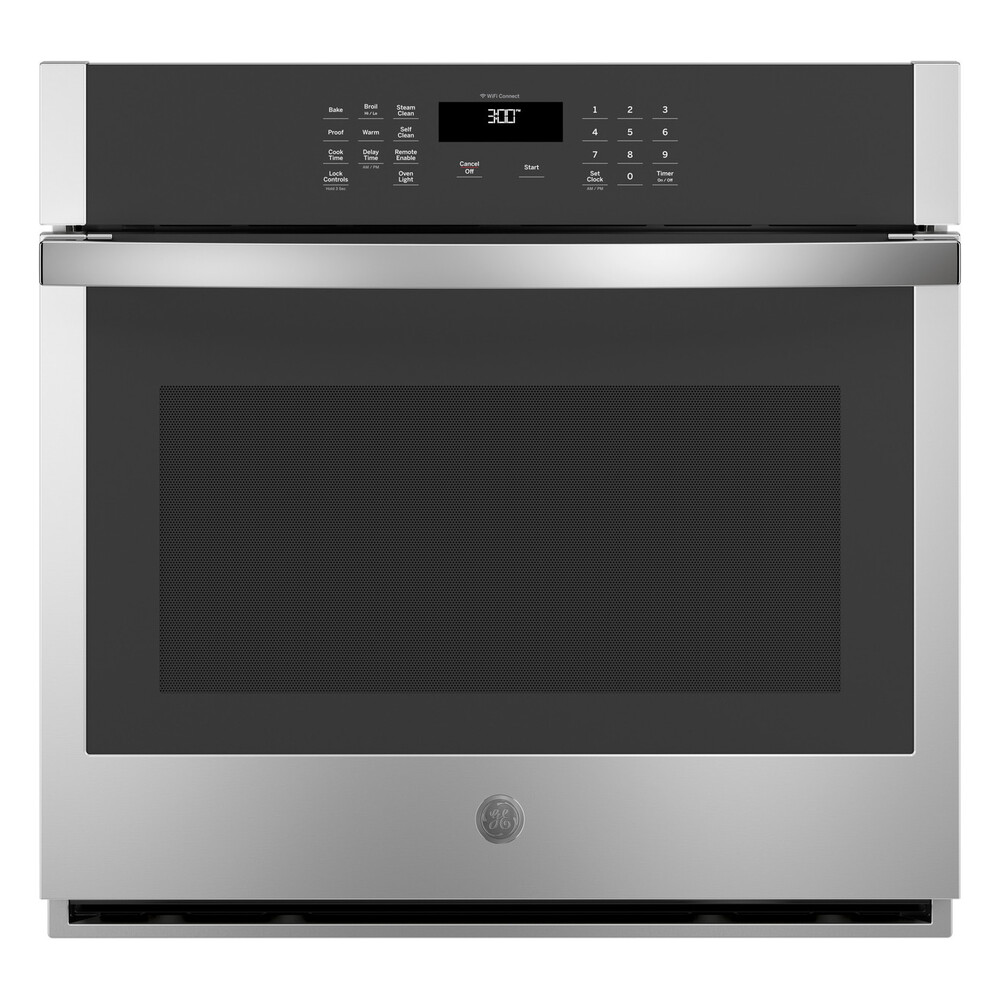
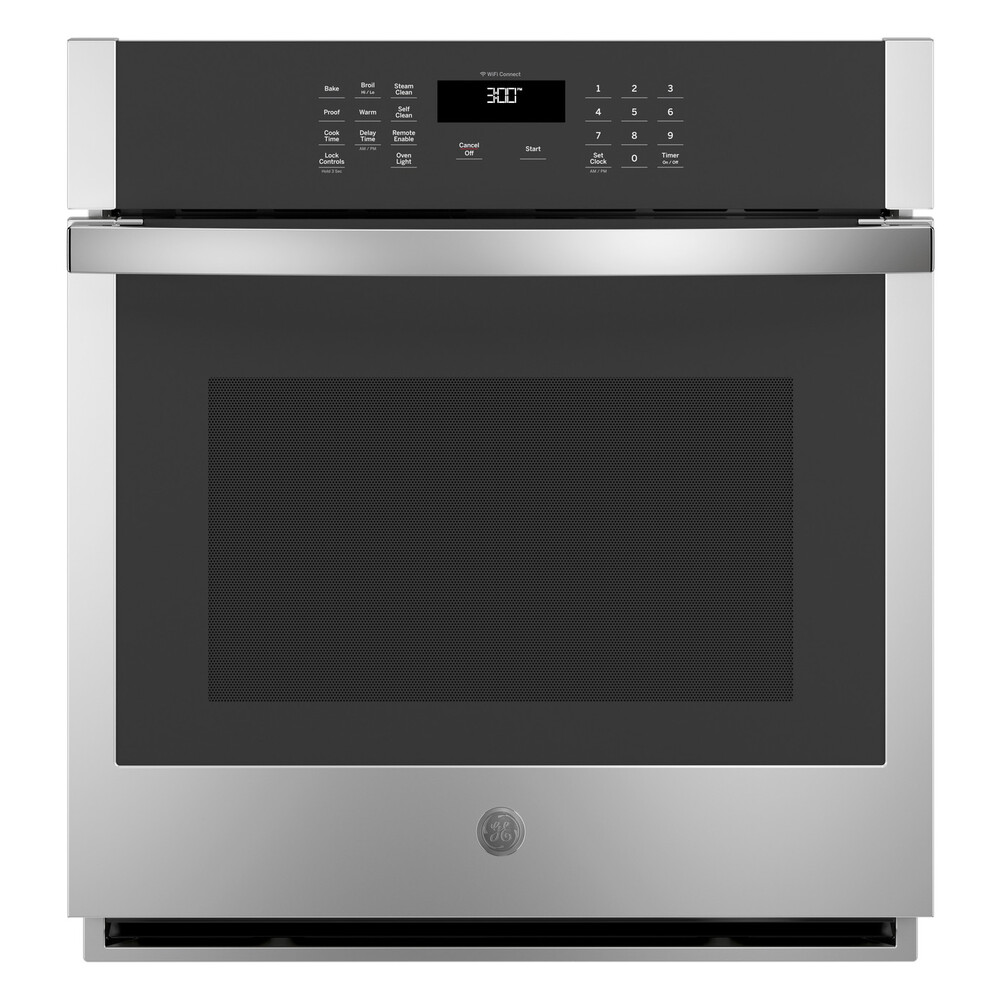
This GE wall oven is the simplest way into a full-size built-in setup, and it does the job without adding unnecessary complexity. With a 30 inch width, 5 cu. ft. total capacity, and a standard single-oven layout, it fits the classic wall-oven role for everyday baking, roasting, and weeknight meals. The smart built-in design gives it Wi-Fi, while Self-Clean with Optional Steam Clean makes upkeep easier than a basic manual-clean cavity. The Hidden Bake Element is another practical touch that helps the oven floor stay easier to wipe down. If you want a straightforward electric wall oven that covers the core features most shoppers look for, this is the most accessible starting point in the group.
- Full-size single-oven format
- Wi-Fi adds convenience
- Hidden bake element helps cleanup
- Good capacity for everyday cooking
- No convection
- No air fry
- Only one cooking cavity
27-Inch Pick: GE JKS3000SNSS
This GE single wall oven is the smaller-footprint option in the lineup, and that narrower 27 inch size is the key reason to choose it. It still gives you a usable 4.3 cu. ft. total capacity, so you are not giving up the core benefits of a built-in oven just to save cabinet width. Wi-Fi is built in, so it keeps the same smart convenience as larger models, and the self-clean with optional steam clean cycle makes maintenance easier. The glass touch controls give it a clean, modern front panel without adding clutter. If your kitchen layout calls for a more compact wall oven opening, this is the size-conscious pick that still feels complete.
- Narrower width for tighter openings
- Wi-Fi built in
- Easy-to-clean self-clean features
- Modern touch-control layout
- Smaller capacity than 30 inch models
- No air fry
- No convection spec listed
Compact Pick: KitchenAid KMBS724SPS
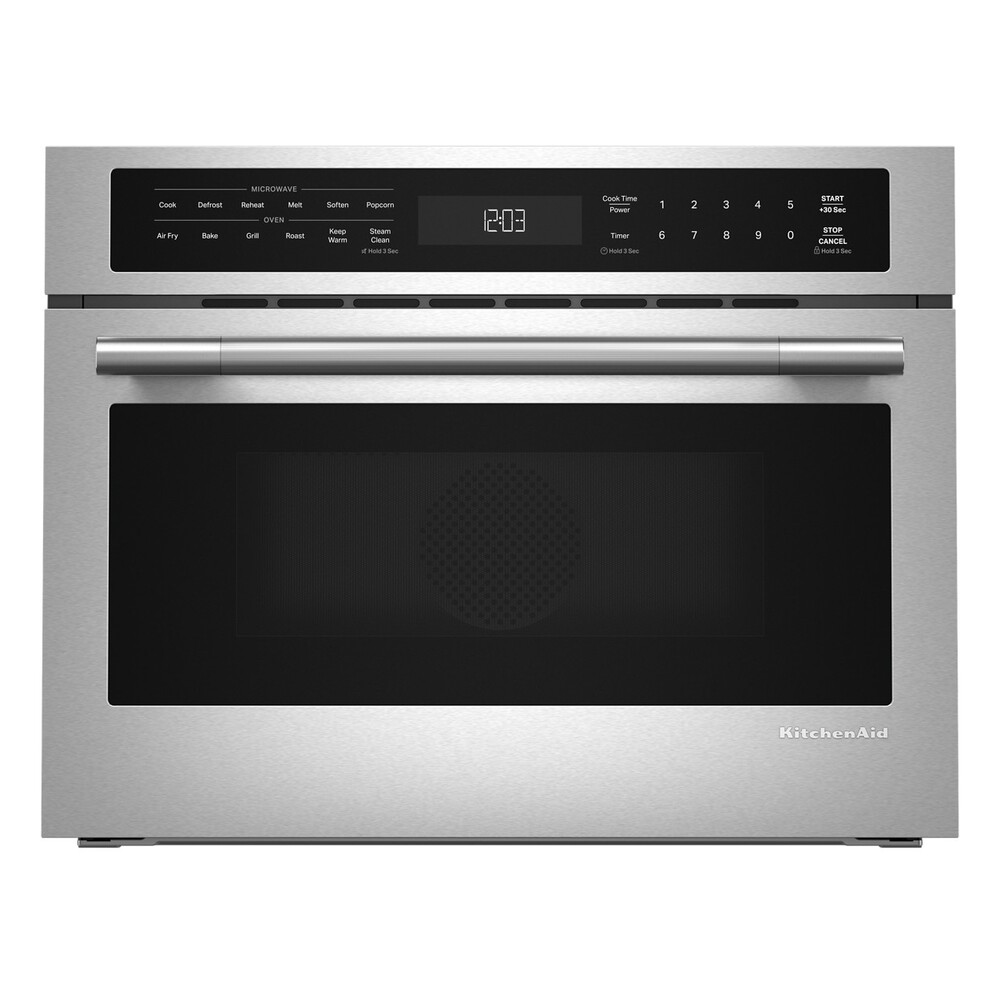
KitchenAid KMBS724SPS 24 inch Built-In More-In-One Convection Microwave Speed Oven with 1.8 cu. ft. Capacity, Drop-Down Door Design and Air Fry Mode in PrintShield Stainless Steel
The KitchenAid KMBS724SPS is a compact 24-inch built-in speed oven option for kitchens that need microwave speed with oven-style cooking in one cavity. It is a strong fit when a full-size single wall oven feels too large or when you want a secondary oven beside a main range.
- 24-inch compact width
- Speed-oven versatility
- Built-in wall installation
- Useful secondary cooking cavity
- Smaller capacity than full-size wall ovens
- Different cooking style than a conventional single oven
Convection Double Pick: GE JTD5000SVSS
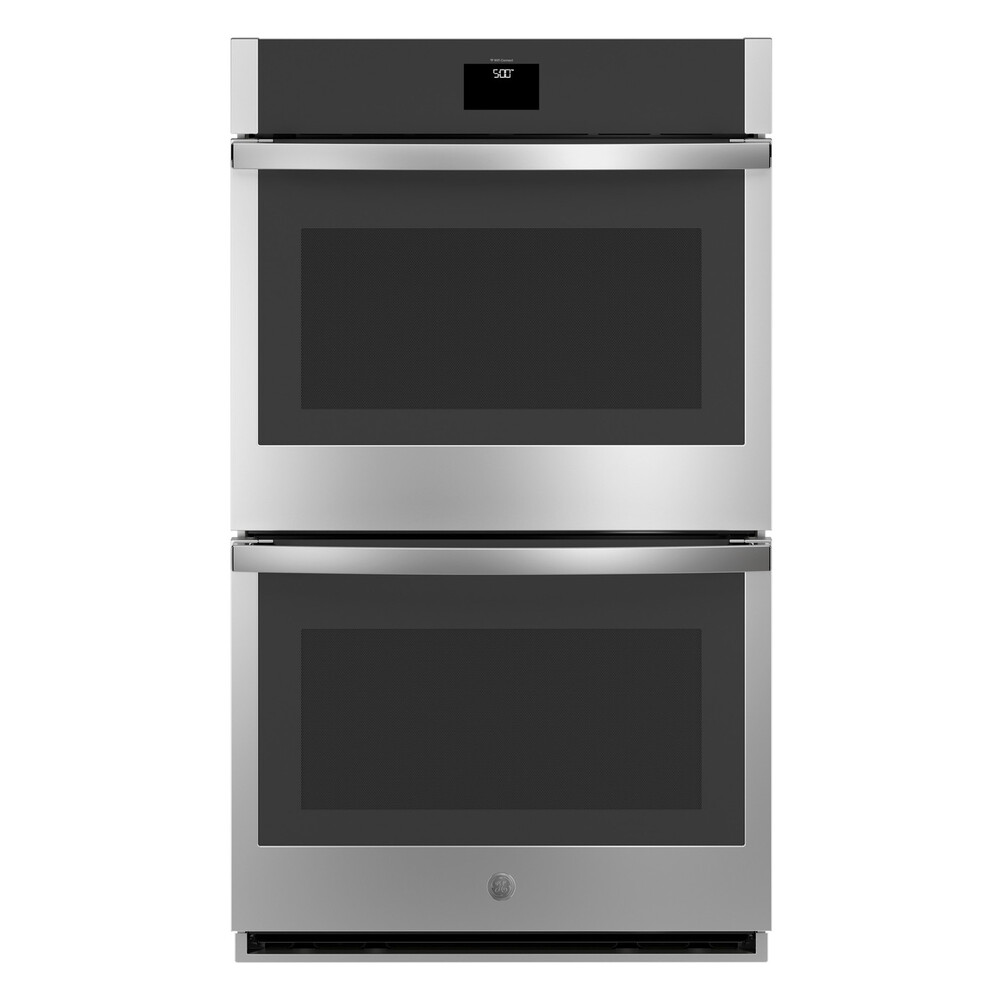
This GE double wall oven is the feature-forward 30 inch option when you want two cavities plus stronger cooking tools. With 10 cu. ft. total capacity, True European Convection, and No Preheat Air Fry, it covers holiday multitasking and everyday crisping in one built-in setup. Wi-Fi is included, and Self-Clean with Optional Steam Clean helps keep both cavities manageable. If a standard single oven feels limiting and you want convection and air fry without giving up a second cavity, this is the clear step up in the group.
- Two full-size cavities
- True European Convection
- No Preheat Air Fry
- Wi-Fi built in
- Needs more vertical cabinet space
- Larger footprint than 27 inch doubles
Double Oven Pick: GE JKD3000SNSS
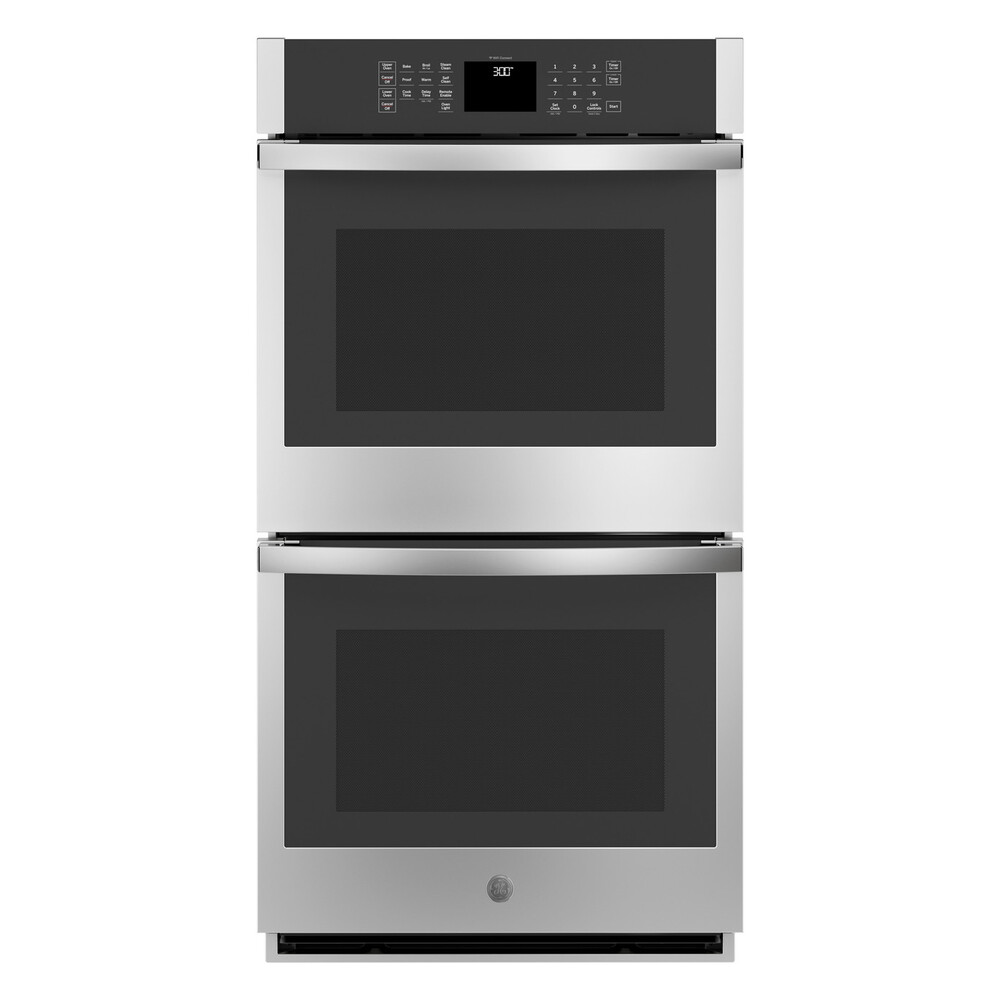
This GE double wall oven gives you the classic two-cavity setup without jumping to the largest physical footprint in the category. With 8.6 cu. ft. total capacity and a 27 inch width, it delivers real multitasking space while staying narrower than many 30 inch double ovens. The smart built-in design adds Wi-Fi, and the self-clean with optional steam clean feature helps keep maintenance manageable across both cavities. Two ovens are the big advantage here: you can bake in one and roast in the other at different temperatures, which is a major upgrade for holiday cooking or frequent batch cooking. If you know you want a double oven, this is the most practical place to land in the lineup.
- Two separate cavities
- Narrower than many 30 inch doubles
- Wi-Fi built in
- Strong total capacity
- Requires more vertical cabinet space
- No air fry
- No convection spec listed
Wall Oven Comparison at a Glance
GE 30" Single | GE 27" Single | KitchenAid 24" Speed Oven | GE 30" Double | GE 27" Double | |
| Model | JTS3000SNSS | JKS3000SNSS | KMBS724SPS | JTD5000SVSS | JKD3000SNSS |
|---|---|---|---|---|---|
| Price | $893 | $1,253 | $1,798 | $1,883 | $2,063 |
| Style | Single | Single | Single | Double | Double |
| Type | Oven Only | Oven Only | Speed Oven | Oven Only | Oven Only |
| Width | 29 3/4" | 26 3/4" | 23 7/16" | 29 3/4" | 26 3/4" |
| Height | 28 5/8" | 28 3/4" | 17 15/16" | 53" | 51 1/8" |
| Capacity | 5 | 4.3 | 1.8 | 10 | 8.6 |
| Wi-Fi |  | | Not included | | |
| Air Fry | Not included | Not included | | | Not included |
| Convection | Not included | Not included | | | Not included |
| Fuel Type | Electric | Electric | Electric | Electric | Electric |
| Good Fit For | Simple single-oven layouts | Narrower single-oven openings | Compact kitchens | Large-capacity cooking | Narrow double-oven setups |
| View | View | View | View | View |
Single Wall Ovens: Pros and Cons
- Usually easier to fit into an existing cabinet opening
- Takes less vertical space than a double oven
- Often simpler to use for everyday meals
- Can still include convection, air fry, and smart features
- Only one cavity for cooking at a time
- Less flexibility for multiple dishes at different temperatures
- May feel limiting for frequent entertainers
- Large dishes can be harder to manage than in a double setup
Single vs Double Wall Ovens
A single wall oven gives you one cooking cavity, which is the simpler choice for most kitchens. It usually takes up less vertical space, can be easier to fit into an existing cabinet stack, and tends to be the better pick if you mostly cook one dish at a time.
A double wall oven gives you two separate cavities, so you can bake and roast at different temperatures at once. That makes it a strong fit for households that cook often, entertain, or want a dedicated upper and lower oven instead of juggling trays and rack positions in one space.
There is a tradeoff: double ovens usually need more cabinet height and can feel overbuilt if you rarely use both cavities. If you mostly make weeknight meals, a well-equipped single oven with convection and air fry may be the better everyday choice.
- Single = one cavity, simpler fit, easier everyday use
- Double = two cavities, more flexibility, more vertical space required
- Choose double if you routinely cook multiple dishes at once
- Choose single if you want simpler installation and less bulk
The Wall Oven Features That Matter Most
Convection is one of the most useful upgrades because it helps move hot air more evenly through the cavity. That usually means more consistent browning and better results on cookies, roasted vegetables, and sheet-pan meals.
Air fry mode is another feature shoppers ask for often, but it is most useful when you want crisping without adding another countertop appliance. If you already use a wall oven heavily, built-in air fry can simplify your kitchen and reduce clutter.
Smart features like Wi-Fi, touchscreen controls, and optional steam clean can be helpful, but they should come after fit and capacity. In other words, buy the oven that matches your cabinet and cooking style first, then decide whether app control, self-clean, or steam-clean support is worth having.
- Convection helps with even heating and browning
- Air fry can replace some countertop cooking gadgets
- Wi-Fi and smart controls are convenient, not essential
- Self-clean and steam-clean options can simplify maintenance
What to Consider Before You Buy
Start with cabinet measurements and confirm the width, height, and depth of the opening. Then check the electrical or gas requirements so the installation path matches the appliance you choose.
Next, think about how you cook on a normal week. If you bake a lot or cook two dishes at different temperatures, a double oven is worth a hard look. If you want a smaller footprint and a simpler layout, a single oven is often the cleaner solution.
Finally, look at the control style and door design. Drop-down doors, glass touch controls, hidden bake elements, and smooth-close doors all affect how the oven feels in everyday use, not just how it looks in the kitchen.
- Measure the cutout first
- Match the fuel and power requirements
- Choose capacity based on real cooking habits
- Look at controls, door style, and cleaning features
Shop wall ovens by size, configuration, and features to find the fit that works for your kitchen.
Shop Wall OvensFrequently Asked Questions
What size wall oven should I buy?
Start with the cabinet opening, not the exterior look of the appliance. Most shoppers are choosing between 24 inch, 27 inch, and 30 inch models, but the right fit depends on your cutout height, width, and depth. If you are replacing an existing oven, match the installation space first and then narrow the features from there.
Is a single wall oven enough for a family?
For many families, yes. A single wall oven is often plenty if you usually cook one meal at a time and want a simpler installation. If you regularly bake and roast together, or need two temperatures at once, a double wall oven is the better fit.
What is the difference between convection and regular baking?
Convection uses a fan to circulate hot air, which can help food cook more evenly and brown more consistently. It is especially useful for roasting and baking on multiple racks. Regular baking still works well, but convection adds flexibility and can improve results for many recipes.
Do I need air fry in a wall oven?
Not necessarily, but it is a useful feature if you like crisp textures and want fewer countertop appliances. Air fry in a wall oven can handle snacks, vegetables, and smaller batches well. If you rarely use that style of cooking, convection alone may be enough.
Can I replace a single wall oven with a double wall oven?
Sometimes, but only if the cabinet opening and surrounding space can support it. Double ovens are taller and require a different installation footprint, so the replacement is not always a direct swap. Always compare the full dimensions and cavity layout before deciding.