Washer Dryer Combos: How They Work, Capacity and Venting
A plain guide to washer dryer combos: how they work, capacity, venting and four stacked models compared.
- Washer dryer combos save space by combining both laundry functions in one vertical footprint.
- Capacity matters on both sides: washer capacity and dryer capacity are separate numbers.
- Vented models need exhaust ducting; ventless models are easier to place in more rooms.
- Compact 24-inch units fit tighter spaces, while 27-inch towers usually offer more room.
- Choose based on your room layout, laundry volume, and whether you can support venting.

A washer dryer combo is a smart way to get two laundry functions into one vertical footprint, but the right choice depends on how you wash, how much you wash, and whether your space can handle venting.
In this guide, we break down how these units work, what capacity numbers actually mean, and how vented vs. ventless models change installation, drying time, and everyday convenience.
What a Washer Dryer Combo Actually Does
A washer dryer combo stacks the washer and dryer in one connected cabinet, so you load one machine and move from wash to dry without needing two separate appliances side by side. In many homes, that makes the biggest difference before you even get to features.
There are two common styles: traditional stacked laundry centers with a top-load washer, and front-load towers such as LG's WashTower designs. The layout changes how you access the drum, but the goal is the same: save floor space while keeping both laundry functions together.
- Stacked laundry centers usually use a top-load washer on the bottom.
- Laundry towers and WashTower units use front-load designs with central controls.
- The dryer can be vented or ventless depending on the model.
- Capacity is listed separately for the washer and dryer on most product pages.
How to Choose a Washer Dryer Combo, Step by Step
- 01
Measure The Installation SpaceStart with width, height, and depth. Also check door swing, hallway clearance, and whether the unit needs extra room for hoses or venting.
- 02
Decide Between 24-Inch And 27-Inch WidthsA 24-inch model is usually the better fit for tighter laundry closets or apartment-style spaces. A 27-inch unit often gives you more drum room and a more familiar full-size feel.
- 03
Choose Vented Or VentlessPick vented if you already have a proper exhaust path and want a traditional drying setup. Pick ventless if you want more placement flexibility or do not have a duct route.
- 04
Match Capacity To Your HouseholdCompare washer and dryer capacities separately, then think about your normal loads. Bulky bedding, towels, and family loads usually benefit from more capacity than a single-person routine.
- 05
Decide Whether You Want Top-Load Or Front-Load AccessTop-load stacked laundry centers are familiar and simple to use. Front-load towers can be easier to load and unload at a comfortable height, especially in premium laundry rooms.
- 06
Check Utility RequirementsConfirm the voltage, amps, and fuel type before you finalize the purchase. These details determine whether the unit matches your home's electrical or gas setup.
- 07
Look At Features That Fit Your RoutineSanitize, Wi-Fi, delay start, pet cycles, and cycle counts can all matter, but only if they fit the way you do laundry. Start with fit and venting first, then narrow by features.
Our Picks by Budget
24-Inch Pick: GE GUD24ESSMWW

All-in-One Pick: Samsung WD53DBA900HZ
Samsung all-in-one washer dryer that washes and dries in a single drum, useful when you want one machine instead of a stacked pair.
- Washes and dries in one drum
- Fits a single laundry opening
- Samsung smart features on supported models
- Cycle time can run longer than separate machines
- One drum means you wait for the full wash-dry cycle
27-Inch Pick: GE GUD27ESSMWW
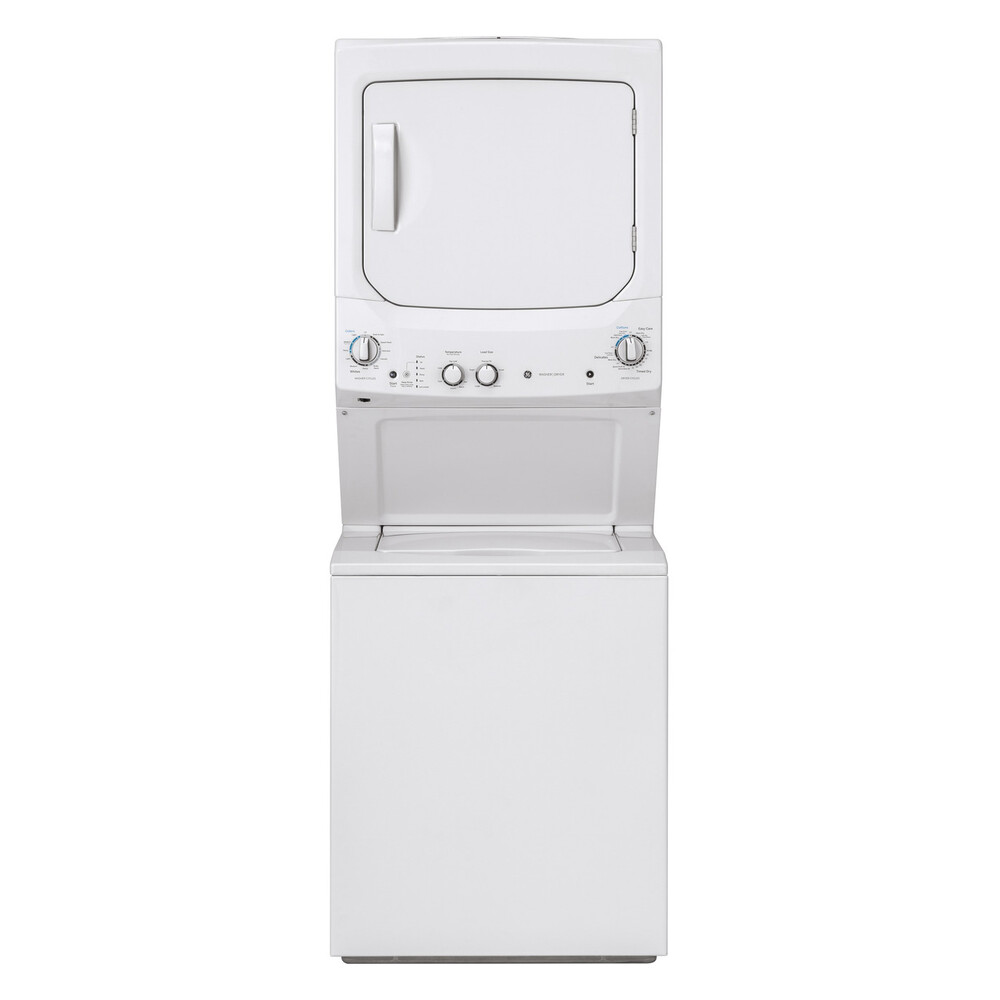
Laundry-Center Pick: GE GUD27ESSMWW
GE 27-inch unitized laundry center with a traditional washer-over-dryer stacked format in one cabinet.
- Familiar stacked layout
- 27-inch laundry-center width
- Separate washer and dryer drums
- Needs the full laundry-center height
- Not a true single-drum combo
Ventless Pick: Whirlpool WFH5424SW
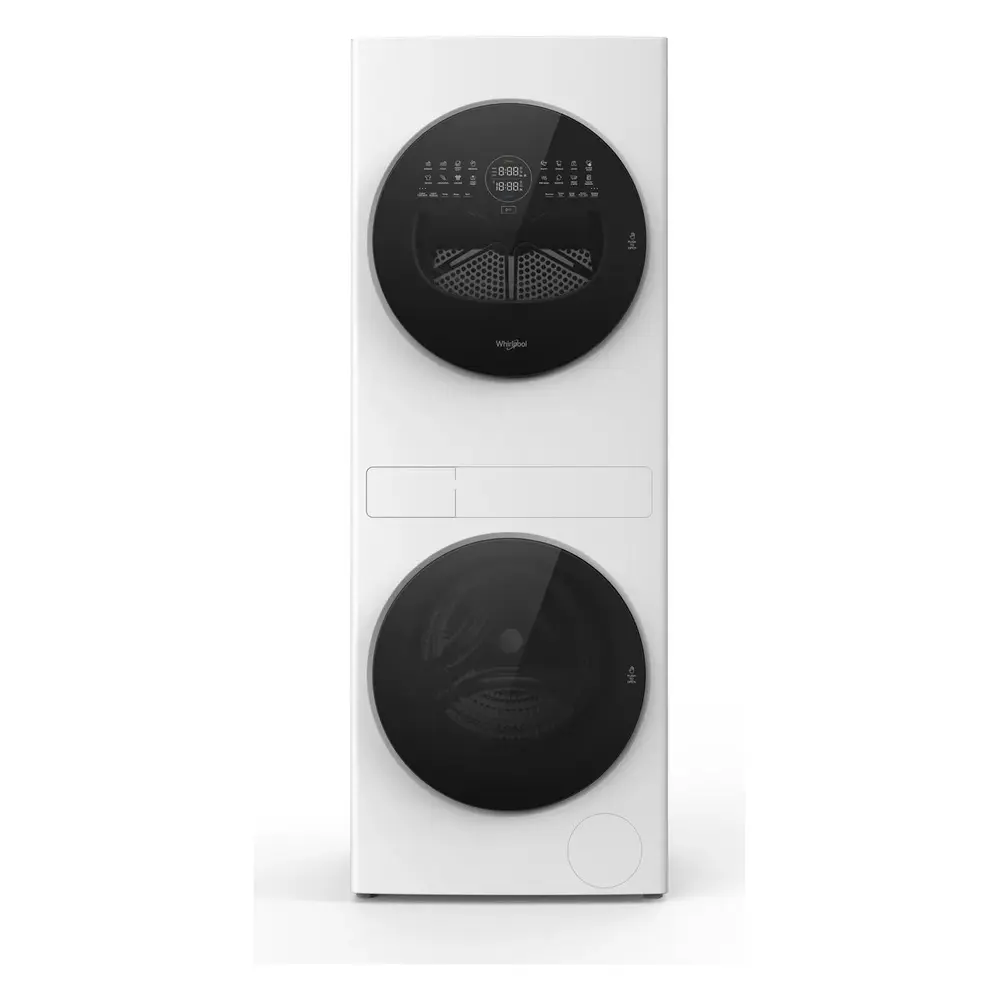
Narrow Ventless Pick: Whirlpool WFH5424SW
Whirlpool ventless heat-pump unit that keeps the footprint narrow when ducting a dryer is hard.
- Narrow width
- Ventless heat-pump drying
- ENERGY STAR listing on this model
- Heat-pump cycles can take longer
- Different install needs than a vented dryer
WashTower Pick: LG WKGX201HBA
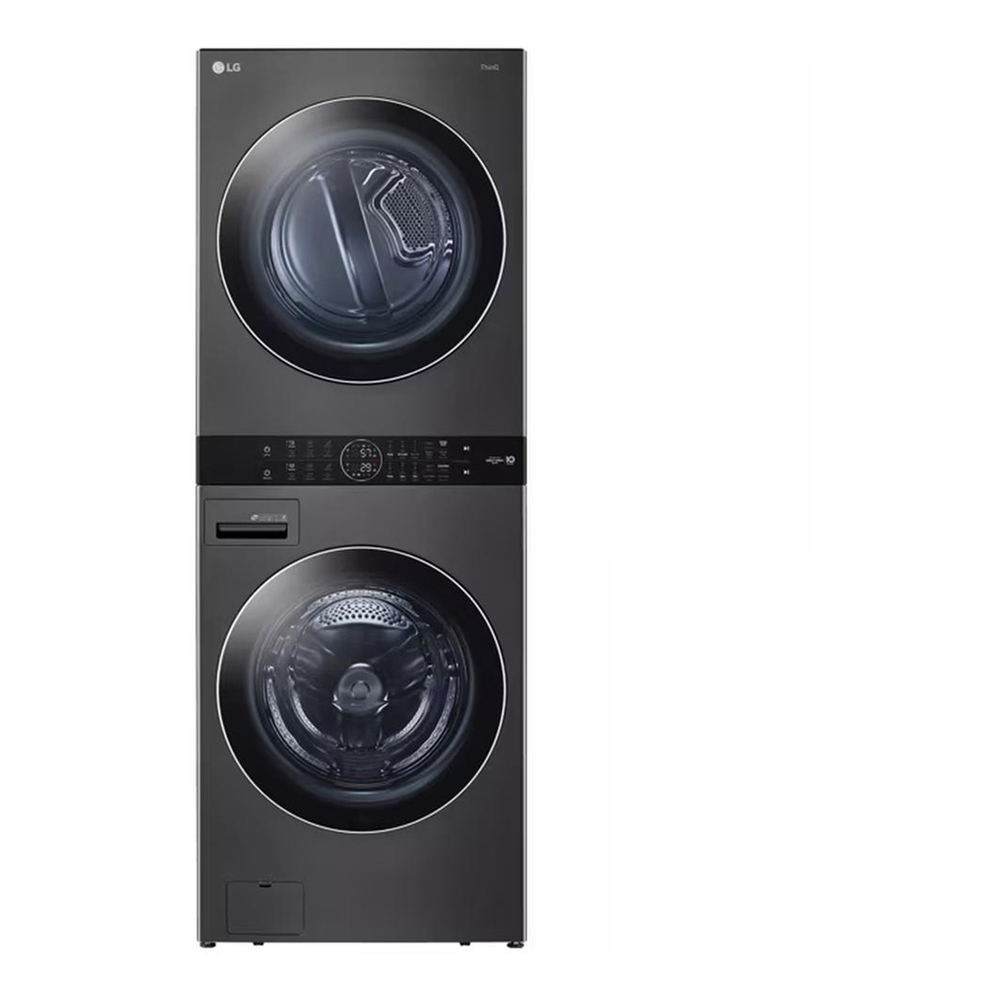
LG WashTower with a full-size washer and gas dryer in one vertical tower, plus Wi-Fi on supported setups.
- Full-size washer and dryer
- Gas dryer option on this model
- Wi-Fi on supported setups
- Needs gas supply for the dryer
- Taller than a single all-in-one drum
Washer Dryer Combo Comparison
 GE 24" Stacked | GE 27" Stacked | Whirlpool 24" Tower | LG WKGX201HBA | |
| Model | WD53DBA900HZ | GUD27ESSMWW | WFH5424SW | WKGX201HBA |
|---|---|---|---|---|
| Price | $2,965 | $1,388 | $1,898 | $2,095 |
| Width | 23 3/4" | 26 3/4" | 23 5/8" | 27" |
| Height | 74 7/8" | 75 7/8" | 63 7/10" | 74 3/8" |
| Depth | 27 3/8" | 30 7/8" | 26 77/100" | 32 3/4" |
| Washer Capacity | 2.3 cu. ft. | 3.8 cu. ft. | 2.7 cu. ft. | 4.5 cu. ft. |
| Dryer Capacity | 4.4 cu. ft. | 5.9 cu. ft. | 4.3 cu. ft. | 7.4 cu. ft. |
| Venting Type | Vented | Vented | Ventless | Vented |
| Fuel Type | Electric | Electric | Electric | Gas |
| Stacked Format |  | | | |
| Heat Pump | Not included | Not included | | Not included |
| View | View | View | View |
Washer Dryer Combo Pros and Cons
- Saves floor space by combining washer and dryer in one footprint
- Simplifies laundry room planning in closets and compact utility areas
- Comes in vented and ventless versions, so you can match the installation to your home
- Available in both compact and full-size capacities
- Can be easier to fit than two separate machines side by side
- Some models require a vent, which limits installation options
- Compact units can feel small for bulky bedding or large family loads
- Ventless models may require a different drying expectation than traditional vented dryers
- Tall stacked designs can be harder to move and install than single appliances
Washer Dryer Combo Capacity: How to Read the Numbers
Capacity is one of the first specs to check because it tells you how much laundry the machine can handle per load. On these units, washer capacity and dryer capacity are often listed separately, so compare both numbers instead of focusing on only one.
A compact model like the GE GUD24ESSMWW is easier to fit into tighter laundry closets, while larger towers such as the LG WKHC252HWA give you more room for bigger loads. If you wash bulky towels, bedding, or family-size loads often, a larger washer and dryer pairing usually feels less cramped in daily use.
Also pay attention to cabinet size. Width and height determine whether the unit fits your space, while depth affects how far it projects into the room and whether doors, vents, and hoses have enough clearance.
- Check washer capacity and dryer capacity separately.
- Measure width, height, and depth before you shop.
- Bigger capacity usually means fewer loads, not necessarily faster cycles.
- Match capacity to your household size and laundry habits.
Vented vs. Ventless: What Changes in Installation
Venting is the biggest technical difference between laundry combo types. Vented models exhaust warm, moist air outdoors through ducting, while ventless models keep that air inside the machine and manage moisture another way, often with heat pump technology.
If your home already has a proper laundry vent, a vented unit can be straightforward to plan around. If you do not have a vent path, a ventless model can open up more placement options, especially in closets, apartments, and interior rooms.
A ventless machine like the Whirlpool WFH5424SW or LG WKHC252HWA is attractive when installation flexibility matters. The tradeoff is that ventless drying can be a different experience than a traditional vented dryer, so it is worth setting expectations around cycle length and how you prefer to do laundry.
- Vented dryers need a route for exhaust air.
- Ventless models are useful where ducting is impractical.
- Heat pump models are a common ventless approach.
- Installation space and laundry room layout matter as much as the appliance itself.
How to Choose the Right Washer Dryer Combo
Start with the space you have, then work outward to capacity, venting, and style. Once you know whether you need a compact 24-inch unit or a 27-inch tower, the rest of the decision gets much easier.
If you want the simplest replacement for a standard laundry center, the GE and Frigidaire-style stacked designs are familiar and efficient to plan around. If you want a more premium laundry experience with front-load ergonomics and smart features, LG WashTower models are worth a close look.
Finally, decide how much flexibility you need at installation. Ventless machines are easier to place in more rooms, while vented units fit homes that already have a dryer exhaust path and want a more traditional setup.
- Measure your opening before you compare features.
- Choose vented if your space already supports it.
- Choose ventless if installation flexibility matters most.
- Pick the capacity that matches your laundry routine, not just your floor space.
Shop laundry centers and washer dryer combo styles to find the footprint and venting setup that fits your home.
Shop LaundryFrequently Asked Questions
What is the difference between a washer dryer combo and a stacked laundry center?
A stacked laundry center usually means two separate machines combined into one vertical cabinet, while a washer dryer combo can also refer to all-in-one or tower-style laundry units. In shopping terms, both solve the same basic problem: they save floor space by putting the washer and dryer together. The difference is mostly in layout, access, and venting.
Do washer dryer combos need a vent?
Some do and some do not. Vented models require a dryer exhaust path, while ventless models manage moisture without ducting. Always check the product's venting type before you plan the installation.
Is a ventless washer dryer combo better for small spaces?
Often, yes, because you do not have to build around a vent outlet. That makes ventless units a strong fit for closets, apartments, and interior laundry areas. The tradeoff is that drying performance and cycle timing can feel different from a traditional vented dryer.
How do I know what capacity washer dryer combo I need?
Look at both washer capacity and dryer capacity, then match them to your load size and how often you do laundry. Smaller households can usually live comfortably with compact capacities, while larger households often prefer a bigger washer and dryer pair. If you wash bulky items often, prioritize the larger drum.
Can a washer dryer combo go in a closet?
Yes, many can, as long as the opening, ventilation requirements, electrical hookup, and clearances all work for the model you choose. Compact 24-inch units are often the easiest to fit into closet-style spaces. Measure carefully and compare width, height, depth, and venting type before you buy.