
Why Pet Owners Should Consider an Air Purifier for Pet Dander

Pets make a house feel warm and full of life. Then there is the other side: faint litter-box smells and that sudden tickle in your nose when a dog jumps on the rug. You love having pets around. You are probably less excited about what floats through the air after them.
An air purifier for pet dander can help with the particles that stay airborne. A properly sized unit can reduce airborne particles in the room where it runs, giving your living space a cleaner feel.
The trick is knowing what a purifier can handle. Dander, odors, and loose hair are related issues, but each one calls for a different kind of help. A little planning makes all the difference.
Why Pet Air Can Feel So Busy
Our pets shed more than just visible hair around the house. They constantly shed tiny flakes of dry skin, called pet dander, that drift right into the room air. Pet allergens also come from dried saliva or urine. These light particles settle onto blankets and upholstery, and then float right back up whenever someone sits down.
That explains why airborne pet allergens cause trouble even in neat rooms. Effective cat dander removal takes more than brushing your pet. You need a way to address what is floating in the room as well as what has already settled on the floor.

A HEPA Filter for Pets Helps With the Tiny Stuff
When fine dander is your main concern, look for an air purifier unit with a HEPA filter for pets. HEPA filters trap fine particles out of the air. The U.S. Environmental Protection Agency notes that portable air cleaners can reduce indoor particle levels when sized properly for the room.
A pet allergy air purifier is especially handy in bedrooms or family rooms where family members spend hours at a time. Set the unit where air circulates freely. Try not to tuck it behind an armchair or squeeze it against heavy curtains, because the machine needs open space to pull air in and push filtered air out.
The Shop Appliances Air Purifiers collection includes models listed with HEPA or True HEPA filtration, and its search filters identify options for pet dander. Be sure to check each product page for its exact filter setup and room coverage before you decide. A compact bedroom and a large open family room require very different airflow capacity.

This unit from Frigidaire has a HEPA filter and can work well in an area of about 350 square feet.
Pet Odor Is a Different Job
An air purifier for pet odors needs more than a standard particle filter. Dander is a physical particle, while an odor is mostly a gas. That means a particle filter might catch floating dust while a wet-dog smell lingers right in the same room.
For reducing pet smell in the house, choose a model that combines high-efficiency particle filtration with activated carbon. Carbon media helps reduce odor molecules that travel through the unit.

The LG Puricare Air Purifier filters in a circle – 360 degrees all around. It contains activated carbon and gives you a fresh home.
Cleaning the source is still essential. You should empty the cat litter box regularly. Wash pet blankets on schedule and clean up any indoor accidents right away. The purifier works alongside your cleaning routine.

What About Dog Hair?
Anyone searching for the best air purifier for dog hair is probably tired of watching loose clumps drift across hardwood floors. We understand the frustration. Yet an air cleaner can only catch hair that is floating and reaches the intake. Fur that has already settled onto rugs or cushions still calls for a vacuum or lint roller.
Think of the unit as everyday support between chores. It may catch some hair that reaches the intake, though its main job is filtering finer airborne particles. Your vacuum cleaner remains in charge of floors and sofas.
Choosing the Right Size for Your Space
A purifier only works well when matched to the room it sits in. A tiny machine placed in a roomy open floor plan may run constantly without making much difference. That means extra electric usage without the benefit you wanted.
Start by checking the room dimensions. Compare that floor area with the manufacturer's recommended square footage. For particle removal, the EPA recommends selecting a portable unit with a Clean Air Delivery Rate (CADR) suited to the room size. A higher CADR rating shows that the machine filters particles faster.

This unit from Austin Air is for medium-sized rooms. It contains medical-grade HEPA technology and can remove particles as small as 0.1 micron. This is about 500 times thinner than human hair.
If you need air purification for multi-pet households, consider a larger unit or placing separate cleaners in key zones. Placing one purifier in the bedroom and another near the pet's main lounge area is often more practical than expecting a single unit to handle an entire home.

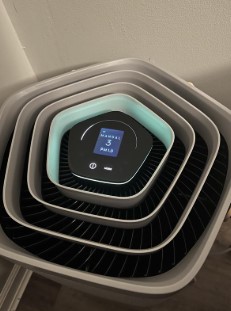
This modern unit from Electrolux looks like a sound system. It is a 13-inch Air Purifier that can even give you real-time air quality feedback in an LED light ring. Green says 'very good', while a maroon color warns of bad air quality.
Simple Habits That Help the Purifier Work Better
- Keep the purifier running continuously on an appropriate fan speed.
- Vacuum soft rugs on a regular basis, and wash pet bedding often.
- Brushing your pet outside on pleasant days also keeps loose hair from drifting indoors.
- Replace filters on the manufacturer's schedule, or sooner if the manual calls for it. As filters fill up with trapped dust, airflow gradually drops.
The Bottom Line for Pet Owners
An air purifier may be a useful part of an allergen-control plan for households affected by pet allergies. Look for verified HEPA filtration for airborne particles, and include activated carbon when pet smells are part of the challenge.
Nobody expects a pet-friendly home to look untouched by animals. That would be unnatural. The goal is cleaner indoor air. Pair a properly sized purifier with regular cleaning, and everyone breathes a little easier.
Looking for the right match for your home? Browse the air purifier collection at Shop Appliances to compare filter options and room ratings for your layout.
Frequently Asked Questions
Do air purifiers remove pet dander?
They can capture airborne pet dander that is drawn into the unit. However, larger particles that have already landed on the floor or on other furniture must still be removed with vacuuming and regular washing.
Is a HEPA filter enough for pet odors?
No. A HEPA filter captures airborne particles like dander. If your problem is odors, you'll need activated carbon in a unit to help catch the smells.
Where should I put a pet allergy air purifier?
Place it in the room where you spend the most time. Place the purifier in a spot where the airflow can move unrestricted.