
Ultimate Guide to Customizable Home Appliances: Handles, Trim, Finishes, and Panel Styles Explained

Choosing home appliances is no longer just about performance. Today, appliances are a core part of your home’s visual identity. The wrong finish, handle, or proportion can disrupt an otherwise well-designed space, while the right choices make your kitchen feel intentional, cohesive, and elevated.
This guide walks you through exactly how to buy customizable appliances that match your home’s design, from finishes and proportions to full design systems.
Step 1: Start with Your Design System, Not the Appliance
Before comparing brands or features, define your overall design direction. Appliances should follow your space, not lead it.
Modern Minimalist System
- Panel style: slab or flat-panel doors
- Handles: integrated edge pulls, long slim bar pulls, or touch-to-open systems
- Trim: square-edge casings and flat baseboards
- Finish: monochromatic, matte or high gloss, polished chrome or matte black
This system prioritizes simplicity and visual clarity. Appliances are often fully integrated or minimal in appearance.
Classic Transitional System
- Panel style: shaker-style doors
- Handles: mix of knobs (upper cabinets) and pulls (lower drawers), simple bar pulls
- Finishes: brushed nickel or satin brass
- Trim: subtly stepped profiles, typically 5 to 7 inches tall
- Color palette: neutral tones, often painted cabinets with wood islands
This style balances modern and traditional elements, making it one of the most flexible for appliance selection.
Traditional Farmhouse System
- Panel style: beadboard or raised panels
- Handles: cup pulls, porcelain knobs, rustic latches
- Finishes: oil-rubbed bronze, unlacquered brass, rustic bronze
- Trim: multi-piece colonial or craftsman-style casings
- Colors: warm whites, sage green, olive tones
Appliances in this system are often more visible and contribute to the overall character of the space.
Step 2: Choose Between Integrated vs Statement Appliances
Deciding between integrated (panel-ready) and statement appliances is a critical step in defining a kitchen's architectural narrative, as appliances significantly impact visual clutter, style cohesion, and daily functionality.
Integrated (Panel-Ready) Appliances
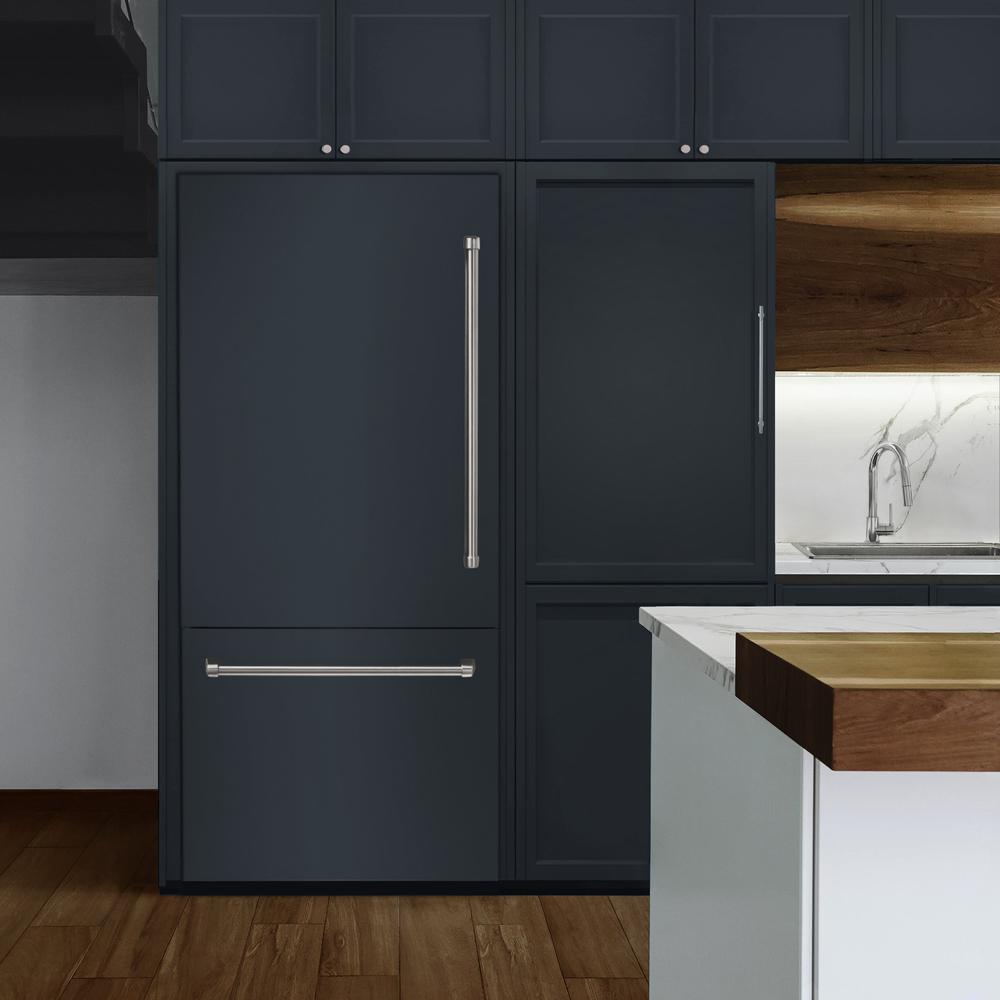
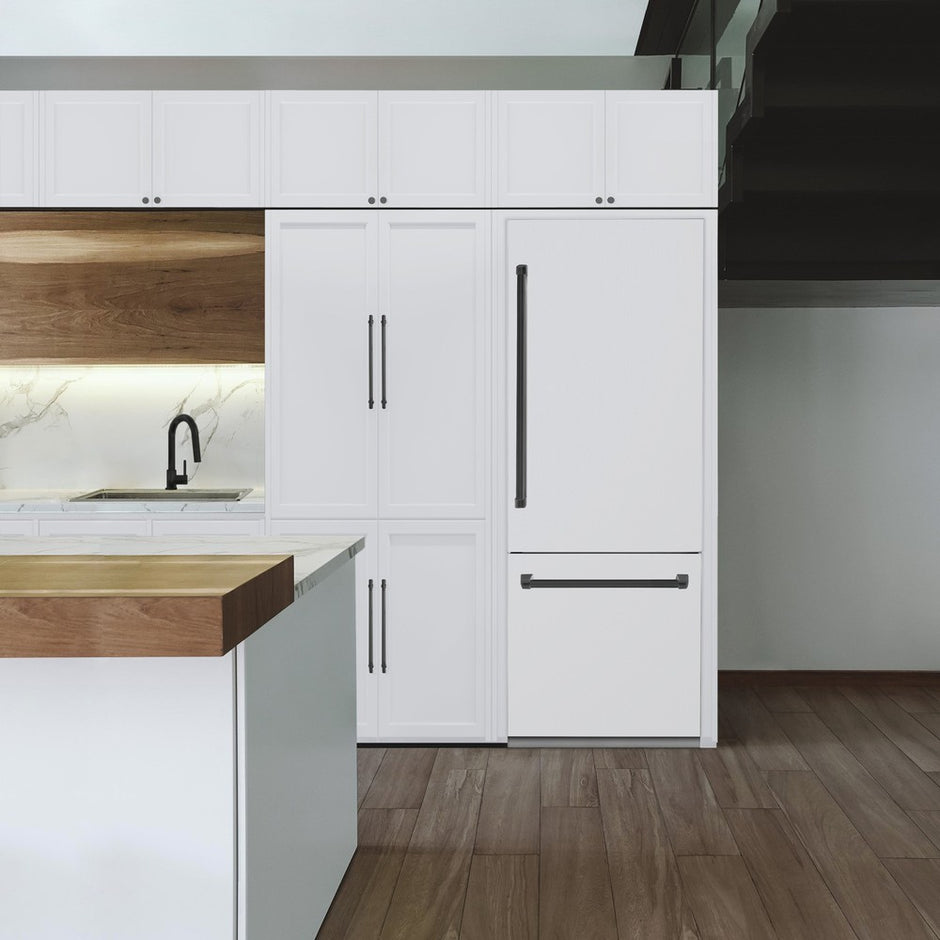
Integrated appliances are designed to blend seamlessly into the cabinetry by utilizing custom panels that match the cabinet door style and finish.
- Visual Impact: This approach keeps visual clutter at bay, creating a clean, streamlined look that is highly favored in open-plan layouts and modern-traditional designs.
- Hardware Requirements: Because integrated appliances have heavy, gasket-sealed doors, they require specialized appliance pulls. These pulls are larger in scale (typically 12 to 18 inches) and are fitted with larger #10 machine screws and rear-mounting bolts to provide the necessary leverage and structural stability.
- Design Consistency: To maintain a unified look, these handles should closely match surrounding cabinet hardware in size and position.
Statement Appliances
Statement appliances are exposed fixtures that serve as distinct focal points or "punctuation" within the room's design.
-
Style Variations:
- Stainless Steel: A timeless choice often paired with modern or transitional kitchens for a sleek, industrial touch.

-
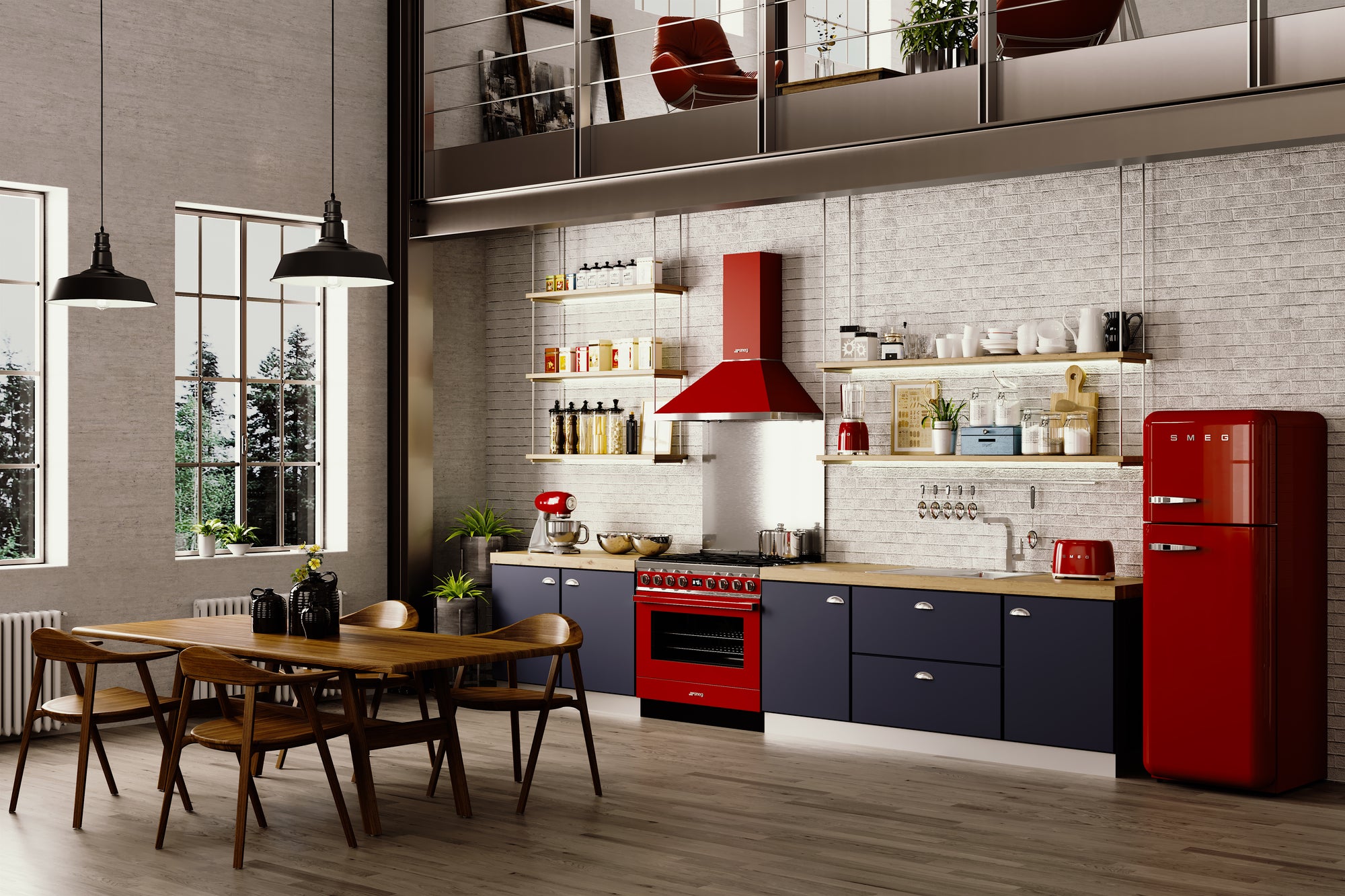
Style Variations:
- Retro and Vintage: One-of-a-kind vintage or retro-inspired appliances can add a sense of history, warmth, and opulence, often elevating the kitchen to a "luxe" level.
-
Style Variations:
- Bold Finishes: Dark-colored appliances (such as black stainless steel) can provide a dramatic anchor, particularly when the color is echoed in the cabinet hardware or other fixtures.
- Coordination Tip: It is vital to coordinate appliance finishes with other metal elements. For example, matte black hardware can echo black stainless appliances, but designers warn against clashing undertones, such as pairing warm brass pulls with cool-toned stainless appliances.

How to Choose Between the Two
- Kitchen Size and Layout: Integrated options are ideal for smaller kitchens or open-concept spaces where an uninterrupted visual field makes the area feel larger and more organized.
- Style Priorities: If the goal is a Modern Minimalist look with reduced visual noise, integrated appliances are preferred. If the goal is a Traditional Farmhouse or Classic Transitional look, statement pieces like an apron-front sink paired with high-end, exposed ranges can enhance the room’s character.
- Function and Clearance: Regardless of the style, ensure there is ample space for appliance doors to open fully without colliding with cabinets or hardware. Professionals often leave extra space near corners to prevent drawers from hitting large appliance handles on adjacent walls.
Step 3: Select the Right Finish (And Don’t Guess)
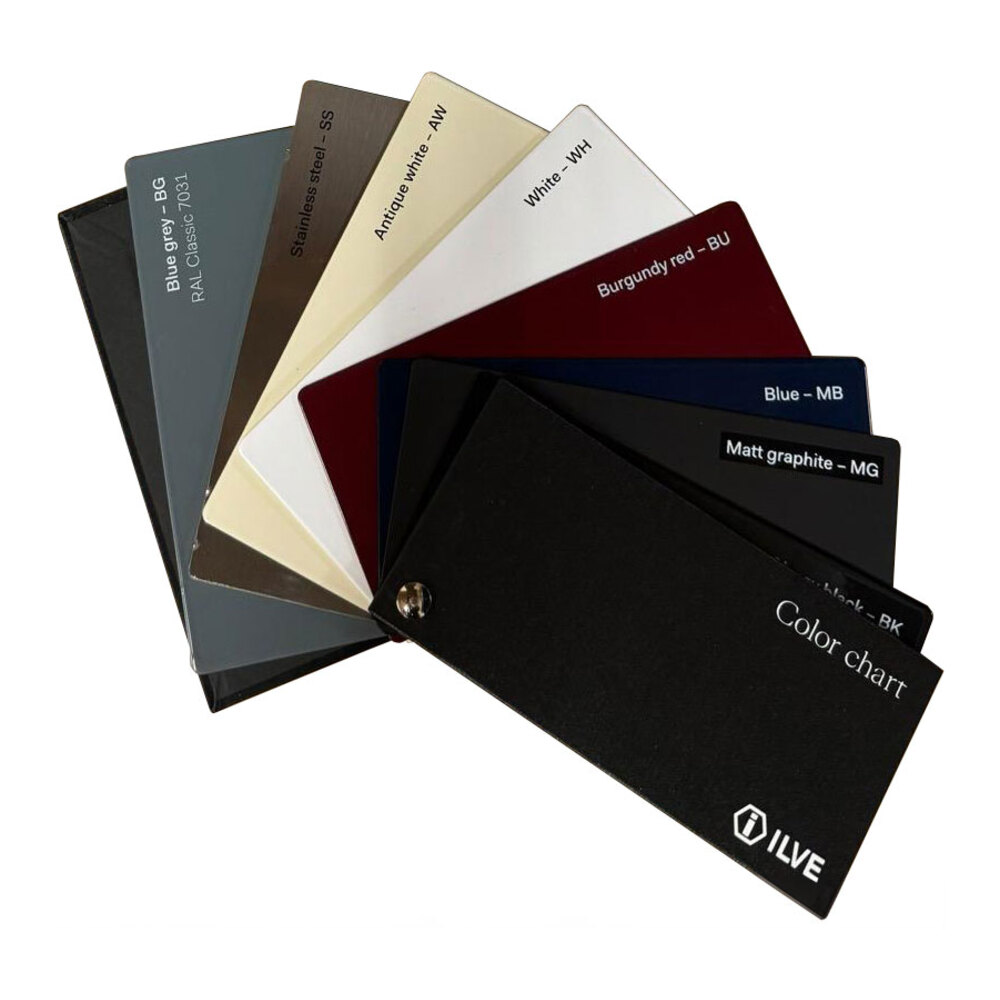
Common Appliance Finishes
- Stainless steel: safe, versatile, widely compatible
- Matte black: bold, modern, high contrast
- White or panel-ready: subtle, minimal
- Custom colors: premium, design-forward
How to Mix Finishes Properly
The 70/30 Rule for Mixing Metals
Hardware is often considered the "jewelry" of the room and must coordinate with other fixed metal elements, including faucets, sinks, lighting fixtures, and appliance trims.
- Unified Finishes: For a cohesive look, the hardware finish should be repeated across pendants, wall sconces, and sink fittings.
- Mixed Metals: While matching exactly is not required, different finishes must share similar undertones to work together. Following the 70/30 rule: using a dominant finish for 70% of the room and a secondary finish for the remaining 30%, is a professional standard for achieving balance.
- Appliance Integration: Hardware can echo appliances, such as pairing matte black pulls with black stainless steel appliances. Appliance pulls (12 to 18 inches) should be used for integrated panels to maintain scale and provide necessary leverage.
Limit Your Palette
Stick to two or three finishes maximum to avoid visual clutter.
Mixing warm and cool tones without intention creates visual tension. Keeping undertones consistent ensures the design feels deliberate rather than accidental.

Step 4: Get Proportions and Handle Design Right
Achieving a professional cabinetry installation requires meticulous attention to scale, the application of established sizing rules, and strategic purchasing. Below are the insights for getting proportions right, utilizing the one-third rule, and practical tips for buying hardware.
Proportions and Handle Design
Getting proportions right is essential for ensuring that hardware serves as a refined detail rather than a distraction.
- Avoiding Design Pitfalls: Hardware that is too small for a cabinet front can appear "apologetic" and lost, while oversized hardware can look "clumsy" and overwhelm the design. The goal is for the proportion to feel inevitable rather than forced.
- Matching Door Style: Proportions must echo the architectural narrative. For example, long pulls in a clean finish establish rhythm in minimalist modern kitchens, while petite knobs can highlight delicate cabinetry in traditional settings.
- Functional Duality: Handle design is also ergonomic. Pulls offer a more substantial grip and are superior for heavy drawers or high-use areas because they distribute force across a larger surface. Knobs are compact and ideal for smaller doors or situations where you want the cabinet’s own detail to shine.
The One-Third Rule for Hardware
The one-third rule is the widely accepted professional standard for maintaining visual balance between hardware and cabinetry.
-
The Horizontal Standard: This rule dictates that a drawer pull should measure approximately one-third the width of the drawer front.
- Example: A 12-inch drawer is ideally paired with a 4-inch pull, whereas a 30-inch drawer would require a 10-inch pull.
- Wide Drawer Applications: For drawers wider than 30 inches, designers often choose between a single extra-long pull following the one-third rule or two smaller pulls spaced evenly (typically at 1/6th of the width from each edge) to prevent the drawer from twisting during operation.
- Vertical Exceptions: It is important to note that vertical cabinet doors do not follow the one-third rule. Standard upper cabinet pulls typically range between 5 and 7 inches. For extra-tall pantry doors or integrated appliance panels, specialized appliance pulls (12 to 18 inches) are used to provide the necessary leverage for heavy, gasket-sealed doors.
Practical Buying Tips
When sourcing hardware, consider these professional strategies to ensure quality and aesthetic success:
- Try Before You Buy: Utilize sample programs to see and feel hardware in person before committing to a full order.
- Test in Situ: Place hardware samples within your actual kitchen to assess how the finish appears in your unique lighting at different times of the day; showroom lighting can be deceptive.
- Consider Maintenance: Burnished or matte styles are significantly easier to keep clean than high-polish finishes, which are prone to showing fingerprints and smudges.
- Strategic Budgeting: If resources are limited, it is better to invest in fewer, high-quality pieces for high-impact areas rather than spreading a budget thinly across mediocre options for the entire room.
- Material Selection: For longevity, solid bronze is a premier choice due to its strength and ability to develop a natural patina over time.
Step 5: Decide Between Contrast vs Monochromatic Design
Deciding between intentional contrast and a monochromatic design dictates whether your hardware serves as a bold focal point or a subtle, integrated element within the kitchen.
Monochromatic Design: The "Quiet" Choice
A monochromatic approach involves matching hardware finishes closely to the cabinetry color (e.g., brushed nickel pulls on light gray cabinets).
- Visual Effect: This style produces a sleek, understated, and calming effect that reduces visual noise. It is often favored by minimalists who prefer subtlety over ornamentation.
- Space Management: Harmonious or monochromatic tones are highly effective in smaller kitchens or open-concept layouts because they allow colors to flow naturally, preventing the space from feeling visually cluttered.
- Technique (Color Drenching): For a sophisticated monochromatic look, designers often use "color drenching", painting walls, trim, and cabinetry the same color but varying the sheens (e.g., satin on walls and semi-gloss on trim) to create subtle definition while making the space feel larger.
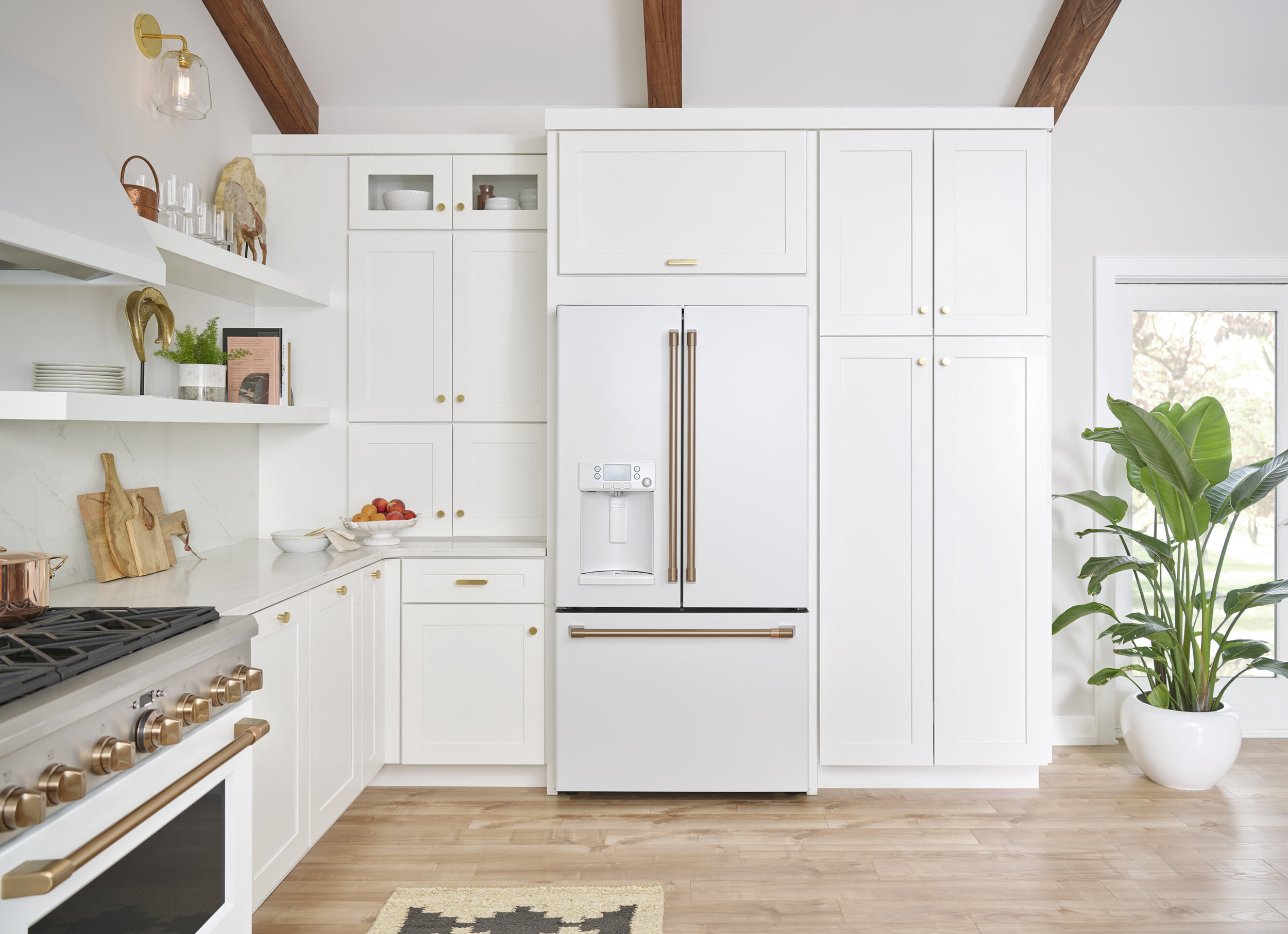
Intentional Contrast: The "Dramatic" Choice
Intentional contrast utilizes hardware as the punctuation of the room, creating visual tension and drama against the cabinetry backdrop.
- Visual Effect: This creates a bold, graphic look that draws the eye to specific architectural features or focal points, such as a kitchen island.
-
Popular High-Contrast Pairings:
- Matte Black hardware on bright white or light wood cabinetry creates a striking modern statement.
- Satin Brass or Gold hardware on dark navy or forest green cabinets introduces a sophisticated, upscale glow.
- Polished Chrome on charcoal or black cabinets for a high-end, luxurious feel.
- Ideal Conditions: Larger kitchens or those with abundant natural light are better suited for high-contrast schemes, as they can handle the visual weight of deeper tones and mixed-metal drama without feeling oppressive.

Key Factors to Consider for Your Decision
- Light Exposure: The direction your kitchen faces matters. North-facing kitchens receive soft, diffuse light that can make warm tones appear muted, often benefitting from lighter, more harmonious finishes. South-facing kitchens handle crisper whites or high-contrast, saturated hues more confidently.
- Kitchen Size: If you want the space to look roomier and airier, you cannot go wrong with lighter, monochromatic shades. If you have a large open area, contrast can help ground the design and define specific zones.
- Psychological Impact: Soft neutrals and monochromatic schemes tend to relax a space, while deeper tones and high contrast create a more expressive and dramatic mood.
Step 6: Budget Smartly
Budgeting smartly for a kitchen renovation involves making strategic choices about materials, styles, and whether to refurbish or replace existing elements. Several professional strategies can help you maximize your investment:
Choose Cost-Effective Styles
Complexity in construction often translates to higher prices.
- Slab and Flat-Panel Doors: These are frequently cited as the most budget-friendly options because their single-piece construction is easier to manufacture than framed doors.
- Shaker Volume Savings: Although Shaker cabinets have a multi-piece construction that can sometimes be more expensive, their extreme popularity means high manufacturing volumes often keep their prices competitive.
- Simple Hardware: The type of hardware you select also impacts the bottom line; ornate designs with scrolling or beaded details will cost more than sleek, minimalist pulls and knobs.
Smart Sourcing
- Bulk and RTA Purchasing: Buying in bulk or selecting Ready-to-Assemble (RTA) cabinets can offer significant savings for homeowners and contractors alike.
- Supplier Dependability: Choose dependable suppliers who honor delivery times; delays in shipping can lead to increased labor costs and project frustration.
Common Buying Mistakes to Avoid
-
Mixing Too Many Finishes
Using multiple metals without a clear strategy creates visual clutter.
- Avoid combining more than two or three finishes
- Follow a dominant and secondary hierarchy (like the 70/30 approach)
Fix: Choose one primary finish and use others only as accents.
-
Ignoring Undertones
Not all metals are compatible.
- Warm tones: brass, bronze
- Cool tones: chrome, stainless steel
Mixing warm and cool finishes without intention makes the space feel disjointed
Fix: Keep undertones consistent across appliances, hardware, and fixtures.
-
Choosing the Wrong Handle Size
Hardware that is too small or too large disrupts visual balance.
- Small handles look “apologetic”
- Oversized pulls can overwhelm cabinetry
Fix: Use proportional guidelines like the one-third rule to maintain scale
-
Overusing Contrast Without Structure
While contrast adds interest, too much creates chaos.
- Random mixing of finishes and styles
- No clear visual hierarchy
Fix: Use contrast intentionally and anchor it with a dominant finish.
-
Not Coordinating with Lighting and Fixtures
Appliances should not exist in isolation.
Failing to coordinate with:
- Faucets
- Lighting
- Cabinet hardware
leads to a fragmented look.
Fix: Treat appliances as part of the overall metal and material palette.
-
Skipping Functional Considerations
Aesthetic choices should never compromise usability.
Examples:
- Hard-to-grip handles
- Poor clearance with cabinetry or trim
- Inconvenient appliance placement
Fix: Balance design with function. A well-designed kitchen must work as well as it looks.
Final Checklist Before You Buy
What design system am I following?
Do I want integrated or statement appliances?
Are my finishes consistent across the space?
Do the proportions and handles feel balanced?
Are appliances coordinated with lighting and hardware?
Design First, Then Buy
The best appliance choices are not just functional. They are intentional. When you align finishes, proportions, and design systems, your appliances stop feeling like separate objects and start becoming part of a cohesive space.
Ready to turn your kitchen from assembled to designed? Discover appliances that match your style, scale, and finish perfectly at Shop Appliances.
FAQs:
What are customizable home appliances?
Customizable home appliances are appliances that can be tailored to match your kitchen design through options like panel-ready fronts, interchangeable handles, multiple finishes, or custom colors. They are designed to integrate with cabinetry and overall interior style rather than stand out as separate elements.
Can you mix different appliance finishes in one kitchen?
Yes, but it should be done carefully. Limit the number of finishes and maintain a clear hierarchy so one finish dominates while others act as accents. This prevents the kitchen from feeling visually cluttered.
Are integrated appliances worth the investment?
Integrated appliances are worth it if you want a seamless, high-end look and a more cohesive kitchen design. However, they usually cost more and require planning with cabinetry, so they are best suited for full renovations rather than quick upgrades.
Do appliance finishes affect maintenance?
Yes!
- Matte and brushed finishes are easier to maintain and hide fingerprints
- Polished or glossy finishes require more frequent cleaning
Choosing the right finish can impact both appearance and long-term upkeep.
How do I make my kitchen look cohesive with appliances?
Focus on consistency across finishes, proportions, and materials. Appliances should align with cabinet hardware, lighting, and fixtures so the entire space feels unified rather than assembled piece by piece.
Read More:
How to Pair Luxury Refrigeration with Custom Cabinetry (Complete 2026 Design Guide)
Best Kitchen Appliance Packages for Open Concept Layouts in 2026
Beyond the Suite: How to Mix Appliance Brands Without Ruining Your Kitchen's Design Flow
How to choose a refrigerator for a condo, brownstone, or large family kitchen
How to Choose the Right Dishwasher (Complete Buying Guide 2026)