
Best 2026 Guide: How to Match Refrigeration, Cooking, and Ventilation for Kitchen Design

Technical and Aesthetic Integration of Major Appliances
Designing a kitchen that performs well and looks cohesive requires more than selecting high end appliances. The real success comes from how refrigeration, cooking, and ventilation systems are sized, positioned, and integrated into the space. When these systems are aligned with ergonomic planning and thoughtful layout geometry, the kitchen becomes both efficient and visually unified.
Ergonomic Paradigms and the Evolution of Spatial Planning
The architectural evolution of the residential kitchen has transformed it from a marginalized service corridor into a high-performance social and culinary center. This shift has turned the kitchen into a "complex ecosystem" where independent appliances are replaced by interdependent thermal, atmospheric, and ergonomic components.
The Kitchen Work Triangle
Formalized in the 1940s, the work triangle remains the primary metric for assessing layout efficiency. It connects the three primary work centers: the refrigerator, the range/cooktop, and the sink.
Professional standards set by the National Kitchen and Bath Association (NKBA) dictate the following dimensions for a functional triangle:

- Individual Legs: No single leg should be less than 4 feet or more than 9 feet.
- Total Perimeter: The sum of the three legs should be between 13 and 26 feet.
- Obstructions: Full-height obstacles, such as pantries or refrigerators, should not separate two primary work centers.
- Island Intersections: No leg of the triangle should intersect an island or peninsula by more than 12 inches.
Evolution into Functional Work Zones
While the triangle is still relevant, modern lifestyles and larger open-concept kitchens often require transitioning to a "work zone" concept. This approach accommodates multiple users and the wider range of appliances found in contemporary homes. These zones typically include:
- Storage Zone: Includes the refrigerator, freezer, and pantry, ideally placed near the kitchen entrance for easy grocery storage.
- Preparation Zone: Centered around continuous counter space and the sink, often requiring at least 30 to 36 inches of uninterrupted surface.
- Cooking Zone: Houses the thermal units (cooktop, oven) and ventilation systems.
- Cleaning Zone: Includes the sink, dishwasher, and waste/recycling receptacles.
Seamless Architectural Integration
Modern paradigms prioritize logical sequencing and visual harmony to ensure the kitchen functions as a design statement.
- Movement Paths: Standard walkways should be at least 36 inches wide, while work aisles for multiple cooks should expand to 48 inches to prevent bottlenecks.
- Integrated Profiles: To maintain superior architectural lines, designers often utilize counter-depth refrigerators (24 to 30 inches deep) or panel-ready appliances that are fitted with custom cabinetry doors to become indistinguishable from storage units.
- Task Sequencing: Efficient design ensures that items retrieved from the refrigerator can be placed immediately on a landing area (at least 15 inches of counter space), facilitating a smooth transition from prep to cooking.

Geometric Configurations and Workflow Optimization
The kitchen layouts listed here are the primary configurations used to balance workflow, storage, and social needs. According to the sources, achieving a "correct match" in these layouts requires integrating ergonomic paradigms like the work triangle and functional work zones to ensure safety and efficiency.

Image credit: Pinterest |
Galley (Parallel)
|
L-Shaped
|

Image credit: Pinterest |

Image credit: Pinterest |
U-Shaped
|
G-Shaped
|

Image credit: Pinterest |

Image credit: Pinterest |
One Wall
|
Island Layout
|

Image credit: Pinterest |
General Planning Standards
To optimize any of these layouts, professional guidelines recommend the following:
- Work Triangle Dimensions: The total sum of the three legs should be between 13 and 26 feet, with no individual leg measuring less than 4 feet or more than 9 feet.
-
Landing Areas: Every major appliance needs adjacent counter space for safety and efficiency:
- Refrigerator: At least 15 inches of landing area on the handle side.
- Cooking Surface: At least 12 inches on one side and 15 inches on the other.
- Sink: A primary prep area of at least 30 to 36 inches of continuous countertop should be immediately next to the sink.
Refrigeration Systems: Sizing, Depth, and Architectural Profile
Refrigeration is often the largest visual mass in the kitchen, making its integration critical both functionally and aesthetically.
Key Considerations
1. Sizing
- Match capacity to household needs, not just available space
- Oversized units can disrupt workflow and dominate the layout
2. Depth
- Counter depth refrigerators align with cabinetry for a flush look
- Standard depth models offer more storage but project into walkways
3. Placement
- Position near the kitchen entry or prep zone for easy access
- Avoid placing directly within the main cooking zone to reduce congestion
4. Panel Ready vs Stainless
- Panel ready units blend into cabinetry for a seamless appearance
- Stainless steel creates a focal point and pairs well with modern finishes
For accurate planning, refer to your appliance measurement guidelines to ensure proper clearances and ventilation space.
Cooking and Ventilation: Performance Meets Placement
Integrating the cooktop and ventilation system as a coordinated pair is essential for maintaining atmospheric quality and protecting kitchen surfaces. A successful installation treats these components as a single ecosystem where technical specs like airflow and mounting geometry align with architectural goals.
Ventilation Fundamentals
- Hood width should match or exceed the cooktop width: For optimal capture, a range hood should ideally be 6 inches wider than the cooking surface, providing a 3-inch overhang on each side. This extra width accounts for the fact that smoke and grease do not rise in straight lines but expand as they move upward.
-
Mounting height affects both performance and visual balance: Positioning the hood too high allows pollutants to escape, while too low can cause heat damage.
- Electric/Induction: Recommended height is typically 20 to 30 inches above the surface.
- Gas: Because of higher heat and smoke output, a range of 24 to 36 inches is standard, with many experts recommending 32 to 34 inches as the "sweet spot" for performance.
- Ducted systems provide the best performance: These systems vent pollutants directly outside and are significantly more effective at removing heat, moisture, and odors than recirculating (ductless) models, which only filter and return air to the room.
Performance Matching: Cooktop to Hood
The ventilation power, measured in Cubic Feet per Minute (CFM), must be precisely matched to the cooking technology.
- Gas Cooktops: Require robust ventilation due to combustion byproducts. The standard rule is 100 CFM for every 10,000 BTUs of total output.
- Electric/Induction: Often support subtler visual solutions. The requirement is generally 100 CFM for every 12 inches of cooktop width.
Smart Integration Across Appliance Systems
Connected appliances are redefining kitchen systems by moving away from independent units toward a complex ecosystem of interdependent thermal, atmospheric, and ergonomic components. This "digital orchestration" relies on communication protocols, often called a "smart handshake," which allow the cooking surface and ventilation system to function as a synchronized pair.
Leading Integration Platforms
The following proprietary technologies illustrate how digital synchronization improves efficiency and safety:
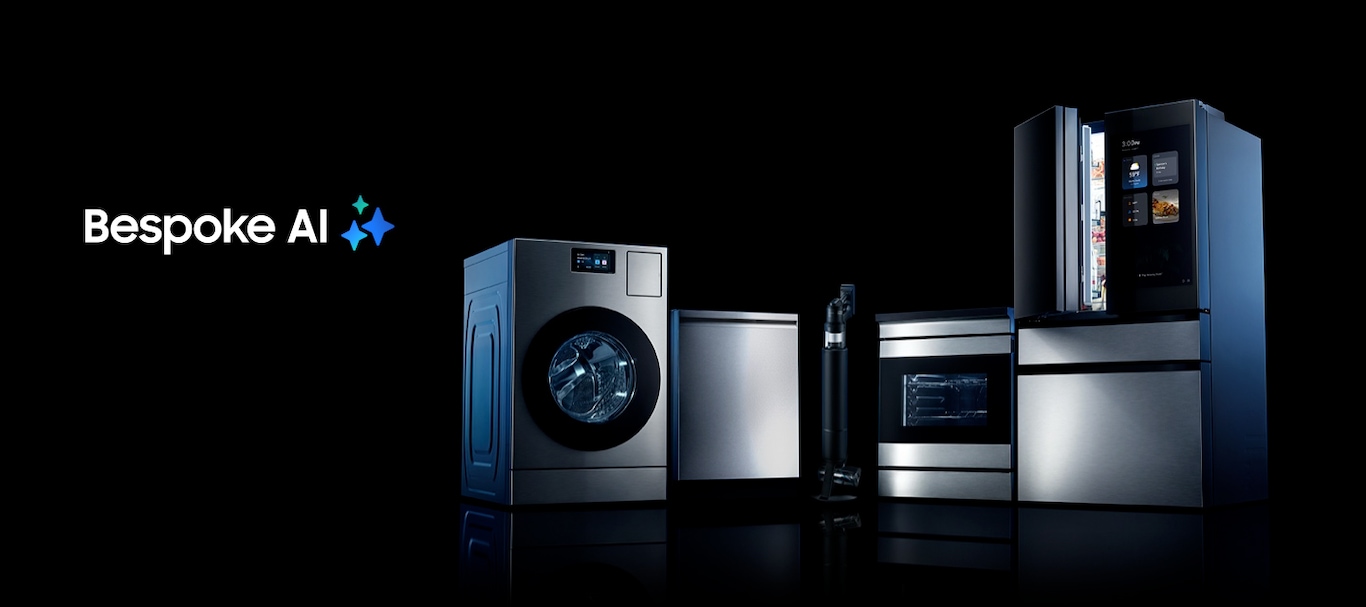
- Samsung Auto Connectivity: This system utilizes Bluetooth to pair compatible hoods and cooktops. Once paired, turning on any burner instantly activates the hood's fan and LED task lighting.
- GE Chef Connect: Another Bluetooth-based system, it synchronizes appliance clocks and automates the activation of fans and lights specifically when the range is in use.
- Bosch Home Connect: Leveraging Wi-Fi and the Matter standard, this platform integrates appliances into broader smart home ecosystems. It supports remote diagnostics and automation routines, such as flashing smart lights when a cooking timer expires.
Common Integration Challenges
- Routing ductwork in island layouts: Island hoods are complex because they lack a back wall to help direct plumes toward the filters. To compensate for cross-drafts in open spaces, designers should add a 100–200 CFM buffer to the base calculation.
- Maintaining clean sightlines in open concept kitchens: For those who want the ceiling line to remain "quiet," downdraft ventilation is an alternative that rises from the counter only when needed. Alternatively, induction cooktops pair well with minimalist intent because they can often utilize less bulky, more discreet hood designs.
- Balancing power with noise levels: High-CFM fans can be loud. To mitigate this, one can scale up to a larger hood; a larger capacity fan running at a lower speed is often much quieter than a small fan at max power. Another option is using inline or remote blowers, which move the noisy motor further away from the kitchen.
Smart Integration and Architecture
A well-integrated hood should feel like a deliberate part of the architecture rather than an afterthought. For example, a custom plaster hood can serve as an intentional vertical centerpiece while housing high-performance components. Digital orchestration further enhances this by ensuring that ventilation power precisely matches the thermal load, protecting surfaces from grease while maintaining the "visual quiet" of the space. This systemic approach ensures the kitchen is safe, efficient, and visually harmonious.
Multi System Coordination Checklist
- Refrigerator placement supports natural food flow from storage to prep
- Cooktop is positioned with adequate clearance on both sides
- Ventilation system is properly sized and correctly mounted
- Appliance door swings do not conflict with walkways or each other
- Electrical, gas, and ducting requirements are planned early
- Smart connectivity features are compatible across brands if used
Finishes and Material Cohesion
Achieving a cohesive kitchen design requires balancing appliance finishes with cabinetry and countertops to create a unified ecosystem. The following details from the sources expand on the strengths and considerations of the primary finishing options.
Stainless Steel
- Timeless and professional appearance: Stainless steel remains the "gold standard" for professional-grade kitchens. However, there are significant chemical differences between grades. 304 Stainless Steel (18/8 or 18/10) is the premium choice for its high corrosion resistance and deep, brushed luster; it is notably non-magnetic. In contrast, 430 Stainless Steel (18/0) is magnetic and more affordable but may show surface wear and fingerprints more readily.
- Pairs well with contemporary and transitional designs: To enhance daily usability, many manufacturers now offer specialized coatings like PrintShield or PrintProof, which resist smudges and fingerprints while remaining easy to clean with a soft cloth.
- Brand Variations: When mixing brands, designers must be cautious as the "grain" and "tone" of stainless steel vary. Some brands have a "warm" tone with higher nickel content, while others have a "cool" or bluish cast.
Panel Ready
- Integrates seamlessly with cabinetry: Panel-ready or "integrated" appliances are designed to be fitted with custom door panels that match the surrounding cabinetry. This effectively hides large components like refrigerators and dishwashers, making them indistinguishable from storage units.
- Ideal for minimalist or highly customized spaces: These appliances support a "flush-mount" aesthetic that aligns with minimalist goals by maintaining a superior architectural line throughout the room. For example, counter-depth refrigerators are often paired with panel-ready finishes to sit nearly flush with 24-inch base cabinets.
Mixed Finishes
- Can add visual interest when used intentionally: Using mixed finishes or "hardware accessory kits" allows you to curate unique textures, such as pairing stainless steel appliances with bold Black Ore or Bronze handles and knobs. This can refresh the energy of the kitchen without requiring a full appliance replacement.
- Requires careful coordination: To avoid a fragmented look, matching handle styles is a primary method for creating cohesion across different brands. Pro-style appliances often use robust bar handles, while contemporary lines may use slim, curved grips or integrated pocket handles.
- In-Brand Safety: Buying from the same brand is the safest way to ensure that whites, blacks, and specialty finishes like black stainless steel match exactly, as these colors often differ significantly between manufacturers.
Material Cohesion Tips
- Countertop Integration: For a minimalist look, induction cooktops provide the cleanest read because the flush, dark glass often blends into stone countertops rather than appearing as a separate piece of equipment.
- Visual Weight: Standard-depth appliances that protrude 6 to 12 inches beyond cabinetry can create visual "bulk". Utilizing counter-depth models or integrated panels helps maintain a cohesive flow, especially in narrow galley layouts.
Bringing It All Together
A well designed kitchen is the result of coordinated systems rather than isolated choices. When refrigeration, cooking, and ventilation are aligned with layout geometry, ergonomic principles, and cohesive finishes, the space becomes intuitive to use and visually refined.
The goal is not just to install appliances, but to integrate them into a unified environment where performance and design reinforce each other.
When you are ready to bring that vision to life, explore curated solutions and expert guidance at Shop Appliances. From advanced refrigeration systems to high performance cooking and ventilation, you will find everything you need to build a kitchen that works beautifully and looks even better.
FAQs
What is the ideal distance for the kitchen work triangle?
The traditional guideline is that the total distance between the sink, refrigerator, and cooktop should fall between 13 and 26 feet. Each leg should typically be between 4 and 9 feet. However, modern kitchens often adapt this into zones rather than strict triangle rules, especially in open layouts.
Should appliances always follow the work triangle?
Not necessarily. While the work triangle is a helpful foundation, today’s kitchens often prioritize zone based planning such as prep, cooking, cleaning, and storage zones, especially in larger or multi user spaces.
What size ventilation hood do I need?
Your hood should be at least as wide as your cooktop, ideally 3 to 6 inches wider for optimal performance. Power requirements depend on your cooking style:
- Light cooking: 300 to 400 CFM
- Moderate cooking: 400 to 600 CFM
- Heavy cooking: 600+ CFM
What is the difference between counter depth and standard depth refrigerators?
- Counter depth: Aligns with cabinetry for a built in look but offers less storage
- Standard depth: Extends beyond cabinetry, providing more capacity but impacting walkway space
Where should the refrigerator be placed?
Ideally near the kitchen entry or prep area so users can access it without disrupting the cooking zone. It should not block primary walkways when doors are open.
Can I mix appliance brands if I want smart features?
Yes, but compatibility varies. Some ecosystems like Bosch Home Connect (with Matter support) are more flexible, while others like Samsung and GE work best within their own ecosystems.
What clearances should I plan for appliances?
- Walkways: Minimum 36 inches, 42 to 48 inches recommended for multi user kitchens
- Dishwasher to sink: Adjacent placement preferred
- Refrigerator door swing: Ensure full clearance without blocking paths
Are panel ready appliances worth it?
They are ideal if you want a seamless, integrated kitchen design. However, they typically cost more and may have slightly reduced interior space compared to freestanding models.
How do I ensure my kitchen design is future proof?
Focus on:
- Flexible layouts
- High quality ventilation
- Energy efficient appliances
- Smart features with broad compatibility
Where can I find the right appliances for my kitchen design?
You can explore a wide selection of refrigeration, cooking, and ventilation solutions at ShopAppliances.com, where expert guidance and curated products help simplify the decision making process.
Read More
Best Luxury Appliance Packages Under $10,000: Luxury That Feels Like a Steal in 2026
Ultimate Guide to Customizable Home Appliances: Handles, Trim, Finishes, and Panel Styles Explained
How to Pair Luxury Refrigeration with Custom Cabinetry (Complete 2026 Design Guide)
Best Kitchen Appliance Packages for Open Concept Layouts in 2026
Beyond the Suite: How to Mix Appliance Brands Without Ruining Your Kitchen's Design Flow