
How to Know If Your Kitchen Is Ready for a Gas Range

A properly prepared kitchen is essential for the safe and efficient operation of a gas range. Gas appliances rely on correct fuel connections, ventilation, and clearances to function as intended, and skipping these requirements can lead to safety risks or poor performance. Ensuring your kitchen meets installation guidelines helps prevent gas leaks, overheating, and ventilation issues.
Beyond safety, proper setup also impacts how well your range performs day to day. Adequate gas supply, correct leveling, and proper airflow all contribute to consistent cooking results and long-term reliability. Taking the time to verify your kitchen is ready helps avoid installation delays, costly modifications, and unnecessary service issues down the line.
Gas Supply Requirements
Fuel Type Compatibility
Gas ranges typically utilize either natural gas, common in urban areas via city lines, or propane, which is stored in tanks and often used in rural areas. To determine if a space is ready for a gas range, look behind the current stove for a gas pipe and a shut-off valve protruding from the wall or floor.
If you are switching between these fuels, be aware that natural gas operates at a lower pressure than propane. Converting an appliance requires a professional to replace or adjust orifices, regulators, and the air mix to ensure safe operation.

Image Credit: Kutch
Gas Line Capacity
Gas Line Sizing and Materials
Ensuring your gas line is the correct size is vital for the range to reach its rated temperature and for other home appliances to function properly. Gas line sizing is determined by the total BTU load of the range, the length of the pipe run, and the number of fittings or elbows the gas must pass through.
The diameter of the gas line must be sufficient to meet the appliance's fuel flow requirements:
- Standard Ranges: Typically use a 0.5-inch gas line.
- High-BTU Stoves: Professional-style stoves with higher heat outputs (12,000 to 25,000 BTU) often require 0.75-inch lines or larger.
- Sizing Factors: Beyond the BTU rating, the correct pipe size depends on the total length of the pipe run and the number of elbows or fittings it passes through.
Professional installers use approved materials such as black steel pipe or listed polyethylene/CSST systems.
Gas Shutoff Valve
National and local codes require every gas appliance to have a dedicated manual shutoff valve located in the same room, typically within a few feet of the range for quick access. This valve is usually situated directly behind the range where the flexible connector attaches to the main pipe.
- Shut-off Valve: Each appliance must have its own dedicated manual shut-off valve. This valve must be located in the same room, within 6 feet of the appliance, and remain accessible. For movable appliances like ranges, a valve behind the unit is considered accessible.
Electrical Requirements
While gas ranges are primarily fueled by natural gas, they still require an electrical connection to power the electronic ignitors and digital displays.
The specific electrical requirements for a gas range include:
Power Source
- Voltage: Gas stoves typically function on 120 Volts. This is significantly lower than the 240 Volts required for standard electric stoves.
Proper Grounding
- Professional Installation: It is recommended to have a certified and licensed electrician inspect and install the necessary circuit and outlet to ensure safety and compliance.
Please note that while most gas ranges follow these standards, you should always check your specific model's installation manual, as some high-end or professional ranges may have different requirements.
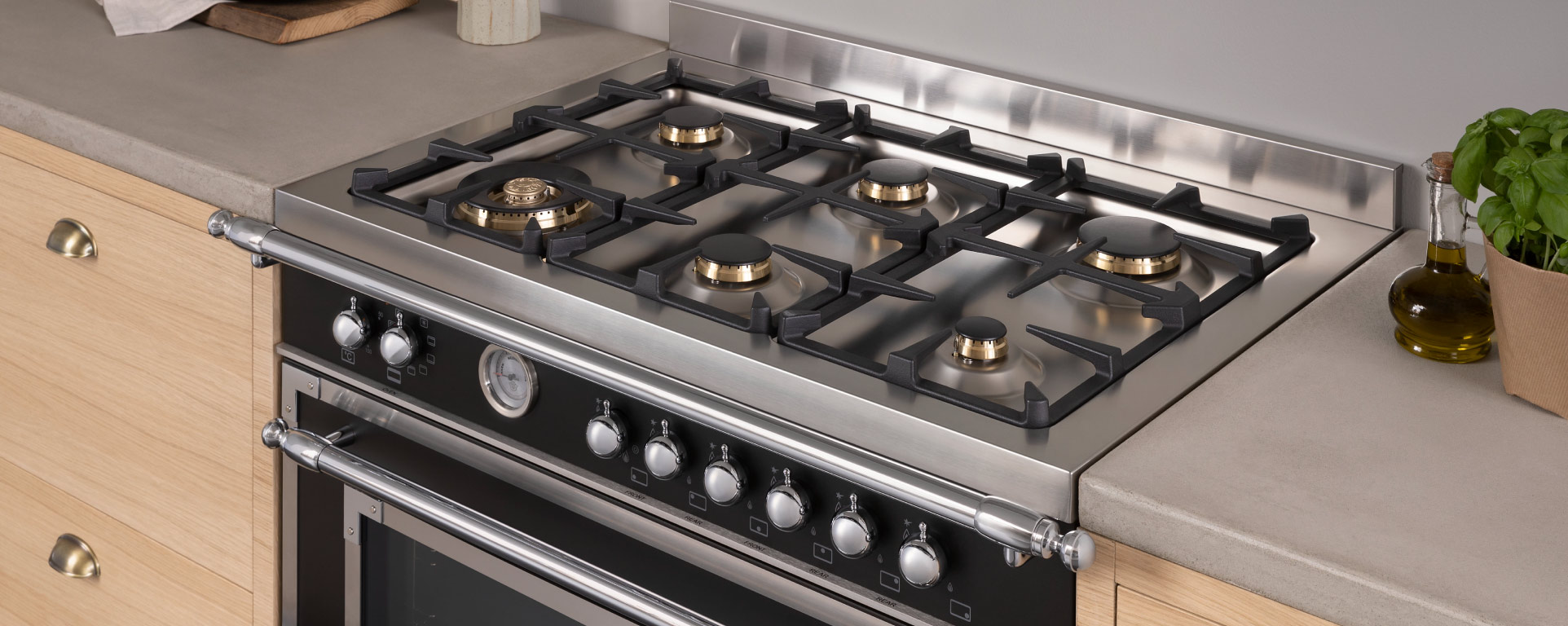
Image Credit: Bertazzoni
Space and Clearance Requirements
To ensure a safe and proper installation of your gas ranges, you must adhere to specific measuring protocols and minimum clearance requirements for surrounding walls, cabinets, and flooring.
Measuring the Installation Space
Before delivery, you should measure the height, width, and depth of the location where the unit will be placed. It is recommended to measure at the top, middle, and bottom of the space, as well as the surrounding area and cabinets, to ensure a suitable fit.
Cabinet and Heat Protection
To protect surrounding surfaces from heat, steam, and grease, gas ranges must adhere to specific minimum clearance requirements.
- Vertical Protection: At least 30 inches of clearance between the cooking surface and the bottom of any unprotected wood or metal cabinets.
- Side Surfaces: A minimum height of 18 inches is required for cabinets located above the counter, and there must be at least 6 inches of spacing between the range and any adjacent side walls.
Ventilation Setup
Range Hood Requirements
Proper ventilation is essential when installing a gas range to remove combustion by-products, such as carbon monoxide and carbon dioxide, as well as heat, moisture, and cooking odors from the home. Without adequate airflow, these pollutants can build up and pose significant health hazards.
Furthermore, modern homes are often "tightly" sealed for energy efficiency, meaning high-capacity exhaust systems can create negative pressure (a vacuum). This vacuum can cause backdrafting, where combustion gases from other appliances, like water heaters or furnaces, are pulled back down their flues and into the living space instead of exhausting outside.

Image Credit: ILVE
Matching Ventilation to BTU Output
To ensure safety and comfort, the power of a range hood, measured in Cubic Feet per Minute (CFM), must be matched to the total thermal output of the gas range.
- The BTU Method: For gas ranges, the standard calculation is 100 CFM for every 10,000 BTUs of total burner output.
-
Capacity Examples:
- A standard range with 30,000 total BTUs requires a minimum of 300 CFM.
- A mid-range pro-style cooktop with 60,000 BTUs requires at least 600 CFM.
- Island Installations: Because island hoods are more vulnerable to cross-drafts in an open room, you should increase the calculated CFM by 50% to ensure pollutants are effectively captured.
| Total Burner BTUs | Minimum CFM Required | Makeup Air Required? | Range Type / Pro Tip |
|---|---|---|---|
| 30,000 BTUs | 300 CFM | No | Standard for most entry-level gas ranges. |
| 45,000 BTUs | 450 CFM | YES | Exceeds the 400 CFM safety threshold. |
| 60,000 BTUs | 600 CFM | YES | Typical for mid-range pro-style cooktops. |
| 90,000+ BTUs | 900+ CFM | YES | Heated Makeup Air is often recommended for high-performance setups. |
Flooring and Leveling
Level Surface
Ensures even cooking and stability
Weight Support
Floor must support heavier professional-style ranges
Gas ranges can be quite heavy and may settle into softer flooring materials such as cushioned vinyl or carpeting. For this reason, it is recommended to place freestanding or slide-in ranges on a protective base like a sheet of plywood, which helps distribute weight evenly and makes it easier to move the appliance for cleaning and maintenance. This also helps prevent discoloration or damage to vinyl or carpet caused by heat and pressure.
Carpeted surfaces are not suitable for gas range installation, and vinyl flooring should be protected by slightly adjusting the leveling legs upward to reduce direct pressure. In addition, installing an anti-tip bracket is required for safety and may involve securing the unit into tile or wood flooring.
To further protect your flooring and maintain a clean installation area, you can also consider adding protective accessories designed to sit beneath or around your range:


Quick Kitchen Readiness Checklist
Gas line installed and compatible
Proper electrical outlet available
Adequate clearances met
Ventilation system in place
Floor is level and stable
Anti-tip bracket installed
Common Mistakes to Avoid
- Assuming all gas ranges are plug-and-play
- Ignoring ventilation requirements
- Skipping professional inspection
- Not checking gas line capacity
When to Upgrade Your Kitchen for a Gas Range
Not every kitchen is immediately ready for a gas range, and some setups may require upgrades before installation. If your home does not already have a gas line, you will need a licensed professional to install one, and in older homes, the existing gas line may need to be upgraded to handle the higher BTU output of modern ranges. Ventilation is another key factor. If your kitchen lacks a proper range hood or has limited airflow, upgrading your ventilation system is important for both performance and safety.
You may also need modifications if your cabinetry does not meet required clearances, if there is no accessible gas shutoff valve, or if your kitchen lacks a nearby grounded electrical outlet for ignition and controls. Additionally, uneven or weak flooring can affect stability, especially with heavier or professional-style ranges. Planning for these upgrades in advance ensures a smoother installation and helps your gas range perform safely and efficiently over the long term.
Ready to Upgrade to a Gas Range?
Explore a wide selection of high-performance gas ranges designed for every kitchen style and cooking need. Whether you are looking for a reliable everyday model or a professional-grade upgrade, you will find options from trusted brands at competitive prices.
Not sure where to start? Check out our guide:
The Best Gas Ranges of 2026: Cook Like a Pro with These Top Picks
When you are ready, browse gas ranges on ShopAppliances.com and take the next step toward upgrading your kitchen with confidence.
FAQs
Do I need a gas line to install a gas range?
Yes, a gas range requires a natural gas or propane connection. If your kitchen does not already have one, a licensed professional will need to install it.
Can I replace an electric range with a gas range?
Yes, but you may need to install a gas line and ensure proper ventilation and electrical access before making the switch.
Do I need a professional to install a gas range?
Yes, it is strongly recommended to have a licensed professional handle installation to ensure safety, proper gas connections, and code compliance.
What is an anti-tip bracket and do I need one?
An anti-tip bracket secures the range to prevent it from tipping forward. It is required for safety and should always be installed.
Can I use propane instead of natural gas?
Yes, many gas ranges can be converted to propane with a conversion kit, but you should confirm compatibility with the manufacturer.
Read More
Gas vs Induction vs Dual Fuel: Pros, Cons, Costs & Which Is Best?
The Best Gas Ranges of 2026: Cook Like a Pro with These Top Picks
The Best Ranges of 2026: Finding the Perfect Fit for Your Kitchen
The Evolution of the Kitchen Range: From wood-burning stoves to induction
French Top vs Open Burner: Which Range Style Is Right for Your Kitchen?