
How to Choose an Outdoor Grill Setup: The Complete Guide

Introduction
Choosing the right outdoor grill setup is more than picking a grill, it’s about creating a functional, stylish, and durable cooking space. Whether you are building a full outdoor kitchen or upgrading a small patio, this guide walks you through fuel types, styles, sizing, placement, and configuration.
Step 1: Choose Your Grill Fuel Type
Your choice of fuel is one of the most important decisions when selecting a grill, as it directly affects how your food tastes, how easy the grill is to use, and how much maintenance it requires. Whether you prioritize convenience, authentic flavor, or versatility, understanding the differences between fuel types will help you find the best fit for your cooking style and outdoor setup.
Gas Grills
- Fast ignition and easy temperature control
- Ideal for everyday cooking
- Best for convenience and consistency
Charcoal Grills
- Rich, smoky flavor
- Longer heat-up time
- Best for traditional BBQ enthusiasts
Pellet Grills
- Wood-fired flavor with digital control
- Great for smoking, roasting, and baking
- Best for versatility
Electric Grills
- Plug-and-play simplicity
- Low smoke output
- Ideal for apartments or small spaces
| Fuel Type | Flavor Quality | Convenience | Startup Time | Best For |
|---|---|---|---|---|
| Gas Grills | Moderate | Very High | ~5 min | Busy families and everyday grilling |
| Charcoal Grills | Excellent | Moderate | 20–30 min | Flavor lovers and traditional BBQ |
| Electric Grills | Low | Very High | ~5 min | Apartments, balconies, and small patios |
| Pellet Grills | Excellent | High | 15–20 min | BBQ enthusiasts and slow smoking |

Step 2: Select Your Grill Style
The style of your grill plays a major role in how it integrates into your outdoor space and how you use it day to day. From permanent built-in installations to flexible portable options, each style offers a different balance of convenience, mobility, and design. Choosing the right style ensures your grill not only performs well but also complements your layout, cooking habits, and overall outdoor aesthetic.

Built-In Grills
- Designed for outdoor kitchens
- Sleek, permanent installation
- Best for high-end, custom setups
Image Credit: Shop Appliances

Portable Grills
- Lightweight and compact
- Perfect for travel, camping, tailgating
Image Credit: Shop Appliances

Freestanding Grills
- Mounted on carts for mobility
- Flexible and budget-friendly
- Great for patios and backyards
Image Credit: Shop Appliances

Countertop Grills
- Space-saving design
- Ideal for balconies or small outdoor kitchens
Image Credit: Shop Appliances

Kamado (Egg) Grills
- Ceramic construction with excellent heat retention
- Supports grilling, smoking, and baking
- Best for enthusiasts who want versatility
Image Credit: Shop Appliances
Step 3: Determine Your Outdoor Kitchen Configuration
Your outdoor kitchen configuration defines how your grill and surrounding elements come together to create a functional cooking space. The right layout should reflect how you cook, entertain, and move within the space, while making the most of your available area. Whether you prefer a simple setup or a fully equipped outdoor kitchen, choosing the right configuration ensures efficiency, comfort, and a seamless grilling experience.
Common Configurations

Standalone Grill Station
Simple setup with just a grill and minimal prep space
Image Credit: Blackstone

Island Configuration
Grill centered with counter space on both sides
Image Credit: Alfresco Kitchens
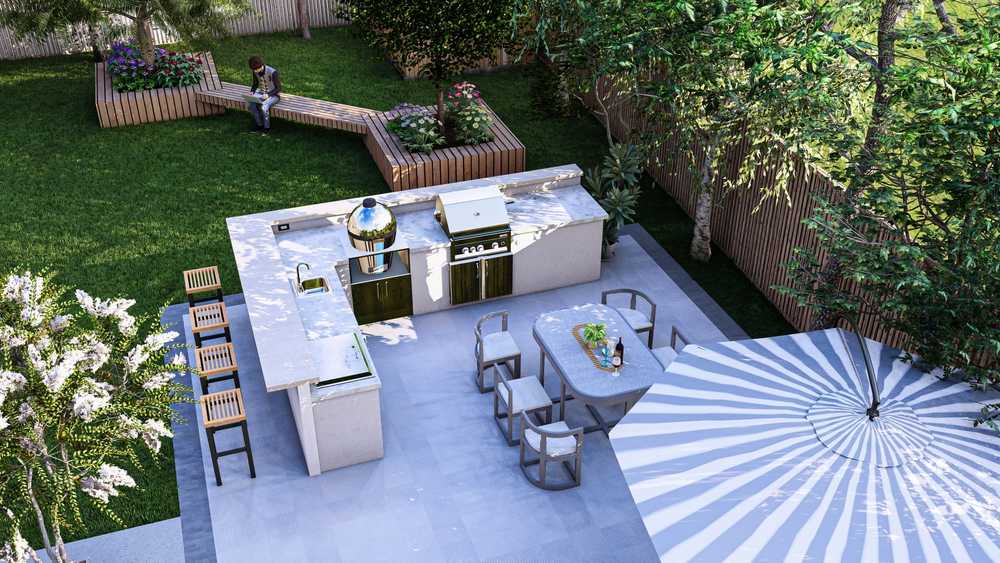
L-Shaped Kitchen
Adds prep, storage, and appliances
Image Credit: XO Appliances
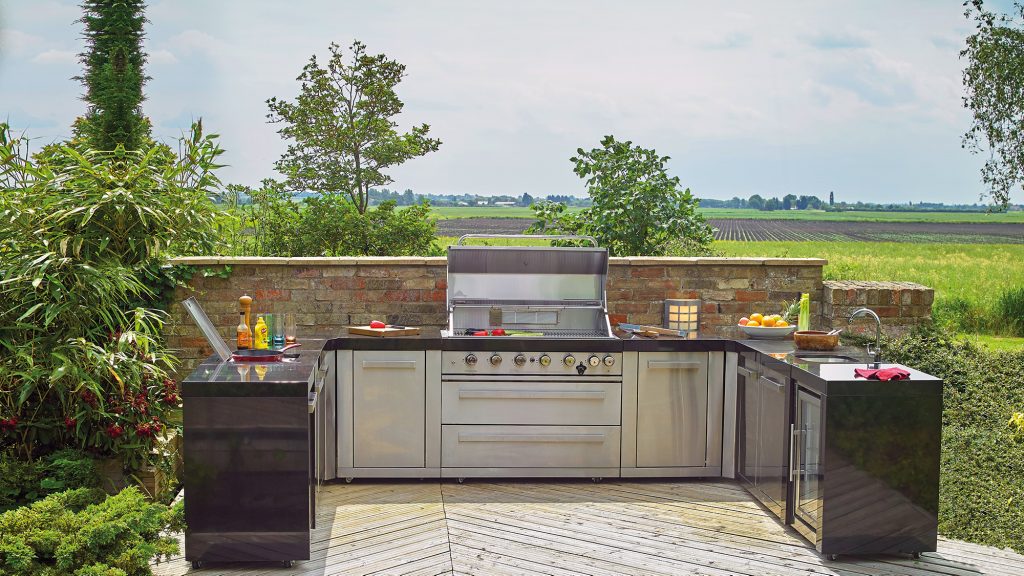
U-Shaped Kitchen
Maximum efficiency and workspace
Image Credit: Mont Alpi

Modular Setup
Expandable components for flexibility
Image Credit: Hestan
Read more: Creating the Ultimate Outdoor Kitchen: Hybrid grills and pizza ovens
Step 4: Choose the Right Grill Size
Choosing the right grill size is essential for both performance and practicality. The size you select should comfortably handle your typical cooking volume while fitting seamlessly into your outdoor space. A well-sized grill ensures efficient cooking, better heat distribution, and enough room to prepare multiple dishes without feeling limited.
Grill Size Guide
| Grill Size | Width | Best For | Ideal Space |
|---|---|---|---|
| Small | 18–26 inches | 1–3 people | Balconies, small patios |
| Medium | 27–36 inches | 4–6 people | Standard backyards, family use |
| Large | 36–48+ inches | 6–10+ people | Entertaining, outdoor kitchens |
Pro Tip
If you regularly host guests, size up. Extra cooking space makes a noticeable difference when grilling multiple items at once.
Step 5: Plan Grill Placement and Ventilation
Placement affects safety, comfort, and performance.
- Safety Clearance: Grills should be used on a firm, flat surface and kept at least 10 feet away from any building structure.
- Design Flow: Use the "golden triangle" rule (keeping the sink, grill, and prep station in close proximity) for effective food preparation.
- Ventilation: If your grill is under a roof or pergola, a range hood is essential to manage smoke, heat, and grease. A common rule is 100 CFM per 10,000 BTU of grill output.
Step 6: Consider Materials and Construction
Durability is critical for outdoor environments.
Best Materials
- Stainless Steel: 304 commercial-grade stainless steel is highly recommended for its durability and resistance to rust and corrosion.
- Cast Aluminum: Lightweight and naturally rust-resistant with excellent heat retention.
- Porcelain-Coated Steel: Generally the most affordable option; the coating prevents sticking and simplifies maintenance.
Weather Considerations
- Coastal areas need higher-grade stainless steel
- Use covers to extend lifespan
Step 7: Evaluate Features and Accessories
Enhance your grilling experience with the right add-ons.
Must-Have Features
- Side Burners: For cooking sauces or side dishes without leaving the grill.
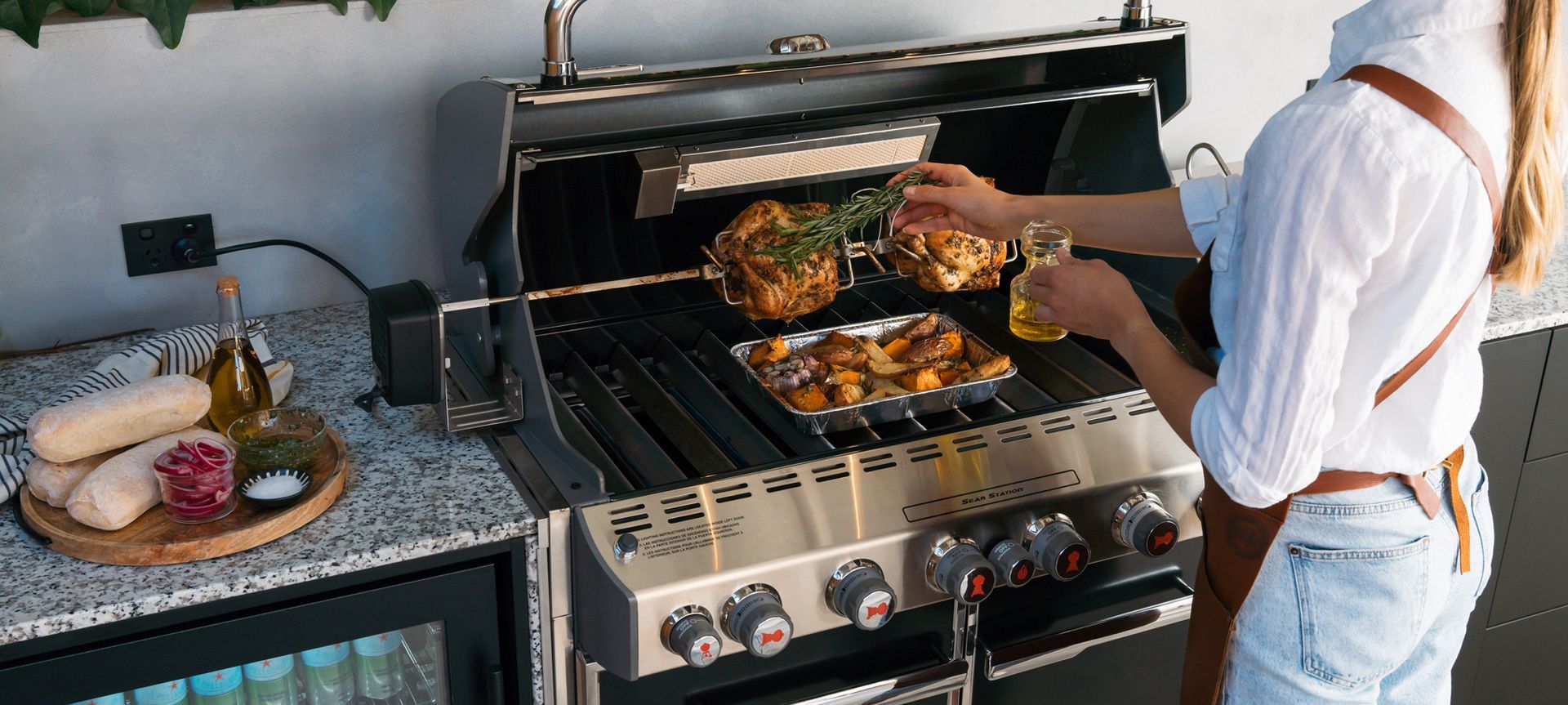
- Rotisseries: Allow for slow, even, hands-free cooking of whole birds or roasts.
- Lighting: Interior and knob lights extend your grilling time into the night and improve safety.
- Temperature Gauges: Built-in lid thermometers or digital probes help you monitor internal grill temperature for precise cooking.
Popular Accessories
- Grill covers: Protect your grill from rust, moisture, and harsh weather, helping extend its lifespan.
- Tool sets: Essential for safe and efficient grilling, including tongs, spatulas, brushes, and skewers.
- Smoker boxes: Add natural wood-fired flavor to gas or charcoal grills by infusing food with smoky aromas.
- Pizza stones: A versatile upgrade that allows your grill to mimic a traditional pizza oven, delivering crispy crusts and even heat distribution.
- Smart connectivity: Advanced features like wireless probes, app control, and remote monitoring let you track temperatures and cooking progress in real time.
Step 8: Plan Installation and Maintenance
Think long-term before making your purchase.
Installation Tips
- Professional Expertise: Built-in grills are permanent fixtures that often require professional installation due to the complexity of utility extensions and custom construction. Tasks involving natural gas, water, or electricity should be left to a licensed professional to ensure compliance with safety codes and to avoid voiding manufacturer warranties.
- Utilities Planning: If using a natural gas grill, have a licensed plumber verify your home's BTU capacity to ensure appropriate fuel flow. For grills with integrated lighting or electronic ignition, ensure the setup is within reach of a standard electrical outlet with GFCI protection.
- Essential Ventilation: In enclosed barbecue islands, vapor release venting is a non-negotiable safety requirement to prevent explosive gas accumulation. Placement depends on fuel density: propane (LPG) vents must be placed near the bottom of the cabinet (within 6 inches of the floor), while natural gas vents go near the top.
- Structural Protection: If installing a grill into a kitchen island made of combustible materials, an insulated grill jacket is required to prevent heat damage or fire hazards. If the cooking area is under a roof or pergola, a professionally installed range hood with a proper CFM rating is essential for managing heat, grease, and smoke.
Maintenance Tips
- Grate Care: To maintain optimal performance, clean grill grates regularly after every use and dispose of any food debris that has fallen into the grill barrel.
- Grease Management: Periodically empty and clean grease trays or pans to prevent dangerous buildup and potential fire flare-ups. For pellet grills, you can wrap the grease pan in heavy-duty aluminum foil to simplify the cleanup process.
- Safety Inspections: Regularly inspect burners and fuel lines, checking burner tubes for blockages and hoses for cracks, leaks, or brittleness. Always ensure the propane cylinder is free of dents, rust, or fire damage before use.
- Protective Covers: Use protective covers for both the grill and cabinets to defend against rust, moisture, and environmental damage. Ensure covers are draped properly from back to front and fastened securely to create a weatherproof seal.
- Surface Maintenance: If your outdoor kitchen includes granite or natural stone countertops, they require periodic sealing and regular cleaning to maintain their luster and resistance to the elements.

Final Thoughts
Choosing the right outdoor grill setup comes down to balancing fuel type, size, style, and placement with how you actually cook and entertain. Whether you prefer the convenience of gas, the flavor of charcoal, or the versatility of a pellet or kamado grill, the right setup can transform your outdoor space into a true cooking destination. Plan thoughtfully, invest in quality materials, and design a layout that works for your lifestyle.
Ready to upgrade your outdoor cooking experience? Explore our full selection of gas, charcoal, pellet, and built-in grills to find the perfect fit for your space.
Shop Appliances offers premium grills designed for performance, durability, and style so you can cook, entertain, and enjoy every moment outdoors.
FAQs
What type of grill is best for beginners?
Gas grills are typically the best choice for beginners because they are easy to use, heat up quickly, and offer precise temperature control.
Is a gas or charcoal grill better?
Gas grills are better for convenience and speed, while charcoal grills provide a richer, smoky flavor. The best option depends on whether you prioritize ease of use or taste.
What is the difference between built-in and freestanding grills?
Built-in grills are installed into outdoor kitchens for a permanent, high-end look, while freestanding grills are mobile and more flexible for different spaces.
What features should I look for in an outdoor grill?
Key features include multiple burners, temperature control, durable materials, side burners, and optional accessories like rotisserie kits or smoker boxes.
How do I maintain my grill?
Regularly clean the grates, empty grease trays, check burners, and use a grill cover to protect it from weather damage.