
Bosch vs Miele Dishwashers: Which Brand Is Right for Your Kitchen?

Bosch and Miele are two of the most respected names in premium European dishwashers, known for their sleek design, ultra-quiet operation, and high-performance cleaning. While they may look similar on the surface, the real differences come down to what matters most to you: long-term durability, drying performance, price, and how your household actually uses a dishwasher day to day.
In this guide, we break down everything you need to know, from lifespan and features to real-world usability, so you can confidently choose the brand that best fits your kitchen, your budget, and your lifestyle.
Quick Comparison
| Feature | Bosch | Miele |
|---|---|---|
| Price Range | $900–$1,999 | $1,100–$4,000 |
| Drying | CrystalDry (best for plastics) | AutoOpen + condensation |
| Lifespan | 7–10 years | Up to 20 years |
| Noise | Very quiet | Extremely quiet |
| Best For | Families, value shoppers | Luxury buyers |
Who Each Brand Is Best For
- Bosch is the preferred choice for most modern households, especially active families that regularly wash a high volume of plastics and everyday items that are traditionally difficult to dry. It stands out for delivering exceptionally quiet performance, strong drying results, and reliable cleaning at a more accessible price point, making it one of the best overall value options in the premium dishwasher category.
- Miele remains a strong option for homeowners who prioritize long-term durability and specialized care, particularly for washing fine china, crystal, or delicate stemware. Its engineering and features, such as the AutoDos system, are well-suited for those seeking a more hands-off, longevity-focused appliance experience, though typically at a higher investment level.

Image Credit: Bosch
Key Differences Breakdown
Cleaning Performance
Both brands are considered "Titans" in cleaning performance, though they use different engineering approaches.
- Bosch: Bosch stands out as a leader in real-world cleaning performance, powered by its advanced PrecisionWash system, which uses intelligent sensors to continuously adjust water pressure, spray patterns, and cycle time based on soil levels. Higher-end models further enhance this with PowerControl spray arms, allowing users to divide the lower rack into targeted zones and customize wash intensity for each area. This level of control makes Bosch especially effective for mixed loads, delivering deep cleaning for heavily soiled cookware while maintaining gentle care for more delicate items within the same cycle.
- Miele: Miele emphasizes consistency and controlled dosing, with a focus on mechanical precision and long-term reliability. Its triple spray arm system and AutoDos feature automatically dispense detergent based on load conditions, helping reduce user input and maintain steady results. While highly effective, Miele’s approach is more centered on uniform performance and automation, rather than the dynamic, load-adaptive flexibility that defines Bosch’s cleaning system.
Drying Technology
Drying is the most distinct technical difference between the two brands.
- Bosch: Bosch leads in drying innovation with its CrystalDry (Zeolite) system, available in the 800 and Benchmark series. This technology actively converts moisture into heat, delivering exceptionally dry results across all dish types, including plastics that are typically difficult to dry. It is particularly effective for households that regularly run mixed loads and want consistently ready-to-use dishes straight from the cycle.
- Miele: Miele uses an advanced condensation-based drying system, often paired with AutoOpen, where the door releases at the end of the cycle to allow moisture to escape. This approach delivers reliable, gentle drying performance, especially for glassware and ceramics, though it may require minimal air-drying time for certain plastic items.
Build Quality & Longevity
While Miele is often associated with extreme longevity, Bosch delivers a more balanced approach to build quality, reliability, and value that aligns with the needs of most households.
- Bosch: Bosch is known for consistent engineering and dependable performance, with an average lifespan of 7 to 10 years that meets or exceeds typical household expectations. Across its lineup, Bosch maintains strong reliability, supported by a low service rate of roughly 7.7% to 7.8%. While entry-level models incorporate more cost-efficient materials, higher-end series offer refined construction and premium components, making Bosch a well-rounded choice for those seeking durability without overinvesting.
- Miele: Miele focuses on maximum longevity and in-house manufacturing, designing its dishwashers to last up to 20 years. With most components produced internally in Germany, the build feels notably robust and engineered for long-term use. This level of durability appeals to buyers looking for a long-horizon investment, though it typically comes at a significantly higher upfront cost.
Noise Levels
Both Bosch and Miele are leaders in quiet operation, with any dishwasher rated 44 dB or lower considered effectively silent in modern open-concept kitchens.
- Bosch: Bosch consistently delivers near-silent performance across multiple price tiers, with the Benchmark series reaching an ultra-quiet 38 to 39 dB. Even mid-range models operate at impressively low noise levels, making Bosch one of the most accessible options for homeowners prioritizing a quiet kitchen environment.
- Miele: Miele also achieves extremely low noise levels, with select models reaching 37 dB in specialized quiet modes. These settings prioritize reduced sound output, though they often come with longer cycle times.
- Key Insight: Once a dishwasher operates below 44 dB, differences in sound levels become negligible in everyday use. Bosch achieves this through advanced insulation and sound-dampening design, delivering consistent quiet performance without requiring extended cycles.

Image Credit: Bosch
Strengths and Tradeoffs
| Feature | Bosch Dishwashers | Miele Dishwashers |
|---|---|---|
| Cleaning Approach | Dynamic, sensor-driven cleaning (PrecisionWash adjusts pressure, spray pattern, and cycle in real time) | Consistent, pre-engineered cleaning with fixed spray arm system |
| Targeted Cleaning | PowerControl enables zone-based washing for mixed loads (heavy + delicate together) | Uniform wash across all racks, less customizable per zone |
| Mixed Load Performance | Excellent for real-world loads with varied soil levels and materials | Strong but optimized for even, consistent loads |
| Drying Performance | Industry-leading with CrystalDry (especially effective for plastics) | Reliable condensation drying, best for glass and ceramics |
| Ease of Use | Flexible and adaptive, reduces need for pre-sorting dishes | More automated with AutoDos, but less load-specific control |
| Build Philosophy | Balanced engineering focused on performance + value | Heavy-duty, longevity-focused (built for long-term ownership) |
| Lifespan Expectation | ~7–10 years (aligned with most household upgrade cycles) | Up to 20 years (long-term investment) |
| Price Positioning | Strong mid-to-premium value across multiple tiers | Premium pricing, often significantly higher upfront |
| Best For | Families, mixed loads, everyday performance, value-conscious luxury buyers | Buyers prioritizing longevity, automation, and specialty care |
Quick Takeaway
- Bosch wins for most households: better adaptability, stronger performance on mixed loads, and more accessible pricing
- Miele wins for niche buyers: long-term durability and set-it-and-forget-it automation
Design and Style Differences
Both brands follow a European-style design, built to sit flush with cabinetry for a clean, integrated look in modern kitchens.
- Bosch offers greater flexibility in design customization, with a wider range of handle styles, including pocket, bar, and recessed options. This makes it easier to match different kitchen aesthetics, from minimalist to transitional.
- Miele emphasizes a more robust, engineered feel, with heavier door action and more deliberate control interactions. This gives the appliance a sense of durability and precision, appealing to those who prioritize a more substantial build experience.
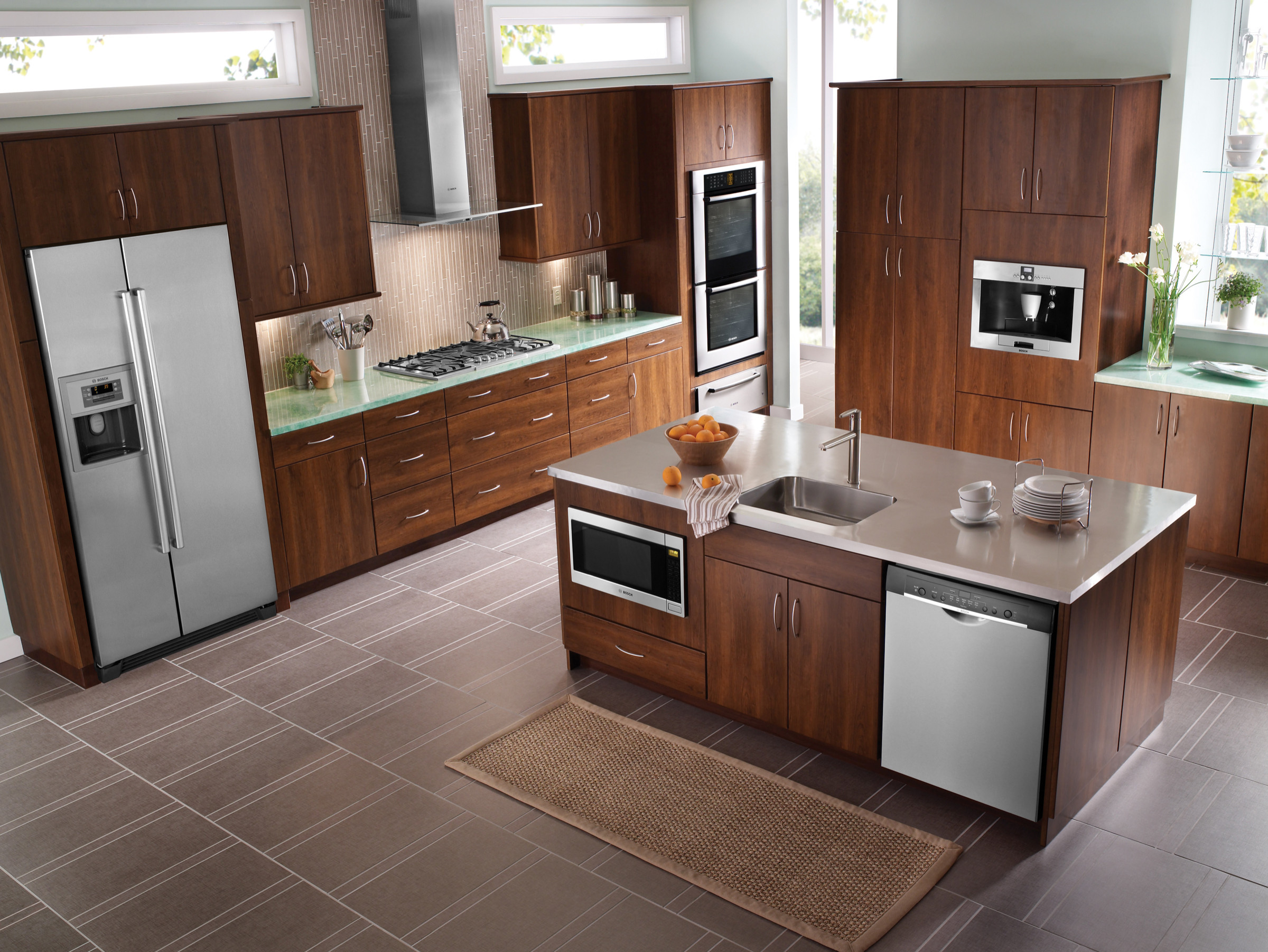
Image Credit: Bosch
Installation Considerations
Because both brands are European, they are generally shallower (about 2 to 2.5 inches less depth) than traditional American dishwashers. This allows them to be installed flush, but it also means the internal racks are shorter, which may require a slight learning curve for users accustomed to deeper American racks. Both brands offer panel-ready models that can accept custom wood fronts to match kitchen cabinets.

Image Credit: Bosch
Price Comparison
- Bosch: Offers a broad range of price points. The 100 Series can be found for under $900, the "meat" of their market (500 and 800 Series) sits between $1,000 and $1,600, and the premium Benchmark series can reach $1,999.
- Miele: Positioned as a premium brand. Entry-level models start around $1,100 to $1,500, while high-end G 7000 models typically cost between $2,200 and $4,000.
Product Recommendations


Service and Reliability
- Bosch generally has broader service coverage and a larger network of technicians familiar with the brand, making parts and repairs more accessible in most markets.
- Miele service is more specialized. In some areas, you may face long wait times if there isn't a factory-authorized technician nearby. Experts recommend confirming authorized service availability in your specific zip code before choosing Miele.
Ideal Home Types
- Bosch: Perfect for open-concept homes where quiet operation is essential, and for busy families who need reliable performance and dry plastics for daily school or work lunches.
- Miele: Best for high-end renovations with custom cabinetry where the owner wants an appliance that will last as long as the kitchen itself. It is also ideal for homes that entertain frequently with delicate glassware.
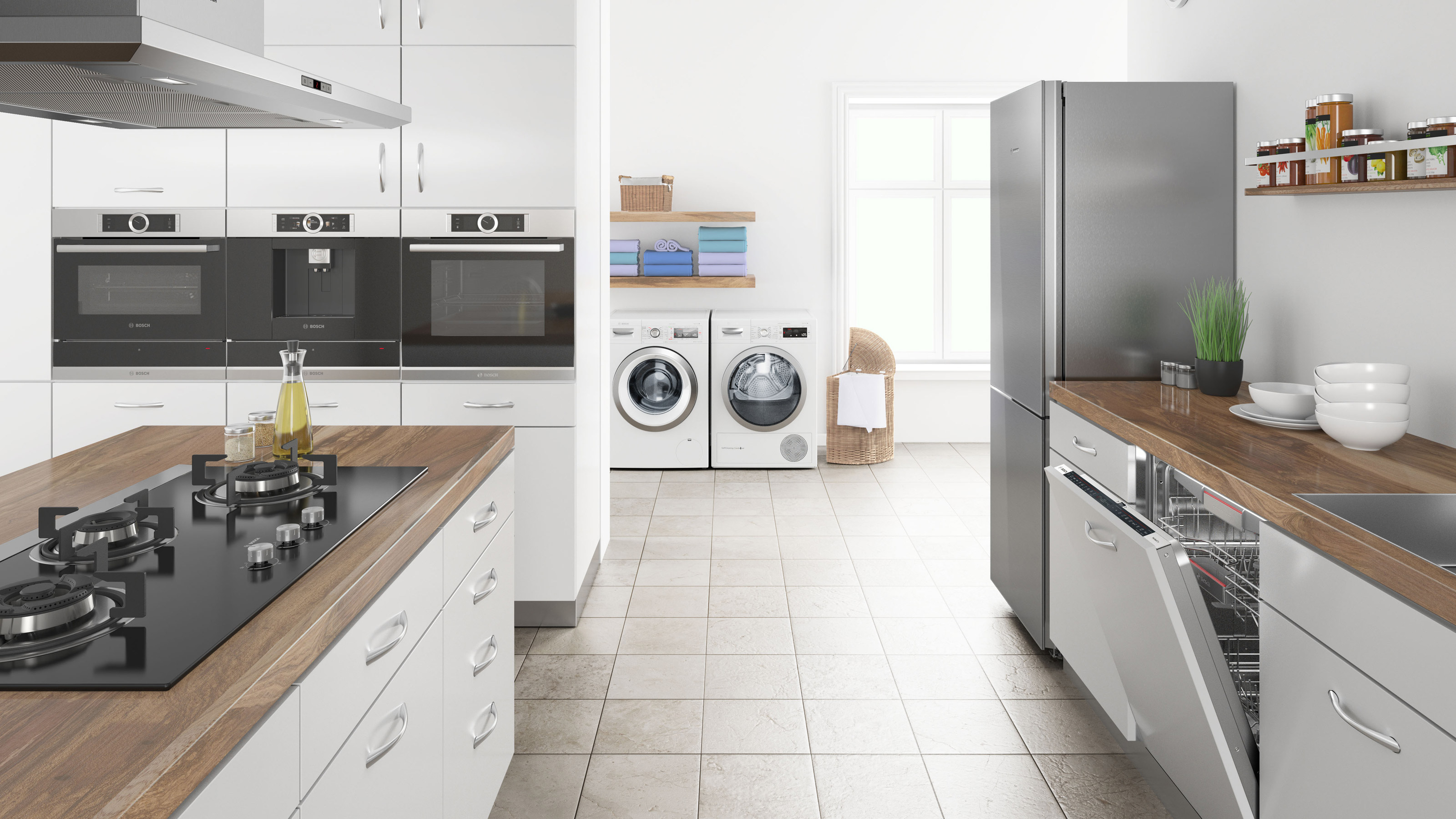
Image Credit: Bosch
Pros and Cons Summary
Bosch Pros
- Excellent overall drying performance, including plastics
- Strong value across multiple price tiers
- Widely available service and support network
- Flexible performance for everyday, mixed loads
Bosch Cons
- Shorter lifespan compared to ultra-premium brands
- Entry-level models use more cost-efficient materials
Miele Pros
- Exceptional long-term durability (built for extended lifespan)
- Premium, heavy-duty construction
- Ideal for delicate items like fine china and glassware
Miele Cons
- Significantly higher upfront cost
- Longer cycle times, especially in quieter modes
- More limited service availability depending on region
Checklist
Determine your budget
Decide if plastic drying is a priority
Consider long-term ownership vs upfront cost
Check local service availability
Choose panel-ready or standard design
Final Verdict
When choosing between Bosch and Miele, the decision ultimately comes down to long-term investment versus everyday performance and value. Miele appeals to those who prioritize maximum durability and premium construction, with a design philosophy centered around extended lifespan and specialized care for delicate items.
Bosch, however, is the more practical choice for most households, offering excellent real-world performance, superior drying results, flexible loading, and a more accessible price point. Its combination of advanced features and broad service availability makes it especially well-suited for busy kitchens and high-volume use, where consistency and convenience matter most.
Ultimately, both brands deliver exceptional quality, but a key deciding factor should be local authorized service availability, as reliable support can have a greater impact over time than individual features.
Ready to upgrade your kitchen? Shop Bosch dishwashers at ShopAppliances.com for a wide selection, competitive pricing, and expert support.
FAQs
Is Miele really worth the higher price?
Miele is worth the price if you view the purchase as a 15-to-20-year investment or if you frequently wash fine china and expensive glassware that requires delicate handling and precise detergent dosing. However, if you want the best drying for plastics or are on a budget under $1,500, Bosch often wins on overall value.
Do Bosch dishwashers dry plastics better?
The consensus among experts is that if drying plastics is your "biggest obsession" or you have a household that washes a high volume of plastic containers (like school lunch boxes), Bosch is the definitive winner. Miele is recommended more for those who prioritize the care of fine stemware and overall build quality over the specific need for bone-dry plastics.
How long do Bosch vs Miele dishwashers last?
Miele dishwashers are designed and tested to last approximately 20 years, while Bosch dishwashers typically have an average life expectancy of 7 to 10 years.
Which brand is quieter?
Both Bosch and Miele are extremely quiet, but Miele is technically the quietest at 37 dB, while Bosch is more consistently quiet across its lineup.
Are Miele dishwashers hard to repair?
Miele dishwashers are not harder to repair mechanically, but they can be harder and more expensive to service due to limited technician availability and specialized parts.
Why buy Bosch from ShopAppliances.com?
Because you’re buying from an authorized dealer, you get full manufacturer warranty protection, guaranteed genuine products, access to rebates and better pricing, and support from brand-trained experts before and after your purchase .
Read More
How to Know If Your Kitchen Is Ready for a Gas Range | Shop Appliances
Why Panel-Ready Appliances Require Earlier Planning Than Stainless | Shop Appliances
How to Maintain Dishwasher Filters and Spray Arms | Shop Appliances
How to Prevent Odor, Moisture, and Mold in Refrigeration Systems | Shop Appliances
The Ultimate Guide to Induction Cooktop Care: Cleaning, Repair, and Longevity | Shop Appliances