
How to Maintain Dishwasher Filters and Spray Arms

Why Dishwasher Maintenance Matters More Than You Think
Dishwashers are often thought of as self-cleaning appliances, quietly handling the mess while you move on with your day. But in reality, they are far from maintenance-free. Over time, food particles, grease, and mineral buildup begin to collect inside key components, and without regular attention, this buildup can quietly reduce performance and create bigger problems down the line.
What starts as a minor issue, like a slightly cloudy glass or a faint odor, can quickly turn into something more frustrating. Clogged filters and spray arms restrict water flow, leaving dishes with gritty residue or stuck-on food. At the same time, trapped debris begins to break down, causing unpleasant smells that linger inside the machine. As these blockages worsen, the dishwasher has to work harder to do the same job, putting extra strain on the motor and internal parts.
This cycle of neglect does not just affect cleanliness. It can also shorten the lifespan of the appliance. In fact, restricted spray arms and clogged components are a common contributor to breakdowns, leading to avoidable repairs and unnecessary costs.
The good news is that preventing these issues is simple. A basic maintenance routine, done consistently, can make a noticeable difference. Just a few minutes spent cleaning the filter or checking the spray arms can significantly improve washing performance, help maintain proper water pressure, and keep your dishwasher running efficiently for years to come.
Cleaning the Dishwasher Filter
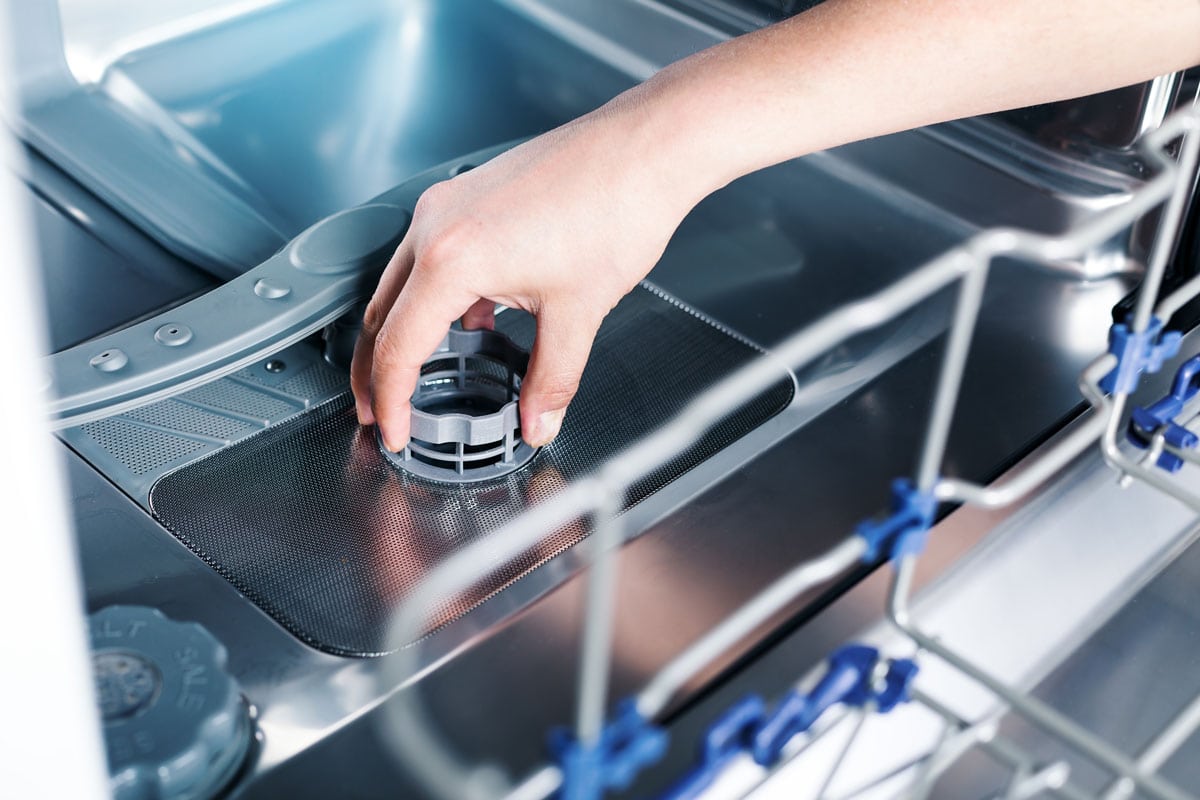
Image Credit: Whirlpool
Step 1: Locate and Remove
- Remove lower rack
- Identify filter location
- Quarter turn counterclockwise and lift
Step 2: Inspect
- Look for food debris or grease buildup
- Signs that indicate more frequent cleaning is needed
Step 3: Rinse and Scrub
- Use hot water
- Soak if needed (10 to 15 minutes)
- Use soft brush only
- Avoid abrasive tools
Step 4: Reinstall Properly
- Replace mesh plate first
- Lock cylindrical filter securely
- Emphasize importance of tight fit
example video from Bosch
Cleaning the Spray Arms

Image Credit: Frigidaire
Step 1: Access and Detach
- Remove racks
- Twist or pull spray arms carefully
Step 2: Inspect Nozzles
- Check for clogs from food or minerals
Step 3: Clear Blockages
- Use toothpick or paperclip
- Avoid damaging holes
Step 4: Deep Clean and Soak
- Vinegar and warm water solution
- Soak for 30 to 60 minutes
Step 5: Remove Internal Debris
- Shake out trapped particles
- Use running water or vacuum method
Step 6: Reattach and Test
- Rinse thoroughly
- Spin arms manually to confirm movement
example video from Bosch
Monthly Dishwasher Deep Cleaning Routine
Wipe Interior and Seals
- Clean gaskets and walls
- Prevent mold and leaks
Vinegar Cleaning Cycle
- 2 cups white vinegar
- Run normal cycle
Baking Soda Refresh
- Sprinkle baking soda
- Run hot cycle
Use Machine Clean Cycle
- When available
- Pair with cleaner tablets

Image Credit: Samsung
Recommended Maintenance Schedule
Building a consistent maintenance routine is essential for preventing odors, ensuring clean dishes, and extending the life of your dishwasher. Below is the expanded Recommended Maintenance Schedule:
After Every Load
- Remove Large Food Debris: Scrape or wipe away visible food bits, large bones, toothpicks, and seeds from the tub bottom. This prevents the filter from clogging prematurely and keeps the pump from becoming blocked.
Monthly
-
Clean the Filter: This is the baseline recommendation for average households running 4–7 loads per week.
- Frequency Adjustments: If you do not scrape or rinse dishes before loading, you may need to clean the filter as often as once a week. Conversely, if you pre-rinse everything, cleaning once or twice a year may suffice.
- Hard Water Warning: Households in hard water areas should clean the filter every 2–3 weeks to prevent mineral crust buildup.
- Wipe Seals and Gaskets: Use a damp cloth to wipe down the door seals and exterior surfaces. This prevents grime buildup, mold growth, and potential leaks.
Every 1 to 3 Months
-
Clean Spray Arms: Inspect the spray arms for clogs every 1–2 months (especially in hard water areas) or at least every 3 months.
- Performance: Clogged nozzles can reduce cleaning effectiveness by up to 40%. Ensure they spin freely and that food particles are not trapped inside the arms.
-
Run a Deep Clean: Perform a thorough cleaning of the interior every 30 cycles or approximately once a month.
- Methods: You can run an empty cycle using specialized dishwasher cleaner or a home remedy such as 2 cups of white vinegar followed by a hot water cycle with 1 cup of baking soda.
- Machine Clean Cycle: If your unit has a dedicated "Machine Clean" cycle, use it to remove internal limescale and grease.
As Needed
- Refill Rinse Aid: Add rinse aid when the indicator light turns on to ensure water slides off dishes, which prevents spotting and improves drying performance.
- Add Dishwasher Salt: If your model has a water softener, refill the salt as indicated. This is critical in hard water areas to prevent limescale from forming on the heating element and internal components.
- Visual and Audible Cues: Perform unscheduled maintenance if you notice gritty residue on dishes, cloudy glassware, musty odors, or standing water in the tub.


Maintenance Frequency Summary
| Component | Household Baseline | Heavy Use / Hard Water |
|---|---|---|
| Filter | Monthly | Every 1–2 Weeks |
| Spray Arms | Every 3 Months | Monthly |
| Deep Clean | Every 30 Cycles | Monthly |
| Door Seals | Monthly | Monthly |
Common Mistakes to Avoid
Skipping filter cleaning
Using harsh scrubbers
Ignoring spray arm clogs
Running dishwasher with loose filter
Signs Needs Immediate Cleaning
Dishes feel gritty
Bad odors
Visible debris in tub
Poor drying or cleaning results
Conclusion
Regular dishwasher maintenance is a simple yet essential practice that ensures your appliance remains a reliable kitchen companion for years to come. By dedicating just a few minutes each month to basic tasks like cleaning the filter and inspecting spray arms, you can significantly improve cleaning performance and eliminate unhygienic odors or gritty residues on your dishes. Beyond just achieving sparkling results, these habits reduce strain on the motor and internal components, preventing costly breakdowns and effectively extending the lifespan of your machine. Establishing a consistent routine tailored to your household's usage, from weekly filter rinses for heavy loads to quarterly deep cleans, is the most proactive way to maintain peak efficiency and hygiene.
Take a moment today to pull out the bottom rack and check your filter; starting this simple routine now will protect your appliance and ensure consistently spotless dishes.
FAQs
How often should I clean my dishwasher filter?
You should clean the dishwasher filter at least once a month. If you run your dishwasher frequently or notice debris buildup, cleaning it every two weeks is recommended.
Do I need to remove the spray arms to clean them?
Not always, but removing them allows for a deeper clean and helps clear internal debris that cannot be reached otherwise.
What happens if I do not clean the filter?
A dirty filter can cause foul odors, poor cleaning performance, gritty residue on dishes, and even damage the dishwasher pump over time.
Can I use vinegar to clean my dishwasher?
Yes, vinegar is effective for removing grease, odors, and mineral buildup. Use it in a bowl on the bottom rack during a normal cycle.
Why do my dishes still feel dirty after a cycle?
This is often caused by a clogged filter, blocked spray arms, or insufficient water flow due to buildup.
Why buy from ShopAppliances.com?
ShopAppliances.com is an authorized dealer offering manufacturer-backed warranties, competitive pricing, fast delivery options, and reliable customer support to help you choose and maintain the right appliances.
What tools should I use to clean spray arm holes?
Use a toothpick, pin, or straightened paperclip. Avoid anything that could enlarge or damage the holes.
Read More
The Ultimate Guide to Induction Cooktop Care: Cleaning, Repair, and Longevity
How to Care for Panel-Ready Refrigeration (A Complete Maintenance and Preservation Guide)
How to Plan Weather Exposure and Choose the Right Materials for Outdoor Spaces
How to Winterize Outdoor Appliances: Complete Guide for Grills, Fridges, Plumbing, and More
How to Season, Clean, and Restore Cast Iron (Best 2026 Complete Guide)