
How to Plan Weather Exposure and Choose the Right Materials for Outdoor Spaces

Outdoor spaces are constantly exposed to environmental stress, making weather one of the most important factors in long term performance. Unlike indoor environments, materials and appliances outside must handle ongoing exposure to moisture, UV radiation, temperature fluctuations, and wind, all of which gradually wear down surfaces and reduce efficiency over time. Without proper planning, this can lead to corrosion, fading, cracking, and mechanical failure.
This guide focuses on how to plan for these conditions from the start by combining the right material choices with smart design strategies. From selection to placement and protection, each decision plays a role in creating a space that performs reliably and maintains its appearance over time.
Understanding Weather Exposure Zones
Understanding your specific weather exposure zone is the foundation of building a durable outdoor space, because not all environments create the same level or type of stress on materials. Coastal areas face constant salt exposure and high humidity, which accelerates corrosion, while inland regions may deal more with temperature swings and seasonal changes. Covered spaces offer partial protection but still experience airflow, moisture, and ambient conditions that can impact longevity. Climate also plays a major role, with high moisture environments increasing the risk of mold and rust, while dry climates can lead to cracking and material fatigue over time.
Sun exposure adds another layer of complexity, as full sun areas experience intense UV radiation and heat buildup, while partially shaded spaces offer more moderate conditions but still require protection. These combined factors directly influence which materials will perform well and which will fail prematurely. Choosing materials without considering your environment often leads to avoidable damage, which is why every decision, from metals to flooring to appliance placement, should be guided by the specific weather conditions your space will face year round.

Choosing Weather-Resistant Materials
Best Metals for Outdoor Use
The primary difference between 304 and 316 stainless steel lies in their chemical composition and their ability to withstand specific environmental stressors, particularly salt.
Grade 304 Stainless Steel (Standard Grade)
- Best For: Inland areas, dry climates, and environments with "normal" weather conditions.
- Characteristics: It is highly durable and corrosion-resistant under standard conditions. It is frequently used for outdoor grills to extend their lifespan to 10–15 years and for BBQ island vent panels to prevent rust.
- Pros and Cons: It has a lower upfront cost compared to marine-grade units. However, in coastal regions, salt deposits can accelerate corrosion on 304 stainless steel, leading to discoloration, rust, and a significantly reduced lifespan.

XO XOGRILL42L 42" Stainless Steel Gas Grill | Shop Appliances

Coyote C3SL42NG SL 42" Stainless Steel Gas Grill | Shop Appliances
Grade 316 Stainless Steel (Marine-Grade)
- Best For: Coastal regions, bayside communities, beachfront resorts, and high-humidity environments.
- The Molybdenum Advantage: Unlike 304, grade 316 includes molybdenum in its alloy mixture. This addition provides superior resistance to salt-based corrosion, salt spray, and salty air.
- Characteristics: It is specifically designed to handle harsh coastal conditions and offers excellent resistance to pitting and rust. It maintains its appearance and performance much longer than 304 when exposed to sea spray.
- Pros and Cons: While it requires a higher initial investment, it offers a better return on investment (ROI) in harsh environments due to lower maintenance and replacement costs over time.

Broilmaster BSB324NLN B 32" Stainless Steel Grill | Shop Appliances

Kenyon B70551 Frontier 21" Stainless Steel Electric Grill | Shop Appliances
Environmental Considerations
When deciding between the two, it is important to consider how far salt can travel. Salt aerosols is microscopic droplets of salt water, which can be carried by the wind and have been documented traveling over 50 miles inland. These particles settle on equipment, and once the water evaporates, the remaining salt reacts chemically with the steel, disrupting its protective layer.
Therefore, if your property is located within a few dozen miles of the ocean or in a region with high salt exposure, the sources indicate that 316 stainless steel is a necessity rather than just a recommendation to protect your investment. If the property is strictly inland, 304 stainless steel is generally considered sufficient.
Non-Metal Materials That Perform Better Outdoors
Non-metal materials are often preferred for outdoor applications where corrosion is a major concern, as they do not rust and can offer unique aesthetic or functional benefits.
HDPE / Marine-Grade Polymer
High-Density Polyethylene (HDPE) is a top-tier synthetic material for outdoor cabinetry and equipment due to its resilience against moisture.
- Weather Resistance: It is fully waterproof and highly resistant to humidity, rain, and UV-related fading. Because it does not absorb moisture, it is naturally resistant to mold, mildew, and fungus, making it an ideal choice for poolside kitchens or high-moisture climates.
- Durability: HDPE is a "maintenance-free" material that will not warp, crack, or rot over time.
- Cons: It offers limited color and texture options compared to natural wood or powder-coated metals.
- Best For: Humid environments, areas prone to frequent rain, and users seeking a low-maintenance solution.
Teak and Treated Wood
Teak is a premium hardwood renowned for its natural oils and timeless appearance, though it requires more attention than synthetic materials.
- Aesthetic and Durability: It offers a timeless, natural look that blends well with traditional or rustic outdoor designs. With proper sealing and regular maintenance, it is highly durable and resistant to weather damage.
- Climate Suitability: While teak is hardy, it often maintains its integrity better in drier regions compared to areas with constant high humidity.
- Cons: It has a higher initial cost than synthetic polymers and requires regular oiling to prevent it from fading, graying, or cracking over time.
- Best For: Traditional designs where natural beauty is the priority and the owner is willing to invest time in upkeep.
Other High-Performance Non-Metals
- Synthetic Rubbers (Elastomers): In mechanical systems like expansion joints, synthetic or natural rubber is often superior to metal because it is resistant to acids, solvents, and oils. These materials are also better at absorbing vibrations and are not subject to the same "cycling fatigue" that can cause metal components to fracture.
- Polycarbonate: Used for specialized enclosures, polycarbonate provides a strong layer of protection against UV exposure and water damage for electrical or sensitive components.
- Stone and Concrete: While not "polymers," materials like granite and concrete are highly recommended for countertops because they offer exceptional strength and can endure extreme outdoor exposure without compromising their appearance.
Long-term outdoor performance depends on selecting materials that can handle real-world exposure, not just initial appearance. Low-grade metals can corrode under salt and temperature stress, untreated wood can deteriorate quickly, and mixing dissimilar metals can lead to hidden structural damage. The most reliable materials are those designed to resist moisture, corrosion, and UV exposure, combined with proper placement and protection to minimize environmental impact.
Protecting Against Moisture and Corrosion
Outdoor appliances and structures face constant exposure to rain, humidity, and temperature changes, all of which can weaken materials over time. Moisture accelerates corrosion, especially when combined with trapped air or salt exposure, while freezing conditions can damage internal systems if water is not properly managed.
To reduce these risks, use compatible materials, prioritize moisture-resistant options like HDPE cabinetry, and ensure proper airflow to prevent humidity buildup. In coastal areas, occasional rinsing helps remove salt deposits and maintain surface integrity.
Designing for Ventilation and Drainage
Proper ventilation and drainage are essential for both safety and durability. Ventilation prevents gas buildup and reduces trapped heat and humidity, while consistent airflow helps protect internal components from corrosion.
Drainage is equally important. Incorporating solutions like channel drains or proper grading ensures water flows away from the structure instead of pooling, which can lead to long-term damage and safety hazards.

Whynter MIM14231SS 14" Stainless Steel Ice Maker | Shop Appliances

Summit BIM271OSLHD 15" Stainless Steel Ice Maker | Shop Appliances
Managing Sun, Heat, and UV Exposure
Outdoor materials are constantly exposed to UV radiation, which gradually weakens surfaces, causes fading, and reduces structural integrity. Direct sunlight also increases heat load, forcing appliances like refrigerators and ice makers to work harder and wear out faster.
To minimize these effects, use lighter-colored materials that reflect heat, position appliances in shaded areas, and incorporate structural shade solutions like pergolas or roof extensions. Reducing direct exposure improves both comfort and performance.

ZLINE RBSOZWM24CB Touchstone 24" White Compact Beverage Center | Shop Appliances

Marvel MRWC224IG31A 24" Panel Ready Compact Wine Cooler | Shop Appliances
Using Covers and Structural Protection
Protecting an outdoor investment requires a multi-layered approach, combining structural shelters with targeted appliance protection to ensure longevity against environmental stressors.
Permanent Structures
- Roof Extensions: These provide maximum, permanent coverage, shielding appliances from all types of weather, including rain, snow, and hail.
- Louvered Pergolas: A versatile option featuring adjustable slats, allowing users to control sunlight while providing reliable shelter year-round.
- Gazebos: These structures create a defined, stylish cooking area that protects equipment from the elements while offering a social hub for the backyard.
- Natural Enhancements: Incorporating climbing plants on pergolas can enhance shade and provide additional natural defense against UV rays.
Flexible Protection
- Retractable Awnings: These offer flexible, seasonal protection, allowing users to adjust the level of coverage based on current weather conditions.
- Shade Sails: Ideal for providing moderate UV protection to prevent appliances from fading and overheating.
- Strategic Natural Shade: Planting trees or shrubs can significantly improve the efficiency and lifespan of units like outdoor ACs, provided they are placed at least 10 feet away to ensure proper ventilation.
Appliance Covers
- Waterproof and Breathable: High-quality covers are essential for safeguarding grills, refrigerators, and sinks from moisture and UV rays.
- Moisture Management: It is critical to select covers that allow moisture to escape; using non-breathable covers can trap humidity, which may lead to rust or internal damage.
- Material Selection: Marine vinyl is highly effective for its waterproof and UV-resistant properties, while marine canvas is favored for its traditional look and superior breathability.
- Custom Fit and Security: Custom-fitted covers are recommended to ensure they stay secure against wind while maintaining the necessary airflow to prevent internal overheating.
Smart Placement of Outdoor Appliances
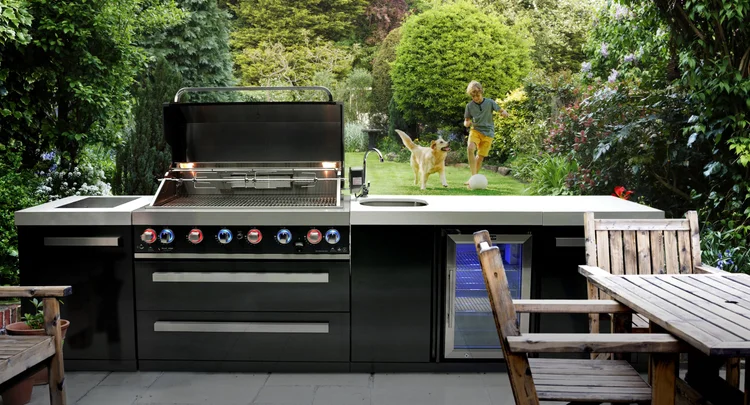
Smart placement is critical for both safety and usability. Grills and heat-producing appliances should be installed at least 10 feet from combustible materials, with proper spacing to prevent heat transfer and ensure safe operation. Maintaining separation between heat and cooling appliances also helps prevent unnecessary strain on components.
Layout should support both function and flow. Position cooking areas to face seating or open space, while keeping pathways clear to avoid congestion. Proper orientation can also improve comfort by directing smoke away from gathering areas and minimizing direct sun exposure on sensitive equipment.
Sealing, Waterproofing, and Enclosures
To ensure the long-term viability of outdoor structures and electronics, a strategy involving regular maintenance, standardized electrical ratings, and multi-layered defense is required.
Surface Sealants and Annual Maintenance
Maintaining the integrity of outdoor surfaces requires consistent attention to protective barriers. Surface sealants should be applied annually to protect materials from water intrusion and staining. Specifically, outdoor granite countertops should be resealed at the end of every season or whenever water no longer beads on the surface. For stainless steel appliances, applying a specialized finish after cleaning can provide an additional layer of protection against the elements, particularly during winterization.
Electrical Protection: IP and NEMA Ratings
Electrical enclosures are categorized by two primary rating systems that define their ability to resist environmental hazards:
- NEMA Ratings: Primarily used in North America, these ratings evaluate construction details, corrosion protection, and ingress. For example, a NEMA 4X enclosure is designed to protect against windblown dust, hose-directed water, and corrosion.
- IP Ratings: These are international standards focused specifically on sealing capabilities against solids and liquids. The first digit indicates protection against solid objects like dust, while the second digit represents liquid resistance. An IP66 rating (equivalent to NEMA 4) is totally dust-protected and resists strong water jets, while an IP67 rating (equivalent to NEMA 6) can withstand temporary submersion in water.
Multi-Layer Protection Approach
A robust protection strategy utilizes multiple barriers to prevent failure, a concept illustrated by high-performance industrial and consumer designs:
- Structural Layering: Similar to non-metallic expansion joints, which use a leak-proof inner tube, a structural reinforced body, and an external cover for environmental defense, outdoor equipment benefits from tiered shielding.
- Appliance Shielding: In outdoor kitchens, this includes using insulated BBQ liners to protect against fire damage, professional-grade utility connections, and breathable waterproof covers.
- Advanced Coatings: Molecularly engineered fluorinated polymer coatings can be applied over existing finishes to provide an unparalleled barrier against the combined effects of UV radiation, salt-fog, and water exposure.
- Enclosure Management: For sensitive electronics like outdoor TVs, cabinets should combine ABS/PC polymer materials for insulation with active cooling fans to manage the internal micro-climate and prevent the "greenhouse effect".
Flooring and Ground Considerations
Flooring plays a key role in durability and safety. Materials like concrete, stone, and pavers are ideal for outdoor use due to their strength and resistance to weather exposure. Choosing slip-resistant finishes is especially important in wet or high-traffic areas.
Proper grading ensures water drains away from the surface, preventing pooling that can lead to damage or hazards. A well-designed foundation keeps the space dry, stable, and easier to maintain over time.
Common Mistakes to Avoid
- Mixing incompatible metals
- Ignoring drainage
- Placing appliances in direct sun
- Using indoor-rated materials outdoors
Final Checklist for Weather-Proof Planning
Before finalizing your outdoor setup, use this quick checklist to make sure every critical factor has been addressed. Each element plays a direct role in preventing long term damage and maintaining performance:
- Choose materials suited to your specific climate and exposure level
- Ensure proper ventilation to prevent trapped heat and moisture
- Plan effective drainage to eliminate standing water
- Incorporate UV protection through placement, finishes, or coverings
- Position appliances safely with adequate spacing and airflow
- Use high-quality protective covers for added defense against the elements
Getting these fundamentals right from the start is what separates a space that lasts a few seasons from one that performs reliably for years.
Conclusion
Creating a durable outdoor space comes down to more than just choosing strong materials. True longevity is achieved by combining the right material selections with smart design decisions that account for weather exposure, airflow, placement, and protection. When both elements work together, you not only prevent premature wear and damage but also ensure your space remains functional and visually consistent over time.
Planning ahead before installation is what makes the biggest difference. Taking the time to evaluate your environment and design accordingly can save you from costly repairs and replacements down the line. If you are ready to build an outdoor space that performs as well as it looks, explore high-quality, weather-ready appliances and materials at ShopAppliances.com and start designing with confidence.
FAQs
What is the most important factor when choosing outdoor materials?
The most important factor is your specific weather exposure. Materials must be selected based on how well they resist moisture, UV radiation, temperature changes, and wind in your environment.
What materials last the longest outdoors?
Materials like 316 stainless steel, marine-grade polymer (HDPE), powder-coated aluminum, and properly maintained teak are among the most durable for outdoor use because they resist corrosion, moisture, and UV damage.
Can I use indoor materials for outdoor spaces?
No, indoor materials are not designed to handle constant exposure to weather conditions. Using them outdoors often leads to warping, fading, mold growth, and early failure.
How do I protect outdoor appliances from weather damage?
You can protect outdoor appliances by placing them under shade structures, ensuring proper ventilation and drainage, and using high-quality waterproof and breathable covers when not in use.
Why is ventilation important in outdoor kitchens?
Ventilation prevents heat and moisture buildup, reduces the risk of gas accumulation, and helps extend the lifespan of appliances by improving airflow around them.