
The Rise of Smart Appliances: A Look Back at the First Connected Devices

Introduction
Smart appliances have transformed modern homes by bringing convenience, connectivity, and automation into everyday life. From refrigerators that track groceries to ovens that can be controlled remotely through smartphones, today’s kitchens are smarter and more efficient than ever before. What once seemed like futuristic technology has now become a common part of connected living, helping homeowners save time, reduce energy usage, and simplify daily routines.
While modern smart kitchens are powered by artificial intelligence and advanced wireless technology, the idea of connected appliances is not new. The journey began decades ago with experimental home automation systems, early computer driven kitchen concepts, and the first internet connected devices that paved the way for today’s smart ecosystems. These innovations introduced the foundation for the connected homes and intelligent appliances we now rely on every day.
In this blog, we will take a look back at the fascinating evolution of smart appliances, from the earliest home automation experiments in the 1960s to the AI powered kitchens of today. Along the way, we will explore the groundbreaking technologies, connected devices, and innovations that helped shape the future of modern home living.
The Origins of the Smart Home Dream
The concept of a connected kitchen might feel like a 21st-century invention, but the dream of a "smart home" actually dates back to the mid-1960s. Long before the sleek, smartphone-controlled devices we offer today, visionaries were experimenting with massive mainframes intended to revolutionize domestic life. Understanding these early milestones helps us appreciate just how far modern appliance technology has come in terms of accessibility and user experience.
The ECHO IV: The Dawn of Home Automation (1966)
Developed in 1966 by Westinghouse engineer Jim Sutherland, the ECHO IV (Electronic Computing Home Operator) is widely considered the first true home automation system. This experimental machine was a precursor to the modern smart hub, designed to act as the "brain" of the household.
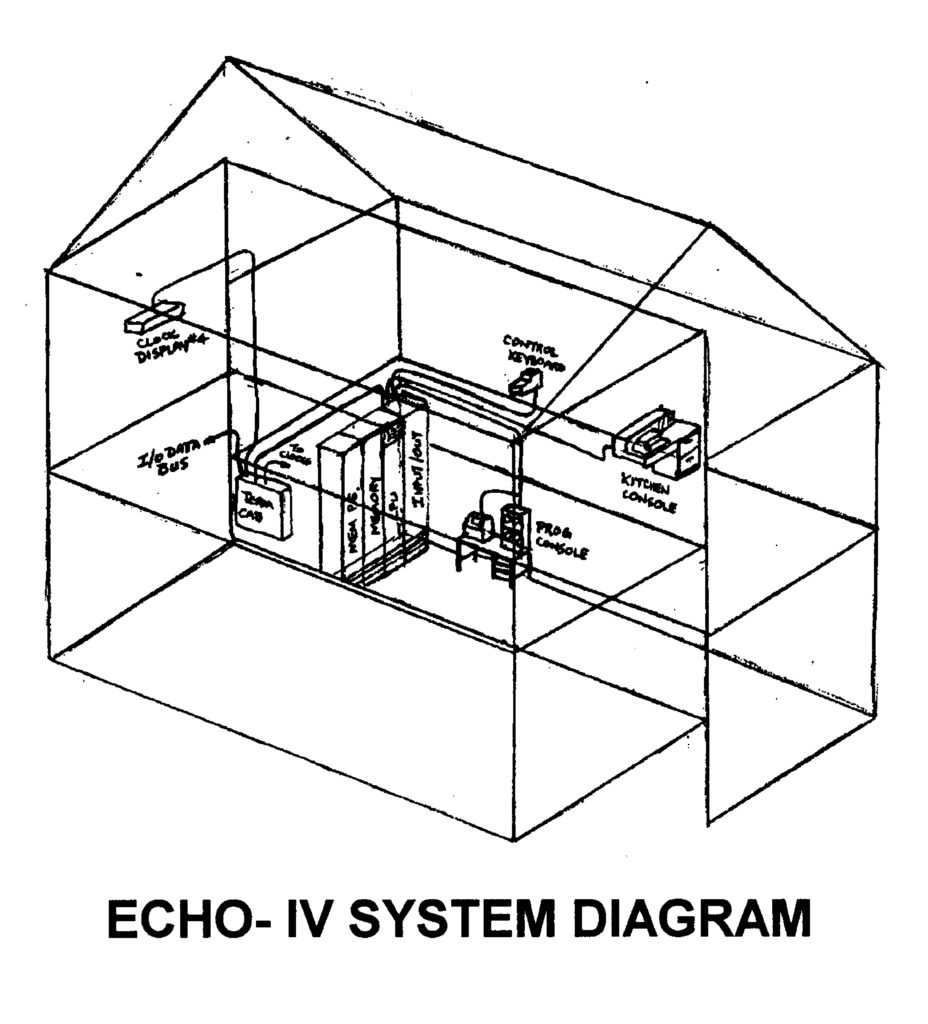
Image Credit: Computer History
Its capabilities were remarkably prescient for the time:
- Inventory Management: It could track and calculate family shopping lists.
- Climate Control: It was designed to manage indoor temperatures automatically.
- Device Automation: It could switch household appliances on and off based on pre-set parameters.
Despite these innovative features, the ECHO IV never reached the consumer market. The primary barrier was its sheer scale; the machine was almost as large as a house, making it completely impractical for the average 1960s home.
The Honeywell Kitchen Computer: A Status Symbol Ahead of Its Time (1969)
In 1969, the Honeywell Kitchen Computer (officially the H316 Pedestal) made a splash as a high-end gift in the prestigious Neiman Marcus catalog. Priced at a staggering $10,600, equivalent to over $75,000 today, it was marketed to the "luxury" demographic as a tool for the modern housewife.
While it featured a sleek black pedestal design, its functionality was hindered by technical complexity:
- Recipe Storage: It was intended to store recipes and suggest meals based on available pantry ingredients.
- The Programming Barrier: To retrieve a single recipe, users were required to learn a complex binary programming language known as "BACK" during a mandatory two-week training course included in the price.
- Market Reception: Because of the high cost and difficult user interface, not a single unit was ever sold to the public.

Image Credit: KBD News

Image Credit: Honeywell brochure, 1969
The Birth of Connected Appliances
The transition from manual housework to the modern connected lifestyle didn't happen overnight; it began with a few pioneering technologies that turned standard household electrical systems into communication networks. For today's homeowners, these milestones represent the first time the industry moved beyond simple mechanical utility to true automation and remote monitoring.
X10: The Foundation of Home Automation (1975)
The journey toward the smart home began in earnest in 1975 with the introduction of the X10 protocol. This groundbreaking communication standard allowed household devices to "talk" to one another by sending signals through a home’s existing AC electrical wiring.

Image: https://www.marketinia.com/wp-content/uploads/2019/02/how-x10-works.gif
Image Credit: Marketinia
By using the wiring already inside the walls, X10 made it possible to control lights and appliances remotely without the need for expensive, specialized cabling. While these early systems were often slow and prone to signal interference, sometimes resulting in neighbors accidentally controlling each other's lights, they established the core concept of a centralized domestic network. This innovation proved that your home's infrastructure could do more than just deliver power; it could deliver data.
The Carnegie Mellon Coke Machine: The First IoT Device (1982)
While X10 was transforming home wiring, a group of students at Carnegie Mellon University (CMU) was busy creating what is widely recognized as the world's first Internet of Things (IoT) device. In 1982, motivated by the frustration of walking across campus only to find an empty or warm soda machine, graduate students and engineers connected a Coca-Cola vending machine to the ARPANET, the precursor to the modern internet.
The system worked through several key innovations:
Image Credit: Digital Mahbub
- Remote Monitoring: Students Zsarnay, Nichols, Kazar, and Durham installed a board to sense the status of the machine's internal indicator lights.
- Real-Time Data: A gateway program checked these lights multiple times per second to track when a soda was purchased or when a column was empty.
- Precision Intelligence: The program even tracked how long a bottle had been in the machine, only labeling it as "cold" if it had been refrigerated for at least three hours.
This project proved that appliances could be proactive partners in our daily routines. By allowing users to check inventory and temperature from their computer terminals, the CMU Coke machine established the "practical value" of connectivity that defines every smart refrigerator and connected oven we sell today.
When you choose a modern appliance with remote diagnostics or inventory tracking, you are using refined versions of the same logic first tested in a university hallway decades ago.
Early Internet Innovations That Changed Everyday Life
The evolution of the modern smart home was not a sudden leap but a series of clever innovations that transformed the internet from a research tool into a practical household utility. By looking at these early milestones, we can see the origins of the convenience and remote monitoring that define the premium appliances we offer today.
The Trojan Room Coffee Pot: The Birth of Remote Monitoring
In 1991, researchers at the University of Cambridge created the world’s first webcam to solve a very relatable problem: finding an empty coffee pot after walking down several flights of stairs. Known as the "CoffeeCam," the system used a video capture card on an Acorn Archimedes computer to point a camera at the Trojan Room coffee pot.
Key facts about this internet landmark include:
- Practical Utility: The feed allowed scientists to see a live image of the pot on their local network so they could ensure coffee was available before making the trip.
- Global Access: In November 1993, the camera was connected to the internet, allowing anyone with an early web browser to view the pot's status.
- End of an Era: The camera remained active for a decade before finally being switched off on August 22, 2001.
This experiment proved that remote monitoring wasn't just a novelty, it was a way to save time and streamline daily routines, a concept that now powers the internal cameras in modern smart refrigerators.

Image Credit: BBC
The 1990s: Redefining the Connected Living Space
The 1990s saw a massive shift in how the public perceived technology, moving from hobbyist "kits" to polished consumer electronics designed for non-technical users. As personal computers became common fixtures in the home, the dream of an automated living space began to take shape through the growth of internet networking.
During this era, several trends emerged that set the stage for today’s smart kitchens:
- From "Blinkenlights" to User Interfaces: Early computers moved away from industrial enclosures and manual switches toward stylish plastic designs and accessible operating systems.
- Visionary Predictions: Futurists predicted that computers would soon handle everything from recipe databases to medical advice for children.
- Proprietary Challenges: While the internet enabled remote access to some systems, most 1990s innovations remained part of expensive, proprietary, and often incompatible ecosystems.
Overcoming the "Fad" Perception
Despite the excitement, early connected devices faced significant hurdles. Many critics in the 1980s and 90s dismissed home computers as "a technology in search of a use," noting that tasks like balancing a checkbook or filing recipes were often faster with a box of index cards and a calculator. Additionally, many early systems could not multitask; if you wanted to use your computer as a home automation hub, it had to be kept powered on and dedicated exclusively to that one task.
It would take another decade for technology to mature, for high-speed Wi-Fi to become universal, and for intuitive voice assistants to replace complex coding. Today, when you preheat your oven from your phone or check your fridge inventory from the grocery store, you are using the perfected versions of those 1991 visions. These early milestones weren't just experiments, they were the "growing pains" of an industry now focused on making your life easier and more efficient.
The Move Toward the Modern Smart Kitchen
The transition into the 21st century marked a fundamental shift in how homeowners viewed their kitchens, moving from isolated utility rooms to the high-tech, social centerpieces of the home. This evolution was driven by a combination of status-focused design and the first ambitious, if early, attempts to bring the internet into domestic appliances.
The Rise of the “Trophy Kitchen” in the Early 2000s
At the turn of the millennium, the "trophy kitchen" emerged as a potent status symbol for both middle and upper-class households. This era prioritized aesthetic style over pure functionality, with the kitchen becoming an "ornamental" space that communicated personal taste and social standing.
- Entertainment and Social Hubs: The kitchen migrated from a private preparation room to a multipurpose social space designed for entertaining. It became the "heart of the home," assuming the social functions previously reserved for living and dining rooms.
- Open-Concept Living: Modern architecture reintegrated the kitchen into the home’s primary layout using open floor plans. This central positioning turned the kitchen into a "culinary theater" where cooking became a performative act in front of guests.
- Mainstream Luxury Finishes: By 2002, "must-have" premium finishes like granite countertops and dark cherry cabinetry became standard expectations for homebuyers. Stainless steel finishes transitioned from a professional rarity to a mainstream requirement.
- Commercial-Style Status Symbols: Homeowners began outfitting domestic kitchens with high-end, commercial-grade appliances previously found only in restaurants. Owning professional-style ranges or oversized refrigerators became a form of conspicuous consumption, signaling status even in households that rarely used them for actual cooking.
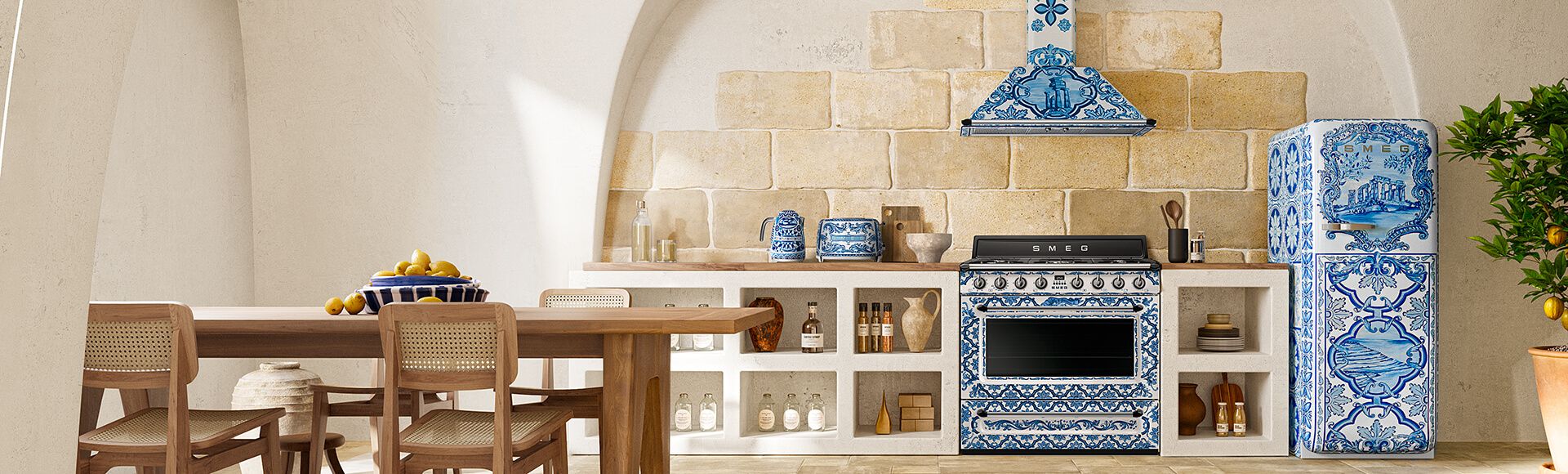
Image Credit: Smeg
The First Internet Connected Refrigerators
While kitchens were becoming more luxurious, manufacturers began experimenting with the first true "connected" appliances around the year 2000. These early devices introduced the concept of the refrigerator as an information hub, though they were ahead of the infrastructure of the time.

Image Credit: Wikimedia
Advanced Interactive Features: In June 2000, the first internet-connected refrigerator debuted: Internet Digital DIOS, launched by LG Electronics, featuring a 15.1-inch touchscreen display. These pioneering units included early versions of food management systems, internal data storage for recipes, and the ability to serve as an entertainment hub for the kitchen.
- Early Connectivity Barriers: Despite their innovation, these first-generation smart fridges faced significant commercial hurdles. High purchase costs and the "sluggish dial-up" speeds of the era made them a difficult sell for the average consumer.
- Foundation for Modern Ecosystems: Although sales were initially low, these devices introduced homeowners to the idea of a connected kitchen ecosystem. They proved that appliances could do more than store or heat food; they could manage inventory, provide scheduling updates, and even offer remote diagnostics.
This era of the "trophy kitchen" and early internet fridges set the stage for today’s AI-powered spaces. The 2000s proved that the modern kitchen was no longer just a place to cook, but a high-tech environment that combined luxury design with the beginning of the smart home revolution.
The Smart Appliance Boom Between 2010 and 2020
The decade between 2010 and 2020 transformed the kitchen from a static workspace into an intelligent, connected environment that listens, learns, and adapts to your lifestyle. This era saw smart technology transition from high-end novelty to an essential domestic utility that prioritizes both user experience and efficiency.
The Expansion of Wi-Fi and Smartphone Connectivity
The widespread adoption of home Wi-Fi networks and the ubiquity of smartphones provided the necessary infrastructure for a new generation of "connected" living. By 2011, manufacturers began launching ranges of appliances that integrated directly with tablets and smartphones.
This connectivity fundamentally changed how we interact with our homes, enabling several key benefits:
- Remote Monitoring: Users gained the ability to check the status of their appliances from virtually anywhere, whether that means verifying if a dishwasher cycle is complete or receiving an alert if a refrigerator door is left open.
- Active Management: Smartphones essentially became a universal remote for the kitchen, allowing homeowners to preheat ovens or manage laundry cycles while at the office or running errands.
- Energy Optimization: New connectivity allowed appliances to be "Smart Grid-ready," giving users the option to automatically schedule energy-heavy cycles during off-peak hours to reduce utility costs.
The Introduction of Voice Assistants into the Kitchen
The mid-to-late 2010s introduced AI-driven voice assistants, specifically Amazon Alexa, Google Assistant, and Apple Siri, as the primary interface for the modern kitchen. These platforms act as the central "brain" of the kitchen ecosystem, offering a hands-free solution that is particularly valuable during complex food preparation.
- Precision Cooking: Home cooks can now preheat ovens, adjust air fryer temperatures, or set timers through simple voice prompts without ever stopping their manual tasks.
- Hands-Free Safety: By eliminating the need to physically touch buttons with messy or wet hands, voice technology reduces domestic accidents and keeps high-touch surfaces cleaner.
- Enhanced Accessibility: For seniors or those with limited mobility, voice control removes the physical strain of bending, reaching, or navigating complex digital interfaces, restoring independence in the kitchen.
.jpg)
Image Credit: LG
Smart Refrigerators and Real-Time Inventory Tracking
The refrigerator evolved into the proactive centerpiece of the modern kitchen during this decade. Modern smart fridges now utilize internal cameras and advanced sensors to fundamentally change how families manage food.
- Remote Grocery Monitoring: Through specialized apps like Smart Manager, homeowners can view a live feed of their refrigerator’s interior while at the store, eliminating guesswork about what is in stock.
- Waste Reduction: AI-driven systems track expiration dates and suggest recipes based on available ingredients. Some studies indicate that these advanced inventory management features can cut household food waste by up to 60%.
- Predictive Maintenance: These appliances are often equipped with diagnostic applications that provide real-time performance data to support staff, identifying potential mechanical issues before they lead to appliance failure.
This boom period successfully bridged the gap between futuristic concepts and practical utility, making smart appliances a standard expectation for any homeowner looking to future-proof their space.
AI Powered Kitchens and the Modern Smart Home
The modern kitchen is no longer just a physical space; it has evolved into an intelligent environment that thinks, learns, and adjusts to how you live. Thanks to rapid advancements in artificial intelligence (AI) and internet connectivity, the "connected kitchen" is becoming a standard expectation for homeowners who value efficiency and sustainability.
The Rise of the AI-Powered “Invisible Sous-Chef”
By 2026, the smart kitchen has transitioned from responding to simple commands to predicting user needs. AI systems act as an "invisible sous-chef," managing routine tasks and streamlining workflows to make cooking more instinctive.
- Learning and Adapting: AI-based applications analyze user habits, dietary preferences, and how often certain foods are prepared.
- Personalized Experience: Over time, these systems provide personalized cooking instructions, suggest meal ideas based on pantry inventory, and even adjust portion sizes to promote healthier living.
- Routine Automation: By automating mundane activities, AI allows home cooks to focus on the creativity and pleasure of cooking rather than manual labor.
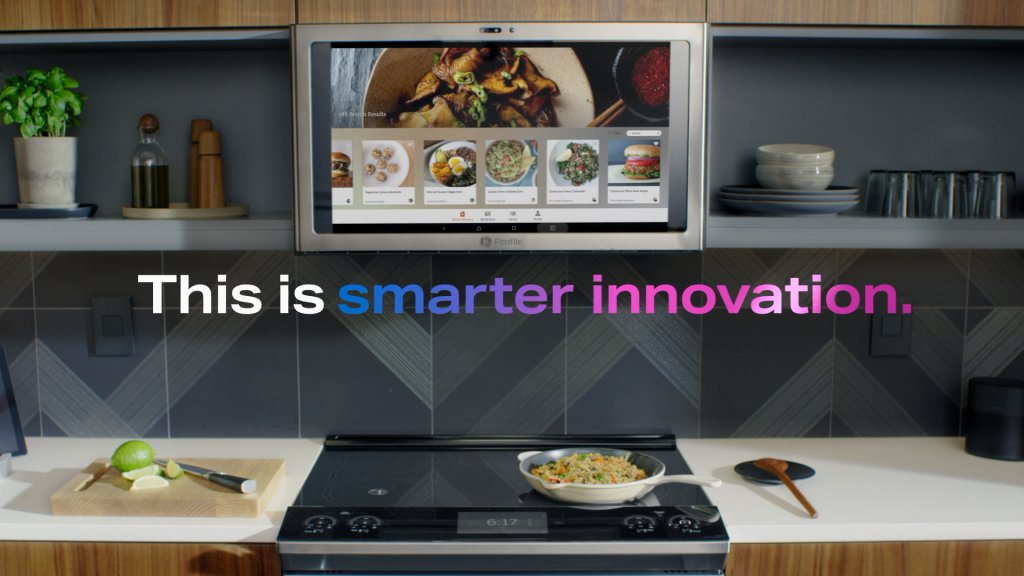
Image Credit: GE Profile
Precision Cooking and Intelligent Appliance Technology
Precision is the hallmark of modern AI-powered appliances, which use a blend of sensors and machine learning to ensure consistent results. These innovations eliminate the guesswork traditionally associated with complex recipes.
- Automated Recognition: Smart ovens can now recognize the specific food items placed inside them and adjust temperature and timing accordingly.
- Real-Time Adjustments: AI-assisted ovens, cookers, and cooktops analyze moisture levels and internal temperatures in real time to maintain perfect conditions.
- Consistent Results: This technology ensures that even difficult meals are cooked accurately with minimal effort, providing professional-level results for everyday home cooks.
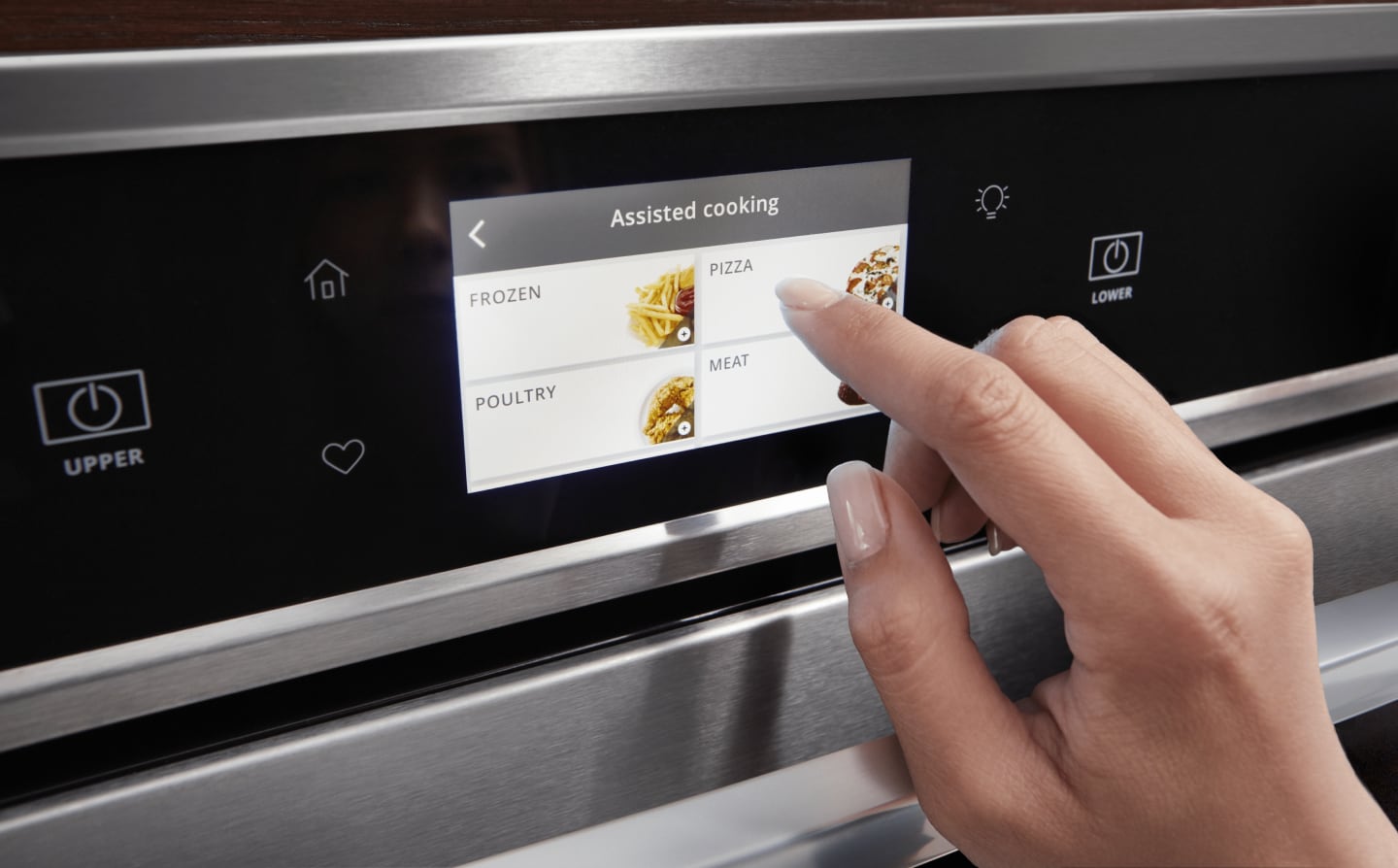
Image Credit: Whirlpool
Intelligent Safety Features in Modern Appliances
Beyond convenience, smart kitchens provide significant safety and security benefits by detecting hazards before they become serious. These features offer greater peace of mind for busy households and those looking to support independent living for seniors.
- Hazard Prevention: Modern appliances are equipped with advanced sensors that can detect food spoilage, smoke, gas, or water leaks and send immediate alerts to a smartphone.
- Automatic Shutoff: Cooktop sensors are designed to automatically shut off burners if they are left unattended, significantly reducing the risk of domestic accidents.
- Accessibility for All: Voice-controlled appliances allow for hands-free operation, which is particularly beneficial for seniors or individuals with limited mobility, as it reduces the physical strain of bending, reaching, or navigating complex digital interfaces.

Samsung NV51CG700SMT Bespoke 30" Black Single Wall Oven | Shop Appliances
Samsung
Samsung is a leader in smart appliance innovation, offering models with AI Family Hub, remote diagnostics, and safety features like automatic shut-off and overheat protection in ovens and other kitchen devices Forbes. Their smart refrigerators use AI image recognition to detect food and prevent unsafe storage conditions.

Bosch NIT8661UC 800 Series 37" Black Induction Cooktop | Shop Appliances
Bosch
Bosch appliances are known for precision safety controls such as tilt and fall sensors in tower fans and overheat protection in ovens and cooktops. They also integrate with smart home ecosystems for remote monitoring.
When choosing your next suite of appliances, you are no longer just buying tools for food preparation; you are investing in a proactive partner that enhances the safety, health, and efficiency of your home.
Sustainability and Energy Efficient Smart Appliances
The modern kitchen has evolved into an intelligent environment that prioritizes both planet-friendly performance and significant household savings. Today’s smart appliances are no longer just about convenience; they represent a major shift toward sustainable living through automated energy management and waste reduction.
How Smart Appliances Reduce Energy Consumption
Smart technology has turned the kitchen into a proactive partner for energy conservation. These connected devices automatically track appliance usage to optimize power consumption in real time. One of the most effective tools for modern homeowners is “Smart Grid-ready” technology, which enables appliances to schedule energy-heavy cycles, such as dishwashing or laundry, during off-peak hours when utility rates are typically lower. Brands like LG, Samsung, and GE Profile have introduced smart appliances with energy monitoring and scheduling features that help homeowners reduce electricity costs without sacrificing convenience.
Some popular smart appliance examples include:
In addition to timing, intelligent systems improve efficiency by measuring the specific needs of each task. For example, Bosch dishwashers use advanced sensors to detect soil levels and water clarity, automatically adjusting water usage and cycle duration for better efficiency. Many modern smart appliances from brands such as Whirlpool, KitchenAid, and Electrolux also include eco modes, low power standby settings, and AI driven cycle optimization to further reduce monthly energy expenses while maintaining premium performance.
Additional smart appliance examples include:
- Bosch Smart Dishwasher
- Whirlpool Smart Range
- KitchenAid Smart Oven
- Electrolux Smart Laundry Appliances
The Growing Popularity of Induction Cooking Technology
Induction cooktops are a cornerstone of the high-efficiency modern kitchen. Unlike traditional gas or electric ranges that heat a burner or element, induction uses electromagnetic fields to heat the cookware directly. This direct transfer of energy results in incredibly rapid heating and unmatched temperature precision.
Because the cooktop surface itself stays cooler and energy is concentrated only on the pan, induction is significantly more efficient than traditional cooking methods. Many premium smart hobs now feature auto-pan detection and advanced power control, ensuring that energy is only consumed when compatible cookware is present. This combination of speed, safety, and sustainability has made induction a top recommendation for homeowners looking to future-proof their kitchens.
Smart Technology and the Reduction of Food Waste
AI-powered refrigerators are now essential tools for managing a more sustainable household. Brands like Samsung, LG, and GE Profile have introduced smart refrigerators equipped with internal cameras and advanced sensors that maintain a real time inventory of groceries and send expiration alerts directly to smartphone apps.
To further minimize waste, intelligent "Smart Manager" systems analyze your current inventory to provide personalized recipe recommendations. This helps families use what they have on hand rather than buying unnecessary duplicates at the store. Research indicates that these advanced inventory management features can reduce household food waste by as much as 60%. By learning household habits, AI ensures that people consume food more efficiently and mindfully.
Popular smart refrigerator examples include:

LG 29.5 cu. ft. French Door Refrigerator LRMVS3006S | Shop Appliances
LG InstaView Smart Refrigerator

GE Profile 28.67 cu. ft. Side by Side Refrigerator PSB48YSNSS | Shop Appliances
GE Profile Smart Refrigerator
The Future of Smart Appliances and Connected Homes
The modern kitchen is undergoing its most radical transformation yet, shifting from a workspace defined by bulky equipment to a sophisticated, "invisible" environment. This evolution reflects a broader movement where smart technology and minimalist design converge to create homes that are as efficient as they are beautiful.
The Growing Trend of the “Disappearing Kitchen”
The "disappearing kitchen" represents a high-end architectural shift where professional-grade tools are seamlessly integrated into the home's living areas. In this design philosophy, function follows form to create a clutter-free, social atmosphere.
- Integrated Aesthetics: Modern kitchens are increasingly using sleek, handle-less cabinetry and "push-to-open" mechanisms to hide high-performance appliances behind uniform panels.
- Minimalist Layouts: The focus has moved toward flat panels and clean geometric lines that minimize visual noise. This allows the kitchen to function as a "credenza" or a decorative "stage set" during social gatherings rather than a purely utilitarian room.
- Seamless Living Spaces: As open-concept floor plans have matured, the kitchen has fully merged with the living room. Designers now focus on creating "concealed hubs" for routers and charging stations, ensuring that technology supports the lifestyle without disrupting the aesthetic.
What the Future Holds for Smart Appliance Technology
Predictive AI and Automation
By 2026, the kitchen is evolving into a proactive partner. Rather than just responding to commands, AI-powered systems "think, learn, and adjust" to how people live.
- Invisible Sous-Chefs: Smart ovens now feature automated food recognition, adjusting temperature and moisture levels in real-time to ensure consistent results for complex recipes.
- Habit Learning: Future appliances will analyze dietary preferences and preparation frequency to provide personalized recipe recommendations and even adjust portion sizes for healthier living.
Fully Integrated Smart Ecosystems
The future of the kitchen is defined by total ecosystem integration, where appliances, lighting, and safety systems operate under a centralized "brain".
- Centralized Control: Smart hubs now connect voice assistants like Alexa, Google Assistant, and Siri to every device in the kitchen, allowing for hands-free management of lighting, ventilation, and appliance cycles.
- Intelligent Safety: Integrated sensors are becoming a standard expectation for future-proofing homes. These systems can automatically shut off burners if left unattended, detect leaks in dishwashers, and provide mobile alerts for food spoilage.
Focus on Sustainability and Personalization
Sustainability is no longer a secondary feature; it is a primary driver of modern appliance innovation.
- Energy Optimization: Advanced AI tracks appliance usage to schedule energy-heavy cycles, like dishwashing or laundry, during off-peak hours to reduce utility costs.
- Resource Efficiency: Technologies such as induction hobs with auto-pan detection and AI dishwashers that measure soil intensity ensure that no energy or water is wasted.
- Personalized Convenience: From coffee machines that brew your specific "perfect latte" the moment you wake up to refrigerators that automate grocery reordering, the future of appliances is focused on delivering a bespoke user experience.
For homeowners looking to future-proof their space, these innovations represent a shift toward a kitchen that doesn't just host meals, but actively enhances the safety, health, and comfort of the entire household.
Conclusion
The journey of smart appliances has evolved from oversized experimental machines in the 1960s to today’s AI powered kitchens that simplify everyday life. Early innovations like the ECHO IV, the Honeywell Kitchen Computer, and the first internet connected devices laid the foundation for the connected homes we now rely on. Over the decades, advancements in Wi Fi, mobile technology, voice assistants, and artificial intelligence have transformed kitchens into intelligent spaces focused on convenience, efficiency, and personalization.
Modern smart appliances do far more than automate simple tasks. They help homeowners save energy, reduce food waste, improve cooking precision, and enhance household safety. As technology continues to advance, the future of smart homes will focus even more on seamless integration, sustainability, and predictive automation that adapts to everyday routines.
Upgrade Your Kitchen with Smart Appliances from ShopAppliances.com
Ready to bring the latest smart technology into your home? Explore the newest selection of smart refrigerators, connected cooking appliances, dishwashers, and energy efficient kitchen solutions at ShopAppliances.com. Whether you are building a fully connected kitchen or upgrading a single appliance, ShopAppliances.com offers trusted brands, competitive pricing, expert support, and modern solutions designed for today’s smart homes.
FAQs
When was the first smart appliance invented?
One of the earliest smart home concepts was the ECHO IV, developed in 1966 by Jim Sutherland. It could manage shopping lists, control household temperatures, and automate certain appliances, making it one of the first examples of home automation technology.
What was the first internet connected appliance?
The first internet connected appliance is widely considered to be the Carnegie Mellon Coke machine created in 1982. Students connected the vending machine to the ARPANET so they could remotely check if drinks were available and cold before walking to the machine.
Are smart appliances energy efficient?
Yes, many modern smart appliances are designed to improve energy efficiency. Features like energy monitoring, off peak scheduling, precision cooking, and automatic power optimization can help reduce electricity usage and lower utility bills over time.
Are smart appliances worth it in modern homes?
Smart appliances can offer significant benefits for modern households, including convenience, remote access, enhanced cooking performance, improved safety features, and energy savings. Many homeowners also appreciate the integration with voice assistants and smart home ecosystems for easier day to day management.
Why buy smart appliances from ShopAppliances.com?
ShopAppliances.com offers a wide selection of smart appliances from trusted brands designed to fit modern kitchens and connected homes. Customers can shop with confidence thanks to competitive pricing, manufacturer warranties, expert customer support, and reliable delivery options that make upgrading to smart appliances simple and convenient.
Read More
Dishwasher History: The Journey from Josephine Cochrane’s 1886 Invention to Modern, Quiet Models
The Post-War Boom: How the 1950s shaped the modern kitchen industry
Design Trends: Comparing 1950s Pastel Appliances to Modern Stainless Steel
From Icebox to AI: The 100-Year Evolution of the Refrigerator
The Evolution of the Kitchen Range: From wood-burning stoves to induction