
Induction vs Gas for Luxury Kitchens: Which Premium Cooktop Is Right for You?

In today’s luxury kitchens, the cooktop is more than just a cooking appliance, it is a defining element of both design and performance. Homeowners are no longer choosing based solely on function, but on how seamlessly the appliance integrates into the space, supports their lifestyle, and elevates the overall kitchen experience.
At the center of this decision is a clear contrast: traditional gas cooking versus modern induction technology. Gas has long been associated with professional kitchens and hands-on control, while induction represents a new generation of precision, efficiency, and minimalist design.
As luxury kitchen trends continue to evolve, induction is rapidly gaining momentum, yet gas remains an enduring symbol of culinary tradition. Understanding the strengths of each is key to choosing the right fit for your home.
What Defines a Luxury Kitchen Today?
Today’s luxury kitchen is a sophisticated, multi-purpose environment where functionality meets design artistry, serving as both a personal retreat and the home’s primary entertainment hub. The definition has evolved beyond surface-level aesthetics toward seamless integration, intelligent technology, and intentional living.
The Shift Toward Minimalist Design & "Quiet Luxury"
A defining characteristic of modern luxury is "Quiet Luxury," a design philosophy centered on restraint, authenticity, and timeless appeal rather than overt statement.
- The "No-Kitchen Kitchen": The rise of concealed kitchens allows appliances and work zones to disappear behind panel-ready cabinetry or movable systems, transforming the space into a seamless extension of the living area.
- Refined Simplicity: Clean sightlines are achieved through integrated storage and reduced visual clutter, often replacing traditional upper cabinetry with hidden or architectural storage solutions.
- Material Authenticity: Designers prioritize natural and expressive materials such as quartzite, reclaimed wood, and hand-finished surfaces that bring warmth and depth without excess ornamentation.
- Evolved Color Palettes: Modern luxury kitchens are moving toward warmer, richer tones, including deep greens, earthy neutrals, and muted terracottas, creating a more inviting and layered environment.
Integrated Smart Appliances
Technology in the luxury kitchen is no longer a visible feature but a fully integrated system designed to enhance convenience without disrupting the aesthetic.
- Connected Ecosystems: Smart appliances, including Wi-Fi-enabled ovens and intelligent refrigeration, streamline cooking and kitchen management with remote access and automation.
- Touchless Functionality: Voice controls and sensor-based fixtures support a hands-free experience, improving usability and efficiency.
- Hidden Integration: Charging stations, controls, and displays are increasingly built into cabinetry and surfaces, maintaining a clean and uninterrupted design.
Health and Wellness-Conscious Living
Wellness is now a core pillar of luxury kitchen design, influencing both layout and appliance selection.
- Environmental Quality: Advanced ventilation, air purification, and water filtration systems are incorporated to support a cleaner, more controlled indoor environment.
- Biophilic Elements: Natural light, organic materials, and features like indoor herb gardens contribute to a calming, restorative atmosphere.
- Intentional Cooking: The adoption of steam and precision cooking technologies reflects a shift toward healthier, more mindful food preparation.
Cooktops as Functional and Visual Centerpieces
The cooktop plays a defining role in shaping the kitchen’s identity, influencing whether the space feels architectural and minimal or bold and professional.
- Induction for the "Vanish Effect": Induction supports seamless integration, with surfaces that visually recede into the countertop. In ultra-luxury designs, systems can even be installed beneath stone, preserving the material as the focal point.
- Gas as a "Pro-Style" Statement: Gas ranges act as a visual anchor, with prominent grates and hardware that establish a chef-driven, professional aesthetic.
- Design-Driven Choice: The decision between induction and gas often reflects a broader preference for minimalist integration versus expressive, performance-forward design.
- Control Experience: Induction emphasizes consistency and precision, while gas appeals to those who prefer a more hands-on, responsive cooking style.

Image Credit: Frigidaire
Induction Cooktops in Luxury Kitchens
In the modern luxury market, induction is increasingly viewed as a high-tech, premium upgrade that aligns with "smart home" trends and minimalist aesthetics. It is particularly favored for open-plan layouts where the goal is for the kitchen to integrate seamlessly with the living area.
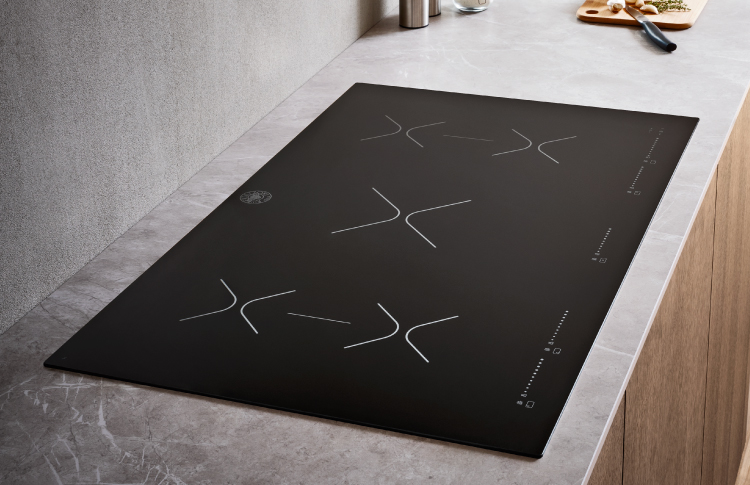
Image Credit: Bertazzoni
Key Advantages:
- Minimalist Aesthetic and "Vanish Effect": Induction surfaces offer a sleek, flush-mount look that can read more like furniture than equipment. Ultra-luxury systems like InvisaCook take this further by installing the technology directly beneath a stone countertop slab, keeping the material continuity completely uninterrupted.
- Unrivaled Speed and Efficiency: Induction is significantly faster than gas, transferring 85–90% of energy directly to the pan. It can bring water to a rolling boil 30–40% faster than high-BTU gas burners.
- Pinpoint Precision: Digital controls allow for extreme accuracy, such as holding a steady simmer within ±1°F or melting chocolate without a double boiler.
- Cooler and Healthier Environment: Because induction heats the pan rather than the air, it keeps the kitchen significantly cooler. It also produces zero combustion byproducts, eliminating the nitrogen dioxide (NO₂) and carbon monoxide associated with gas.
- Effortless Maintenance: Since the glass surface stays relatively cool, spills do not bake on. One survey found induction owners spend an average of only 8 minutes a week cleaning, compared to 32 minutes for gas.
Drawbacks to Consider:
- Infrastructure Requirements: Induction typically requires a dedicated 240V / 40–50A electrical circuit, which may necessitate an expensive panel upgrade in older homes.
- Cookware Limitations: Only ferromagnetic cookware (cast iron, carbon steel, magnetic stainless) works. Professional-grade copper, aluminum, and glass are incompatible.
- Tactile and Auditory Factors: Some users miss the visual feedback of a flame and may find the electronic "humming" or "buzzing" at high power levels distracting.
- Power Outages: Unlike gas, induction is entirely dependent on electricity and will not function during a power outage.


Gas Cooktops in Luxury Kitchens
Gas remains a staple in luxury design for those who desire a "chef" look and value traditional, tactile cooking methods. It is often the centerpiece of "pro-style" kitchens that feature bold vertical elements like plaster or metal hoods.
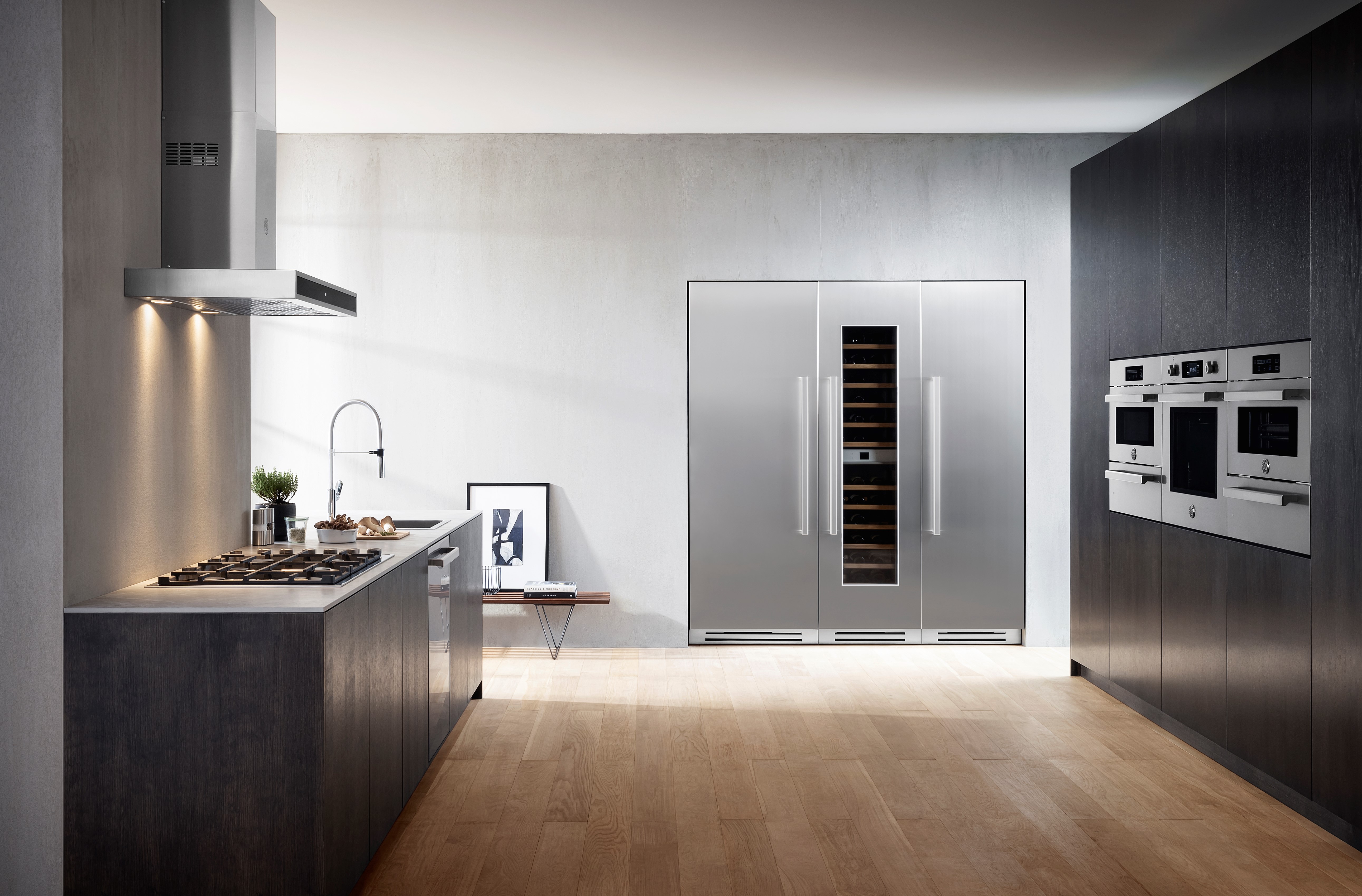
Image Credit: Bertazzoni
Key Advantages:
- Professional Focal Point: A large gas range with heavy-duty grates and industrial knobs serves as a powerful visual statement and a culinary focal point.
- Intuitive Heat Control: The visible flame provides immediate feedback, allowing chefs to judge heat levels by the height and color of the fire.
- Flame-Specific Techniques: Gas is essential for techniques like charring peppers, toasting tortillas, or achieving "wok hei" (the breath of the wok) over an open flame.
- Universal Compatibility: Gas works with any cookware material, including traditional unlined copper and specialty clay or glass pots.
- Mechanical Reliability: High-end gas ranges are prized for their rugged construction and straightforward mechanical design, which is often easier to repair than complex electronics.
Drawbacks to Consider:
- Low Efficiency and Wasted Heat: Gas is only 32–50% efficient, with much of the heat escaping into the room. This can make a luxury kitchen feel like a "sauna" during heavy use.
- Air Quality and Safety Concerns: Unvented gas cooking is a source of indoor pollutants linked to respiratory issues, including a study attributing 12.7% of US childhood asthma cases to gas stove exposure. Open flames also present higher risks for accidental burns or gas leaks.
- Difficult Cleaning: Maintaining a pristine gas range is labor-intensive, requiring the removal and scrubbing of heavy grates, burner caps, and spill trays where grease bakes on easily.
- Stricter Ventilation Needs: Because gas manages heat, grease, and combustion gases, it typically requires more powerful and expensive hood systems (often 600+ CFM), which can complicate minimalist ceiling designs.


Head-to-Head Comparison
The following comparison of induction and gas cooking technologies highlighting their respective strengths and limitations across key categories.
Performance & Speed
- Induction Efficiency: Induction is significantly more efficient than gas, transferring 85–90% of its energy directly to the pan. In contrast, gas cooktops are often only 32–50% efficient, with much of the heat escaping into the kitchen air.
- Boiling Speed: Because the heat is generated within the cookware itself, induction can bring water to a boil 30–40% faster than high-BTU gas burners. High-end induction zones with "PowerBoost" can deliver up to 3,700W, significantly outperforming professional-grade gas burners in boil tests.
- Ambient Heat: Gas burners release substantial heat into the surrounding environment, which can turn a kitchen into a "sauna" during heavy use. Induction keeps the kitchen noticeably cooler because very little heat is wasted.
Precision & Control
- Temperature Accuracy: Induction offers pinpoint digital precision, allowing cooks to hold delicate sauces at exact temperatures or melt chocolate without a double boiler. Modern units can maintain temperatures with a variance of just ±1°F.
- Visual Feedback: Gas is highly valued by professional chefs for the immediate visual cue of the flame, allowing for intuitive adjustments based on fire height and color.
- Low-Heat Stability: While induction excels at precise simmering, high-end gas ranges with dedicated low-flame diffusers can sometimes maintain a lower "floor" temperature than mid-tier induction units.
- Responsiveness: Induction responds nearly instantaneously to setting changes because the magnetic field can be modulated within milliseconds. Gas response is also fast but can be slightly lagged by the thermal mass of the heavy grates.
Design & Aesthetics
- Minimalist Integration: Induction cooktops provide a sleek, minimalist look that integrates seamlessly with luxury cabinetry and countertops. They are often preferred in open-plan designs to achieve a "vanish effect" where the cooktop reads more like furniture than equipment.
- Pro-Style Focal Point: Gas ranges are often chosen as a bold focal point in professional-style kitchens. However, their grates and burners add visual "busy-ness" that may conflict with ultra-minimalist design goals.
Cleaning & Maintenance
- Wipe-and-Go Surface: Induction is widely considered the easiest surface to clean. Because the glass-ceramic surface does not get as hot as the pan, spilled foods do not bake on, allowing for a quick wipe down.
- Labor-Intensive Gas: Cleaning gas ranges is a "nightmare" involving the removal and scrubbing of heavy grates, burner caps, and spill trays where grease and food particles inevitably crust over.
- Cleaning Time: One survey found induction owners spend an average of 8 minutes per week cleaning their cooktop, compared to 32 minutes for gas owners.
Safety & Air Quality
- Surface Safety: Induction is the safest option for families; the surface remains relatively cool to the touch, and units feature automatic shutoff when a pan is removed.
- Indoor Air Quality: Gas burners emit NO₂, CO, formaldehyde, and particulates directly into the home. A 2022 study linked unvented gas cooking to 12.7% of US childhood asthma cases. Induction produces zero combustion byproducts.
- Fire Risks: Gas involves open flames and hot grates that stay hot for 15+ minutes after use, presenting higher risks for accidental burns, grease fires, or gas leaks.
Installation & Infrastructure
- Electrical Requirements: Induction typically requires a dedicated 240V / 40–50A circuit, which may necessitate an expensive electrical panel upgrade in older homes.
- Gas and Venting: Gas requires a dedicated gas line and more powerful ventilation. Because gas produces combustion gases and more ambient heat, a stronger hood (often 600+ CFM) is generally required by code or design.
- Cookware Compatibility: Induction requires ferromagnetic cookware (cast iron or magnetic stainless steel). Pure aluminum, copper, and glass pans will not work.
Long-Term Value
- Operating Costs: While electricity is often more expensive than gas per unit of energy, induction's high efficiency narrows the cost gap significantly. In some regions with time-of-use rates, induction can actually be cheaper to run.
- Home Resale: In many luxury markets, induction is increasingly seen as a high-tech, premium upgrade that increases home value, though some buyers still strongly prefer traditional gas ranges.
- Durability: Gas cooktops are prized for their straightforward mechanical design and ease of repair, while induction units have fewer moving parts but rely on sophisticated electronics that may require specialized service.

Image Credit: JennAir
Comparison Table (Quick View)
| Feature | Induction | Gas |
|---|---|---|
| Efficiency | 85–90% | 40–55% |
| Boil Speed | 30–40% faster | Standard |
| Safety | High (Cool surface, no flame) | Moderate (Open flame, gas) |
| Cleaning | Very Easy (8 min/week) | Difficult (32 min/week) |
| Cookware | Magnetic only | All types |
| Air Quality | Excellent (No emissions) | Poor (NO₂, CO emissions) |
| Visuals | Minimalist/Integrated | Industrial/Focal point |
Luxury Kitchen Design Trends (2026–2027)
Luxury kitchen design continues to evolve toward seamless integration, performance-driven appliances, and long-term sustainability, with cooktop choices playing a central role in defining both function and aesthetic.
- The Rise of Induction in Modern Homes: Induction is becoming the preferred choice in new luxury builds due to its speed, efficiency, and compatibility with minimalist design, aligning with the broader shift toward integrated, low-visual-impact kitchens.
- Selective Decline of Gas in New Construction: While still valued by enthusiasts, gas is being used more selectively, particularly as building regulations, ventilation requirements, and environmental considerations influence appliance decisions in certain regions.
- Seamless and Hidden Cooktops: Flush-mounted and fully integrated cooktops are gaining traction, with designs that sit level with countertops or disappear entirely, supporting the continued rise of concealed, architecture-first kitchens.
- Sustainability as a Design Priority: Luxury buyers are increasingly prioritizing energy efficiency, reduced emissions, and future-proof electrification, making appliance selection part of a broader sustainability strategy rather than just a performance decision.
Read More: Best Luxury Appliance Packages Under $10,000: Luxury That Feels Like a Steal in 2026

Image Credit: ILVE
Hybrid Luxury Setups (Best of Both Worlds)
For homeowners who don’t want to compromise, hybrid kitchen setups offer a balanced approach that combines modern efficiency with traditional performance.
- Induction Cooktop + Gas Burner Module: Many high-end kitchens now feature a primary induction surface for everyday cooking, paired with a dedicated gas burner or wok module for specialized techniques that benefit from an open flame.
- Why Designers Recommend This: Hybrid configurations allow designers to deliver both aesthetic flexibility and functional versatility. Induction supports clean, integrated layouts, while a gas element provides a performance-driven focal point without dominating the entire space.
- Who Should Consider It: This setup is ideal for homeowners who value precision and low maintenance for daily use, but still want access to traditional flame cooking for specific dishes or entertaining scenarios.
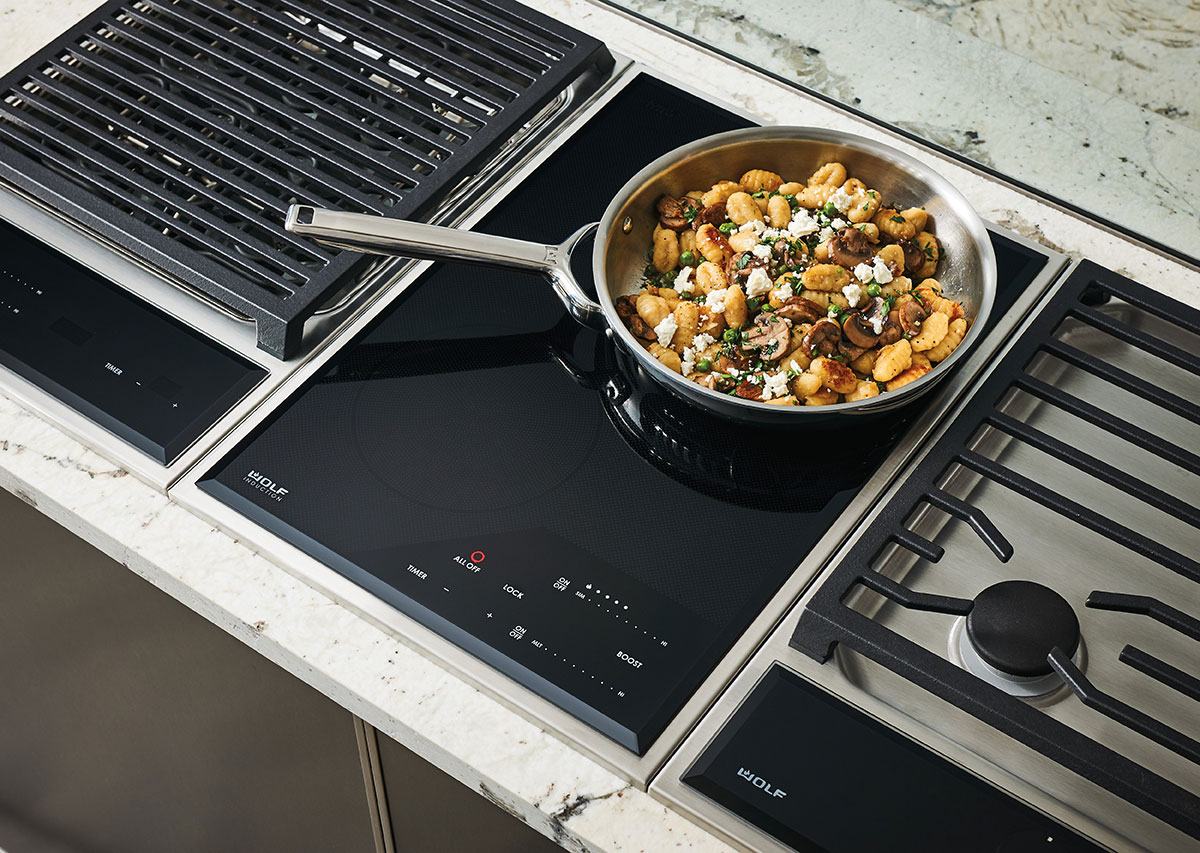
Image Credit: Viking
Best Use Cases
Choose Induction If:
- Modern aesthetic
- Low maintenance
- Energy efficiency
- Family safety
Choose Gas If:
- You prefer traditional cooking
- You need open flame techniques
- You want a pro-style centerpiece

Image Credit: Fulgor Milano
Top Luxury Brands to Consider
As kitchen design continues to evolve, many homeowners are moving beyond standalone cooktops and incorporating full ranges or rangetops to unify cooking performance with a cohesive design statement. This allows you to carry the same induction vs gas decision into a more integrated, appliance-forward centerpiece.
When selecting a premium ranges, brand choice plays a key role in both performance and design identity. These brands stand out in the luxury space for their craftsmanship, innovation, and reliability.
Induction
Bosch – Known for precision engineering, sleek design, and seamless integration into modern kitchens


ZLINE – Offers a balance of performance and value with bold, contemporary styling


Bertazzoni – Combines Italian design with modern induction technology for a refined, high-end aesthetic


Gas
Forno – Delivers professional-style design and performance at a more attainable price, making it a strong option for homeowners seeking a luxury look without the ultra-premium cost.


Viking – A legacy brand in pro-style kitchens, offering powerful burners and iconic design


Kucht – Delivers commercial-style performance at a more accessible price point


Checklist Section
Kitchen style (modern, minimalist vs classic, pro-style)
Cooking habits (everyday use vs specialty techniques like wok or flame cooking)
Ventilation setup (required strength for gas vs lighter needs for induction)
Electrical capacity (240V availability for induction installation)
Budget and long-term value (upfront cost vs efficiency and maintenance)
Final Verdict
Choosing between induction and gas ultimately comes down to how you define luxury in your kitchen.
- Induction represents the modern luxury standard, offering seamless integration, precision performance, energy efficiency, and a cleaner, more minimal aesthetic that aligns with today’s design trends.
- Gas remains a traditional luxury statement, delivering the tactile control, visual flame, and professional presence that many home chefs still value.
The right choice depends on your lifestyle and design priorities. If you favor a streamlined, low-maintenance, and future-forward kitchen, induction is the natural fit. If you prefer a more hands-on cooking experience with a bold, chef-inspired look, gas continues to hold its place.
Ready to Upgrade Your Kitchen?
- Shop Induction Ranges to explore the latest in modern performance and design
- Shop Gas Ranges for classic power and professional styling
- Talk to Appliance Experts for personalized guidance based on your kitchen, cooking style, and budget
FAQs
Is induction really better than gas?
Induction is generally considered better in terms of efficiency, speed, safety, and air quality. It heats faster, wastes less energy, and produces no indoor emissions. However, gas still appeals to those who prefer open-flame cooking and tactile control, so the “better” option depends on your cooking style and priorities.
Do chefs prefer gas or induction?
Traditionally, many chefs preferred gas for its visual flame and hands-on control. However, more professional and home chefs are now adopting induction for its precision, consistency, and speed. In modern kitchens, it is increasingly common to see a mix of both.
Can induction replace gas completely?
For most households, yes. Induction can handle nearly all everyday cooking tasks with greater efficiency and control. The only limitations are specific techniques like charring or wok cooking, which require an open flame. Many luxury kitchens solve this with a hybrid setup.
Is induction worth the higher cost?
In many cases, yes. While induction has a higher upfront cost, it offers long-term value through energy efficiency, faster cooking, easier cleaning, and added safety. It is especially worthwhile in modern kitchens focused on performance and design.
Does induction affect home resale value?
Yes, in a positive way. Induction is increasingly seen as a premium, future-forward feature, particularly in newer or renovated homes. Buyers looking for modern, energy-efficient kitchens often view induction as an upgrade.
Why buy from ShopAppliances.com?
- Authorized dealer for top appliance brands
- Competitive pricing and exclusive offers
- Full manufacturer warranties on all products
- Fast, reliable delivery options
- Expert support to help you choose the right appliance